Day Trips from Barcelona

Published: July 18, 2024
day trip from barcelona

It can be easy to stay in our comfort zone - it's warm, reassuring, and predictable. But sometimes, it's great to break out of that bubble and explore the world outside. For instance, you book a vacation to an amazing and exotic new place. You go exploring and discover new foods and culture. But after a few days, you might feel like you've seen the things you want to see. You may have checked every box on the itinerary. What do you do then? Well, you break out of that bubble and take your explorations further afield! Even a city as beautiful as Barcelona has some must-see places outside its walls. So hop on a train, slide into your slickest automobile, or put your hiking boots on for a serious jog. Here are some of the best day trips you can take from Barcelona!

Featuring:

  • Girona
  • Ruins of Empuries
  • Montserrat
  • Costa Brava
  • Andorra
Image of

Girona

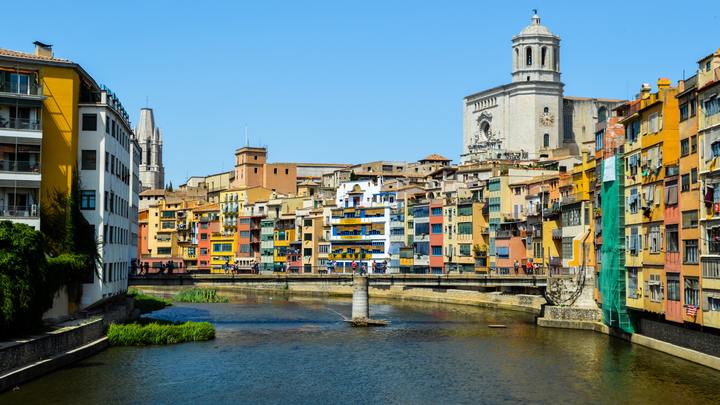
Just an hour outside of Barcelona, you'll find Girona. In fact, you might already recognize parts of it, as it was the location of 'King's Landing' in the Game of Thrones TV show! Appropriately, it's an interesting mix of medieval and modern architecture. One unmissable highlight is Girona's old town, where you can explore cobbled streets and ancient surroundings frozen in time. Beyond it is Girona's Cathedral, which was built back in the 11th Century, though not much of the original stonework remains. Since it towers over the city, it will be tough to miss! Inside, you'll be treated to stunning baroque facades, ancient artifacts, and timeless artwork.

When you're done, make sure to see the Banys Arabs, or Arab Baths, for another slice of medieval life. And if that isn't enough history for one day, there are a few museums that chronicle the town's history, both good and bad. Then, once you've thoroughly explored, you'll find plenty of lovely restaurants to eat and drink, including the world-famous and rather pricey El Celler de Can Roca.

How to get to Girona

From Station Barcelona, in the heart of the city, rains run throughout the day and take between 70-80 minutes. Alternatively, it's a 30-minute drive.
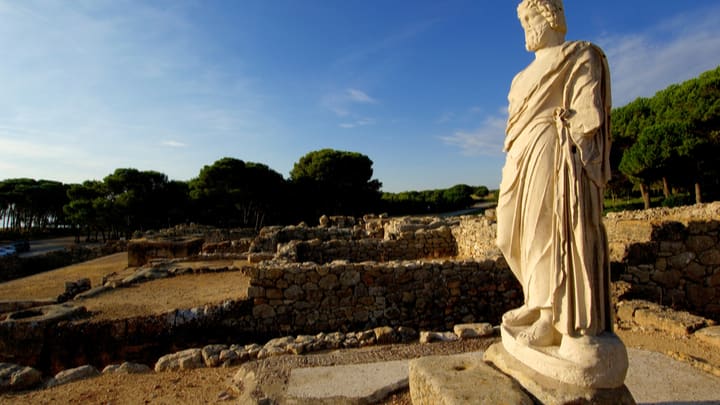
Image of Archaeology, Path, Walkway, Flagstone, Monastery, Adult, Male, Man, Person, Art,

Ruins of Empuries

Just a little further than Girona you'll find something amazing. Empuries was an ancient city founded by Greek travelers over 2000 years ago! Later the Romans set up shop, but by the Middle Ages, it was a ghost town. This is likely because it was a difficult place to defend and, as such, was a constant target of pirates. For the next 1700-odd years, nature swallowed it up. But in 1908, it was rediscovered by archeologists. In fact, they haven't finished uncovering the city's secrets yet, over a century later!

Don't let that stop you. The Ruins of Empuries is still a fascinating place to visit. A literal trip back through time, you'll see mosaics and architecture from millennia ago, before entering the ancient amphitheatre. Imagine the plays and talks that would have taken place back then. Then, visit the site's museum for some sweet spoon-fed knowledge. Definitely one of the most fascinating day trips you can make from Barcelona!

How to get to the Ruins of Empuries

Hop in your favorite four-wheeled machine, ideally a car, and you'll make it in an hour. Alternatively, you can get a bus or train to Girona, and a connecting bus will get you straight there.
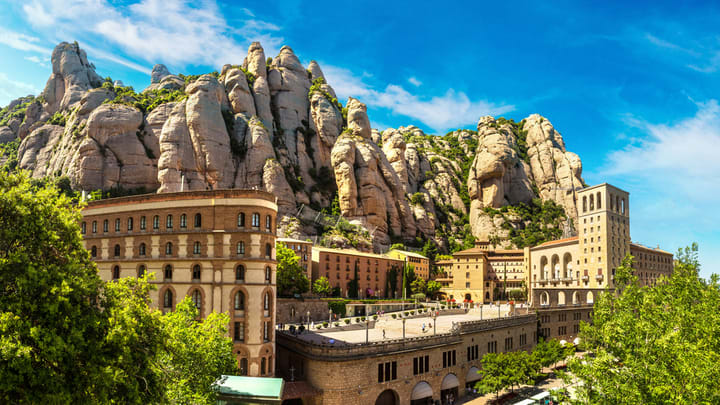
Image of Cliff, Nature, Outdoors,

Montserrat

North of Barcelona is stunning Montserrat, or Serrated Mountain, a beautiful mountain range near the Catalan capital. And believe us, its jagged peaks are quite a sight! Its tallest peak, Sant Jeroni, stands tall at over 4000ft. But really, the reason you'll want to go there is the Santa Marie de Monserrat, a Benedictine Abbey nestled atop one of the peaks. It dates all the way back to medieval times, but is still in use to this day.

While trying not to bother the monks, you'll be able to explore the abbey's church in all its splendor. Gaze up at the Dome of the Altar and you'll see stunning restored artwork depicting angels and other Christian iconography. Everywhere you look, you'll see beauty. Then, if you want to do a deep dive into the abbey's history, head to the on-site museum and fill your brain with delicious information. If you'd like to fill your stomach too, there's also a restaurant, cafe, and even a hotel if you're feeling sleepy!

How to get to Montserrat

Montserrat is about an hour's drive from the city center. Or, at just over two hours, trains are another option. If you want to travel up to the peaks in style, you can take the Aeri de Montserrat, a cable car that'll take you from the foot of the mountains all the way up! At 4000ft, the views are one of a kind. And best of all, it will also take you to the Abbey!
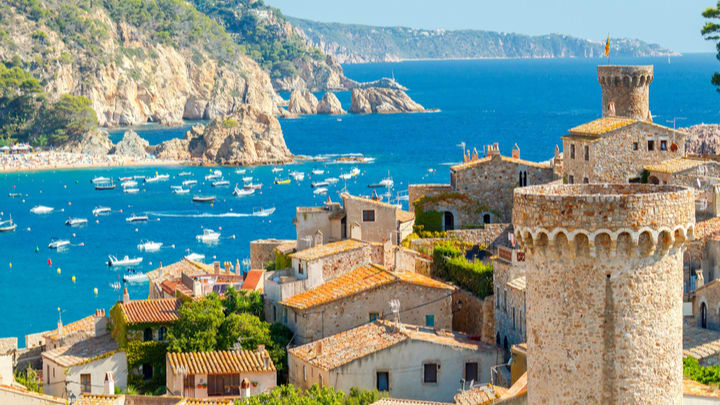
Image of Building, Castle, Fortress, Nature, Outdoors, Scenery, Water, Waterfront, Sea, Boat, Cityscape, Urban,

Costa Brava

Want to get out of the city to chill out and stretch out? Then Costa Brava might be the most perfect of all the day trips from Barcelona! Featuring three beaches that stretch out over 4000ft of beautiful golden sand, it's the perfect excuse to get out of the city! Each of the three beaches has its own unique vibe, so choose wisely. Llevant is the busiest, so expect plenty of sunbathers and party people similar to Barceloneta. If you're looking for a quieter time to max out your relaxing, check out Caldetes. Fewer people, fewer problems. Or, if you want to get your blood pumping with some sweet watersports, check out Dunes, where you can try your hand at scuba diving and windsurfing, among others.

Once you're done lounging, you can head into Santa Susanna. It's a historic seaside town with a plethora of seafood restaurants, bars, and cafes. It was built back in the 1400s, so expect a good mix of old and new architecture to explore!

How to get to Costa Brava

You can make the journey to Costa Brava by car, which will take you just under 2 hours. Or, if you prefer to travel by train, you're looking at just over 3.5 hours. It's a bit further away than some of the others on this list, but it's definitely one of the best day trips from Barcelona that you won't want to miss!

Image of Nature, Outdoors, Scenery, Mountain, Slope, Valley, Landscape, Mountain Range, Neighborhood, Tree, Peak,

Andorra

And finally, we end this list with another state entirely. And that state is the Principality of Andorra! Replete with its own flag and coat of arms, this microstate is situated northwest of Girona. There, you'll find Europe's highest capital city, Andorra La Vella, sitting at a mighty 4000ft! Nestled in the picturesque Pyrenees, you'll find churches, chapels, and medieval architecture. There's also duty-free shopping, something most cities can't boast about!

It becomes a popular skiing destination in winter. That's, presumably, because it's so high up. Or, if you prefer using your feet, there's hiking trails, and UNESCO protected spaces to explore.

How to get to Andorra

Andorra is a solid 3.5-hour drive from Barcelona. Surprisingly, the train takes the exact same time. So, pick your poison!

And that's our list of the best day trips from Barcelona!

Dom Bewley
Go City Travel Expert

Continue reading

Basílica de Santa María del Mar
Blog

Best Churches in Barcelona - Guide

Heading to Barcelona this year and interested in the city's deep connection to the Catholic faith? Or just looking for somewhere to chat to the big man upstairs? Check out our guide to the best churches in Barcelona, and see which best suits you! Including: La Sagrada Familia Basílica de Santa María del Mar Basílica de Santa María del Pi La Catedral de Barcelona Templo Expiatorio del Sagrado Corazón de Jesús and more! La Sagrada Familia La Sagrada Familia isn't just one of the best churches in Barcelona - it's one of the most unique and eye-catching buildings on Earth. Designed by renowned Catalan architect Antoni Gaudí and only nearing completion 120+ years after work began, it's one of the most prominent jewels in Barcelona's crown. Each element, from the spires to the interior façades, was meticulously designed around themes of Christianity. Every inch holds meaning. There's nothing quite like it in any other place on the planet, making it an absolute must-visit for anyone visiting the city, Christian or otherwise. To make the most of your visit, and to uncover all the church's secrets, take a guided tour and get the low down from a learned guide. This is the way. Basílica de Santa María del Pi A 14th-century gem, the Santa Maria del Pi is named after a large pine tree that faced the church during construction. Widely considered one of the best churches in Barcelona, it mimics the Catalan Gothic style of Basilica de Santa María del Mar, with its less extravagant design and large, beautiful windows. In fact, the Santa Maria del Pi contains one of the world's largest rose windows, which is a magnificent sight to behold! Beyond the church's undeniable beauty and calm praying space, you'll find a small museum and treasury, which claims to contain a piece from Christ's crown of thorns. Whether that is the case or not has yet to be determined, but why not go and see for yourself? Basílica de Santa María del Mar Built back in the 1300s, the Basilica de Santa María del Mar is a testament to the beauty of the Catalan Gothic style. And what a style it is, with simple symmetry accentuating harmony. Its massive, stunning windows bathe the interior with light, which perfectly contrasts the weighty and somewhat daunting exterior design. A calm, quiet space in comparison to the loud, awe-inspiring Sagrada Familia, it's the perfect place to visit if you're not one for crowds. Templo Expiatorio del Sagrado Corazón de Jesús Sitting atop Barcelona's Tibidabo Mountain, the tallest hill in the city, you'll find the Templo Expiatorio del Sagrado Corazón de Jesús. One of the more recent creations on this list, having been built between 1902 and 1961 by father and son Enric and Josep Sagnier, it's no less beautiful and deserving of a visit. With elements of Neo-Byzantine, Neo-Romanesque, and Neo-Gothic elements, it's a wonderful and unique mix you won't find anywhere else. On the outside, you'll admire its intricate spires and the statue of Jesus that looks out over the city. On the inside, gaze up at its massive dome. La Catedral de Barcelona Arguably Barcelona's second most recognizable church, the Catedral de Barcelona is one of the city's largest tourist attractions. Standing tall in the city's delightful Gothic Quarter, only something as unique and alien as the Sagrada Familia can overshadow its beauty. You can even ascend to the top of the cathedral and look over the district from up on high. Built over the course of 150 years, you can see the different eras and styles within its design. Make sure to visit the crypt of Saint Eulalia, a prominent Christian martyr and the namesake for the church's alternative name, the Cathedral of Santa Eulalia. Reial Monestir de Santa Maria de Pedralbes Tucked away from Barcelona's tourist-heavy center, you'll find the Reial Monestir de Santa Maria de Pedralbes. Another of the city's 14-century creations, its simple design was ordained by the king at the time, Jaume II. Its Catalan Gothic trappings mimic the other churches on this list built during the same period. However, what Reial Monestir de Santa Maria de Pedralbes does boast is beautiful gardens surrounding the entire building. So, if you want to add a nice, green stroll to your visit, it's worth checking out. Sant Pau del Camp In the free-spirited district of El Raval, you'll find the oldest church in the entire city. Built over 1200 years ago, the Sant Pau del Camp started life as a Benedictine monastery, but has since become a place of worship for many in Barcelona. Given its age, it's the only church of its kind in the city, and has been restored multiple times. Having witnessed civil war, conflicts, and invasions, it's no wonder the church has needed some TLC over the years. It might not top this list for its fancy design or prominence, but it's absolutely one to visit for its history. Santa Maria de Montserrat This final entry might be a bit of a cheat as it's not technically in Barcelona, but just a short trip away, the Santa Maria de Montserrat absolutely deserves to be seen. You can make your own way there on public transport, but we'd recommend taking a stress-free guided tour up the mountain. Santa Maria de Montserrat is a monastery founded in the 11th century and rebuilt between the 19th and 20th centuries. Today, it still functions with over 70 monks and is notable for enshrining the image of the Virgin of Montserrat. You can head inside and look around, though, given its popularity, you may be waiting some time unless you get there early. There's also a nearby museum, where you can learn about the church's history. Easily one of the best churches in Barcelona, if you allow a little wiggle room on the subject. And that's our list of the best churches in Barcelona! Looking for more things to do and see on your vacation to the Catalan capital? Check out Go City. With our All-Inclusive Pass and Explorer Pass, you can experience all of Barcelona's best bits when and how you want.
Dom Bewley
Rainbow over the Barcelona rooftops
Blog

Things to do in Barcelona for Pride Day

Barcelona has always been a bit of a trailblazer. No surprise then that the Catalan capital was the first Spanish city to host a Pride march back in 1977, when a few hundred people protested along Las Ramblas in the name of the Gay Liberation Front of Catalonia. Today, the celebration has become one of Spain’s largest LGBTQ+ festivals and, for two weeks in July, the streets are transformed into an ocean of vibrant rainbow flags. This mass celebration of love, diversity and inclusion – variously known as Barcelona Pride, Barcelona Gay Pride, and Pride! BCN – culminates with a colorful mid-month parade that attracts around a quarter of a million participants and spectators, and a series of concerts and closing parties that all but blow the lid off Barcelona! Read on for our guide to all the best things to do in Barcelona on and around Pride Day… Barcelona Pride Parade Barcelona’s Pride Parade is the (almost) grand finale to a series of flamboyant events taking place across the city through the first half of July. Bearing in mind that the middle of the day can get pretty hot here in summer, the Barcelona parade kicks off at a relatively balmy 6PM, blazing a colorful trail that starts in the Tres Xemeneies Park – named for the three industrial chimneys that dominate the skyline here. The parade paints a rainbow the length of Avenida del Parallel before turning towards Avinguda Maria Cristina and Palau Nacional, home of the Pride Village and main stage. Expect flamboyant floats, banging party anthems, outlandish costumes and feather boas galore. Get there in plenty of time to grab a spot by the barriers that line the route then make for the huge free concert and after-party by the Pride stage. This location at the foot of Montjuïc hill is the hub of all things Pride throughout the two-week celebration, with daily performances, workshops, community events and more, plus plenty of food and drink. More Barcelona Pride Events The variety of events leading up to the parade and concert is colorful as it is varied. The program changes from year to year, but there are several festival stalwarts that can be relied upon to return regularly. These include: Miss Drag Pride Pageant. The most talented drag kings and queens from across Barcelona and beyond come together to perform in front of a panel of drag experts (in full showstopping drag regalia, natch). The event  – the closest thing you can get to experiencing RuPaul’s Drag Race without RuPaul themself – usually takes place in the Maria Cristina club. The High Heels Race. This event is precisely what it sounds like: a high-speed, high-octane, high-stakes, high-heeled race to the finish line, with runners temporary setting aside the festival’s spirit of love and acceptance in pursuit of a greater goal: cash. Expect trips, stumbles and lots of laughs from this most comical and cut-throat of Pride spectacles. The Pride Village. With the beautiful Palau Nacional (pictured) as its backdrop, the Pride Village is your one-stop-shop for all things LGBTQ+ throughout the festival. We’re talking exhibitions, information stands, bars, food stalls and even an activity area for kids – there’s a strong focus on family at Barcelona Pride, and many of the events are open to participants of all ages. Yes: even the High Heels Race! This is also where the opening and closing parties take place, with international DJs, live bands, drag performers and dancers among the many entertainers to grace the stage. Barcelona Pride Nightlife Barcelona is a gay-friendly city and the LGBTQ+ nightlife is excellent year-round. There are stacks of bars and clubs to pick from but gay hotel chain Axel’s sky bar roof terrace is one of the best. Not only is the company here great; there’s also a pool, loungers, long cocktail menu and some splendid views across the rooftops of Eixample, the LGBTQ+ district known fondly as ‘Gayxample’ by some locals. The legendary Safari Club is also close to Eixample and Plaça Espana (itself a bit of a Pride month hotspot). Regular club nights at Safari include Bananas on Friday nights and YASS! parties on Saturdays, which are of course even busier and wilder during Pride. The monthly Matinee party (sorry ladies, men only) is another of Pride’s big events, running from around midnight well into the small hours. Check local listings for details, dates and more info on all of the above, plus many other massive club nights taking place across Barcelona during Pride. Best of the Rest: Things to do during Barcelona Pride It’s summer! It’s Pride! It’s Barcelona! So what better way to while away the long daylight hours than on one of the city beaches? Closest to the center, you’ll recognise Platja de Sant Sebastià by the huge, sail-shaped hotel at its southern end. Or head north along the coast to the Poblenou district for clothing-optional Platja de la Mar Bella. Fancy a beachy day trip? Strike out for Platja de la Bassa Rodona, a few miles south of the city in nearby Sitges. All of these beaches are very scenic, sandy and LGBTQ-friendly sunbathing spots. You’ll also want to hang out in gay-friendly Eixample, which gives you as good a reason as any to spend time ogling some of Antoni Gaudí’s most eye-popping architectural exercises in Catalan Modernism. We’re talking the iconic Sagrada Familia as well as the quite extraordinary confections that are Casa Batlló and Casa Milà (aka La Pedrera).  Entry to all three is included with a Go Barcelona pass, which also gives you access to several more Barcelona bucket-listers, including… A guided tour of yet another of Gaudí’s masterpieces: the absolutely Insta-tastic Park Güell (pictured above). A sightseeing tour aboard the open-top Barcelona bus. A lip-smacking tapas-tasting tour. A ride on the Barcelona cable car. Entry to the bonkers worlds of the Museum of Illusions and Big Fun Museum. Entry to the Picasso Museum and a walking tour of the maestro’s old Barcelona haunts. A walking tour of Barcelona’s best markets. … and many more! Find out more and get your Barcelona attractions pass here. More things to do in Barcelona Top summer activities in Barcelona Barcelona’s best parks Barcelona neighborhoods guide Free things to do in Barcelona The Barcelona tourist traps to avoid
Stuart Bak
Stuart Bak
sagrada
Blog

Sagrada Familia

Gaudí is one of the world's most famous architects. Such was his influence at the beginning of the 20th-century, you'll find his work all over his native Barcelona. His greatest achievement is undoubtedly La Sagrada Familia, a huge monument to Gaudí's faith. So, let's take a deep dive into La Sagrada Familia, and discover why it absolutely has to be on your itinerary! What is La Sagrada Familia? To put it simply, La Sagrada Familia is a temple that was designed by world-famous Catalan architect Antoni Gaudí. It was considered his Magnum Opus, but he was unable to finish it before his death more than 100 years ago. To this day, the monument has yet to be finished, and work continues to this day. Who was Antoni Gaudí? Antoni Gaudí i Cornet was a Catalan architect born in 1852. His unique style, characterized by the marriage of neo-Gothic art, Oriental art techniques, and a fascination with nature and the human body, led the Catalan Modernism movement. A Barcelona local, his creations are found predominantly in the city. Rather than working from sketches, Gaudí preferred creating detailed 3D models of his would-be buildings before construction. This often meant more time spent in pre-production than many other architects of his time, but is likely part of the reason his works remain so unique to this day. History of La Sagrada Família The idea for La Sagrada Familia was conceived in 1872, after bookseller and prominent religious organizer Josep Maria Bocabella returned from the Vatican. After seeing the Basilica Della Santa Casa, or Basilica of the Holy House), he wanted to create a similar church in Barcelona. Josep approached famed Catalan architect Francisco de Paula del Villar, who planned to create an authentic Gothic revival church. Work began in 1882, but Villar only oversaw the creation of the apse crypt before resigning from his position in 1883. That's when our man Gaudí stepped in. After radically redesigning the building, work continued, and he was appointed architect director one year later. But Gaudí knew his design would take many years to come to fruition. Thankfully, Josep didn't mind this; the work, and the time it would take to finish it, would speak for itself. However, nearly forty years later, only 20% of the work was complete. And worse yet, Gaudí soon passed away, leaving his understudy Domènec Sugrañes i Gras to carry on in his stead. In fact, both Gaudí and Maria Bocabella are the only two people to be laid to rest in the crypt. Then, tragedy struck. The Spanish Civil War led to parts of the building being destroyed and the plans being badly burnt. Therefore, once the war was over, it took over 15 years to reconstruct his original plans from early concepts and undamaged sections. In the years since, many architects have taken control of the project. And now, nearly 150 years after the project was conceived, it's almost complete. La Sagrada Familia design and influences Every inch of the church is symbolic of important elements of Christianity. Originally, eighteen spires were planned, symbolizing Jesus, his twelve disciples, the Virgin Mary, and the four Evangelists (Luke, Mathew, John, and Mark). However, to date, only nine have been completed. A religious man himself, Gaudí insisted that the largest spire, dedicated to Jesus, be shorter than Montjuïc Hill, so as not to surpass divine creation. The three grand façades are similarly dedicated to important moments in the faith; the Nativity represents the birth of Jesus and life itself, the Passion of his sacrifice, and the Glory of his everlasting reign. Each has its fair share of iconic imagery, ranging from life-affirming to torment. The interior of the church is a feast for the eyes, with geometric shapes intersecting throughout the pillars and the ceiling. No single surface is flat, as abstract shapes undulate with curves, twists, and jagged edges. Gaudí's style influenced the Cubism movement, and you can see as much in the church's design. Visiting La Sagrada Familia La Sagrada Familia is easily one of Barcelona's most prominent tourist spots, with thousands of people visiting the breathtaking building every year. And the best way to see it is by taking a guided tour. Your experienced guide will give you insight into every exciting part of its design, from inside to out. They'll unravel every hidden element of symbolism not covered above, and leave you with a newfound appreciation for Gaudí's work. However, as one of the city's most visited places, you have to book ahead if you want to get a spot. And expect to be among crowds, which has taken on a whole new meaning after recent events! If you'd rather skip all that and see the church from a different perspective, why not take a Virtual 360 tour of the building without even setting a foot inside? Thanks to the power of virtual reality technology, you can explore every surface up close, all while standing outdoors, away from the hustle and bustle of the church's innards! What would Gaudí think about that? We're sure he'd be impressed. Other Gaudí Highlights Of course, La Sagrada Familia is just one of Gaudí's many creations in Barcelona! You could stroll around Park Güell and see his many unique creations, including the salamander mosaic El Drac, and ascend the rib-like staircase to the Porter's Lodge. Why not visit Casa Batlló? It's a homestead turned tourist attraction that's often considered the epitome of Gaudí's finished works. Or, take a trip to the ghoulish-looking La Pedrera, with its limestone-chiseled walls mimicking bleached bone. Alternatively, go back to where it all began at Casa Vicens, Gaudí's first-ever architectural work. Perhaps this all seems a bit pedestrian? If you want to see Gaudí's creations through a different lens, head to the Gaudí Experience 4D and take a breathtaking digital ride through his life, times, and influences. If getting to all of these on your vacation seems a struggle, board a hop-on hop-off bus tour and get to them all in a single day! And that's everything you need to know about La Sagrada Familia!
Dom Bewley

Have a 5% discount, on us!

Sign up to our newsletter and receive exclusive discounts, trip inspiration and attraction updates straight to your inbox.