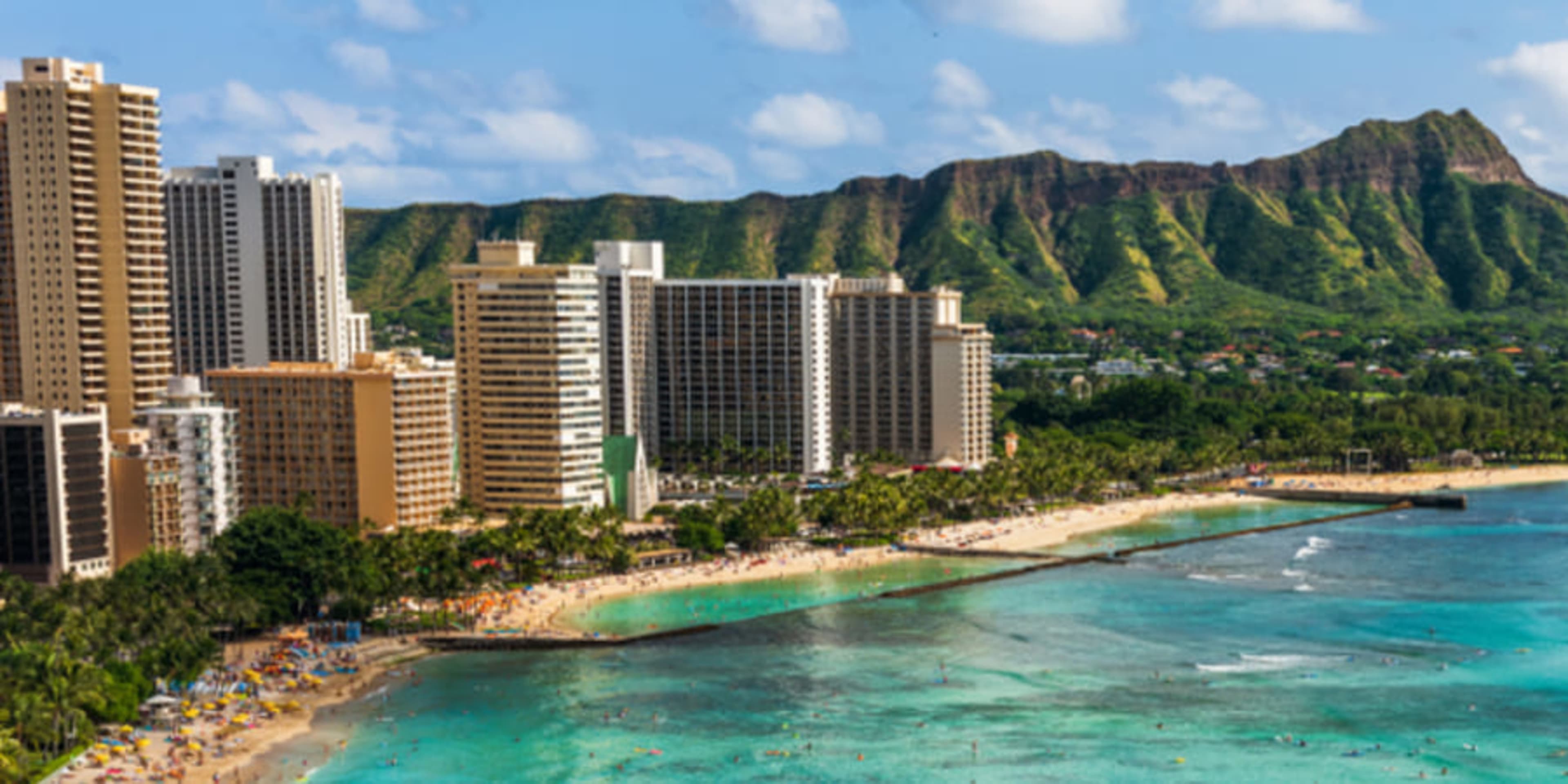

Chasing the best views on Oahu? Start high. The island’s crater rims, ridgelines and cliffside lookouts serve up wide-open horizons where bays, reefs and skylines slot into place like neat puzzle pieces. From paved lighthouse paths to stair-stepping ridge trails, you can pick a route that matches your energy and still experience big, widescreen scenery. We’ve gathered our favorite Oahu viewpoints, what you’ll see from each one, and when to go for the best light. Expect Ko‘olau cliffs, offshore islets, city towers and long stretches of beach all in one carefully curated list.
Pu‘u ‘Ualaka‘a (Tantalus lookout)
If you want a one-stop, all-in view of Honolulu without the long hike, head up the Tantalus and Round Top switchbacks to Pu‘u ‘Ualaka‘a State Wayside. The lookout opens a sweeping arc that runs from Diamond Head and Waikiki across downtown’s skyline to the harbor, with the Pacific filling the frame. Closer in, you’ll pick out Punchbowl Crater and the neighborhoods stepping down the slopes.
On clear days after a shower, the Ko‘olau ridges look ultra-crisp behind the city, and you can sometimes trace the ribbon of Interstate H-3 disappearing into the mountains. We love this viewpoint for its flexibility: midday delivers clean detail; golden hour warms the towers and turns Kapi‘olani Park into a textured green patchwork; blue hour brings a grid of lights across town. Walk the short loop path for alternate angles and foregrounds like native plants or the curved stone wall to anchor your composition. For orientation, place Diamond Head to your right, Kewalo Basin in the middle distance, and Honolulu Harbor off to the left. It’s the perfect first-look stop to understand how the city nestles between crater, mountains and sea.
Nu‘uanu Pali Lookout, Ko‘olau Cliffs
Few places showcase Oahu’s windward side like the Nu‘uanu Pali Lookout. The vantage sits on the Ko‘olau cliffs above the gap where trade winds funnel through, which is why the air feels lively the moment you step out. Spread in front of you, Kāne‘ohe Bay curves from Mokapu Peninsula to the fishpond-dotted shoreline near Kualoa, while the patchwork of reef flats and the famous sandbar paint pale turquoise across the water. Look south and you’ll trace the H-3’s elegant viaducts crossing the Nu‘uanu valley, tucked neatly against the cliffs; look north for Mokoli‘i islet (Chinaman’s Hat) sitting off Kualoa Point. Look down and you can also spot the old Pali Road snaking through the forest, a throwback thread of history—interpretive signs outline the decisive 1795 battle and help you map landmarks to the story.
We like this stop just after sunrise when the Ko‘olau shadows still sweep the fields and the bay turns a bright, glassy blue. Late afternoon brings warm light across the pali faces and strong definition in the folds. Because you’re perched right on the cliff line, you get that dramatic drop from mountain to plain in a single glance. Bring a light layer for the steady breeze, take a slow lap around the rail to frame the bay from different angles, and take in a view that maps the layout of windward Oahu splendidly.
Diamond Head summit, Waikiki and Kahala

Diamond Head summit, Waikiki and Kahala
Scale the inside of a volcanic crater and stand on its rim with Waikiki at your feet. The Diamond Head (Lē‘ahi) Summit Trail leads through a tunnel, up stair sets, and onto historic military platforms where a 360-degree panorama waits. To the west, the skyline stacks neatly along the curve of the shore, Kapi‘olani Park’s lawns unfold in a green sweep, and surfers trace lines across the reef breaks from Queen’s to Ala Moana. Pivot east and you’ll spot the residential arc of Kahala, Koko Head rising beyond, and the deep blue of the Ka‘iwi Channel. Look inland and the Ko‘olau ridges frame the city like a stage set.
We love sunrise here for soft color and long shadows that shape the crater walls; mid-morning helps the ocean’s turquoise bands pop. The restored military stations, range finders, and coastal defense placements add texture and context. The trail itself feels like a mini adventure—tunnel, switchbacks and lookout platforms—so the payoff arrives with a real sense of story. Give yourself time to linger at the summit to take in the full sweep—it’s the classic Honolulu view for good reason.
Koko Head railway summit, Hawai‘i Kai and beyond
For those who like a challenge with their views, the Koko Head Railway Trail climbs the old tramway straight up the crater’s spine to a breezy summit platform. As you ascend, the panorama grows layer by layer. Turn around partway and you’ll already see Hawai‘i Kai’s marina shimmering like a maze, Kuapā Pond’s curves holding neighborhoods together and Maunalua Bay lifting into view. From the top, the scene expands in every direction: Hanauma Bay’s horseshoe of reef glows green-blue to the east, Koko Crater’s rim wraps behind you, and the ridgeline runs toward Makapu‘u and the offshore islets. On clear days, you can pick out Moloka‘i and even Maui on the horizon.
We like late afternoon when Maunalua Bay turns sleek and the marina’s channels reflect warm light, though mornings feel naturally crisper and cooler. Bring grippy shoes, water, and a steady pace; the railroad ties vary in height, and the summit rewards every step with a steady breeze and unbeatable perspective on Oahu’s southeast corner. Walk the short dirt paths around the top to switch up your angle on Hanauma and spot the blowholes sending white threads into the air along the shore. The mix of crater geometry, city patterns below, and open ocean makes this viewpoint a top pick for anyone who loves big, graphic landscapes.
Lanikai Pillbox (Ka‘iwa ridge), Kailua and the Mokes
Short, punchy and packed with scenery, the Lanikai Pillbox hike climbs a sandy ridge above one of Oahu’s most photographed beaches. The reward is a front-row seat to Kailua Bay’s color wheel, with the twin Mokulua islets anchoring the scene in clean symmetry. From the first pillbox, scan south for Waimānalo’s long sweep and the limestone ramparts around Bellows; look north for the curve of Kailua Beach, Popoia Island sitting just offshore, and the inland mirror of Kawainui Marsh. Pivot mauka (inland) and the Ko‘olau cliffs rise in folded greens, giving you an instant sense of how the mountains shape windward weather and water.
We like sunrise for pastel glow over the Mokes and quieter trails, though late afternoon brings a warm sheen to the bay and highlights the ridge textures. The World War II-era bunkers add a platform for wide shots and a bit of history beneath your feet. If you want a slightly different angle, continue to the second pillbox and shoot back toward Lanikai’s coconut palms and turquoise shallows. With minimal effort for maximum view, this spot belongs on any list of Oahu’s best coastal vantage points.
Makapu‘u Point Lighthouse Trail, Ka‘iwi state scenic shoreline

Makapu‘u Point Lighthouse Trail, Ka‘iwi state scenic shoreline
The Makapu‘u Point Lighthouse Trail earns its place on every viewpoint list with an easy, paved climb and a huge payoff at the top. The overlook sits above the 1909 lighthouse, and from there the Ka‘iwi Channel spreads out in a deep, mesmerizing blue. Straight ahead, Manana (Rabbit Island) and Kaohikaipu sit like sculpted stones, while to the left the long beach of Waimānalo arcs along the coast toward the Ko‘olau ridges. Look back to see Koko Head and Koko Crater forming a twin backdrop to Hawai‘i Kai, with the coastline stepping away in lava shelves. Winter adds a bonus: humpback whale spouts dot the channel as the giants cruise their seasonal route.
We love this trail at sunrise when the offshore islets catch pastel tones and the cliffs pick up soft gold, but any time of day delivers a satisfying panorama. Informational signs along the way help identify plants, seabirds, and geological features so you can put names to what you’re seeing. At the top, linger on the benches, scan the horizon for dolphins and boats, and trace the reef lines along Waimānalo’s shore. It’s a pure east side view with drama to spare and a smooth approach that fits into any Oahu itinerary.
Kuli‘ou‘ou Ridge summit, Ko‘olau crest
Kuli‘ou‘ou Ridge trades a city start for a true mountain-top perspective. The trail winds through ironwoods and native forest before stepping up wooden stairs toward the Ko‘olau crest. At the summit, the view opens suddenly and dramatically: Waimānalo’s beaches glow far below, the offshore islets sit like commas in the channel, and the Ko‘olau spine runs north and south in a jagged, emerald line. Turn west for a look back over Hawai‘i Kai to Maunalua Bay and Koko Head; look east for a full sweep of windward Oahu, from Mokapu Peninsula to the ridges above Lanikai.
We love how this viewpoint feels balanced—you get both coastlines from one perch, which helps you understand the island’s narrow waist. Clouds often move quickly along the crest, gifting shifting light and shadow that sculpt the valleys. Pack layers for the breeze, water for the climb, and take your time on the final steps; the payoff feels like a secret balcony over two different worlds. Photographers can frame the leading lines of ridge fences and stairs into their compositions, while hikers will enjoy a well-worn, clearly marked route that delivers a mountain experience without difficult technical sections. It’s a satisfying summit with a panorama that rewards each switchback with something new to spot.
Ehukai Pillbox, North Shore coastline
Above Sunset Beach, a short, shaded climb leads to the Ehukai Pillbox lookouts, where the North Shore spreads in a glittering arc. From the bunkers, look left toward Banzai Pipeline and the long, sandy reach of Pūpūkea; look right for Waimea Bay’s perfect crescent and the headland leading to Hale‘iwa. In winter, lines of swell stack along the reefs and you can watch surfers queue into peaks from a calm, elevated seat. Summer flips the script: glassy water, snorkeling in nearby coves, and a coastline painted in soft blues and pale golds. Inland, the Waianae Range rises in a gentle silhouette, and the far point of Ka‘ena anchors the horizon.
We like late afternoon here when the water picks up texture and the light warms the trees that frame the trail. The bunkers give you a stable platform for wide shots and a dash of history, while the canopy keeps the hike pleasant even on warm days. This viewpoint pairs beautifully with a beach stop below, turning a quick climb into a full North Shore afternoon.
Mount Ka‘ala boardwalk, Waianae Range high point
Oahu’s highest summit, Mount Ka‘ala, offers a different kind of view: a mountaintop native cloud forest with windows that open suddenly over the island when the clouds lift. The trail from the Waianae side climbs through ridges and boulder sections to a protected boardwalk that crosses a rare bog ecosystem. As you navigate the walkway, look for endemic plants and listen for native birdsong. When you reach the radar station perimeter and the edge viewpoints, the scale clicks into place. To the west, the Waianae Coast stretches from Mākaha to Mā‘ili in a string of beaches and towns backed by deep blue water. Pivot north and you can trace the curve of the North Shore toward Ka‘ena Point; look east and the central plain slides toward Schofield and Wahiawa, with the Ko‘olau ridges forming the far boundary.
It’s all about perspective here: you feel how the island’s mountain ranges cradle the plains and divide windward from leeward weather. The summit environment is special—boardwalks protect the fragile habitat—so step carefully and linger where viewpoints open. On clear days, you’ll get a panorama that reaches across Oahu; on misty ones, you’ll enjoy the moody details of a native forest above the clouds.
Pu‘u Ma‘eli‘eli, Kāne‘ohe Bay and the sandbar

Pu‘u Ma‘eli‘eli, Kāne‘ohe Bay and the sandbar
For a manageable hike with a huge windward payoff, Pu‘u Ma‘eli‘eli delivers. The trail begins near Temple Valley and winds through forest to a small bluff above He‘eia with a front-row seat to Kāne‘ohe Bay. From the top, the famous sandbar glows light jade at low tide, a patchwork of channels and reefs etched into the water. Mokoli‘i (Chinaman’s Hat, pictured) sits cleanly off Kualoa, while Coconut Island (Moku o Lo‘e) anchors the middle of the bay near the research pier. To the south, the He‘eia fishpond forms a graceful crescent along the shore; to the north, the Jurassic folds of the Ko‘olau drop straight to the water near Kualoa Regional Park.
Time your visit for mid to late morning on a clear day to catch bright color in the bay; late afternoon warms the ridges and adds layers of shadow that define the valleys. Pack water and shoes with traction for a couple of short, steep bits, and bring a snack to enjoy at the top. For photos, use overhanging branches to frame the scene or step to the far edge for a wide, clean horizon. It’s a compact adventure with an outsized view of one of Oahu’s most beautiful bays.
Looking for more Oahu inspiration? Discover more things to do on the North Shore and check out our guide to the best free downtown attractions.
Step up your sightseeing with Go City®
We make it easy to explore the best a city has to offer. We’re talking top attractions, hidden gems and local tours, all for one low price. Plus, you'll enjoy guaranteed savings, compared to buying individual attraction tickets.
See more, do more, and experience more with Go City® - just choose a pass to get started!
?_a=BAVHyiE80)