
Christmas in Amsterdam

Published: July 18, 2024
Fireworks over the iconic Amsterdam canal houses

The festive period sees the historical streets of Amsterdam transform almost entirely, embracing the festive period in any way it can. Should you find yourself in Amsterdam around the holidays, you’ll see the streets lined with all manner of light and art displays, and many busy squares occupied by different holiday-themed events, festivals and markets.

As the Netherlands celebrates more than just Christmas Day, the festive atmosphere is all the more electric in Amsterdam all through December. If you’re looking for somewhere to truly embrace the holiday spirit, then Christmas in Amsterdam could be the trip for you.

Sinterklaas
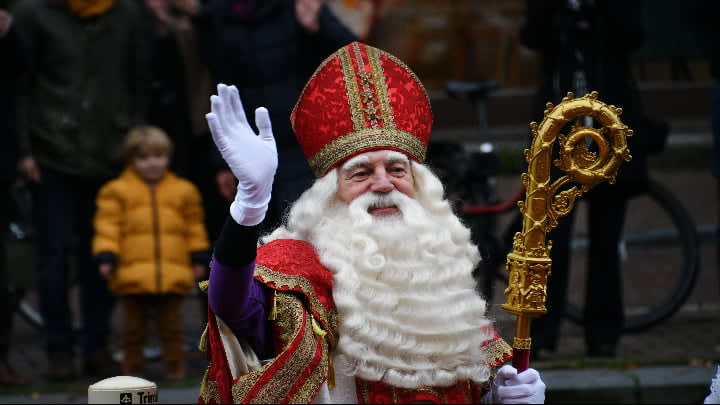
Image of Glove, Adult, Bride, Female, Person, Woman, Festival, Boy, Child, Male,

Should you find yourself spending the holiday season in Amsterdam, you may be in for a treat, with not just one but two Christmases to celebrate. This is the reality for children throughout the Netherlands who, in addition to celebrating Christmas Day, also look forward to a visit from Sinterklaas on December 5. In the Netherlands, Sinterklaas is the main day for gift-giving, while Christmas is more commonly reserved as a day to celebrate with family over a traditional dinner.

Unlike Santa Claus, who elsewhere visits in secret on the night of the 24th, Sinterklaas (Saint Nicholas) makes a very public and grand entrance in mid-November. Arriving in the Netherlands on his iconic steam boat, Sinterklaas and his helpers, known as ‘Pieten’, parade through the country’s major cities, throwing candies and festive treats to the onlooking children.

These festivities continue all the way up to the day of Sinterklaas on December 5, when children across the country wait excitedly to hear a knock on their front door. If they’ve been good that year, they should find their gifts on the other side. It’s also traditional for children to leave a shoe or boot by the fireplace or door, which they may find filled with small gifts when they wake the next day.

Unlike Christmas Day and Boxing Day, Sinterklaas isn’t recognized as a public holiday. As such, don’t fret if you have nobody to celebrate with, as most cafés, bars and restaurants will still be open should you want to share in the festivities!

Christmas Markets

Image of Urban, Handbag, Person, Backpack, Apple,

It’s become somewhat of an unspoken rule for major European cities to offer up a vast selection of Christmas markets and festive celebrations throughout the holiday period, and Amsterdam certainly doesn’t disappoint.

Where Amsterdam departs from the European trend is in the absence of German-style Christmas markets. While you’re bound to find some similarities, Amsterdam’s Christmas markets are traditionally Dutch through and through.

Amsterdamsche Kerstmarkt

The Amsterdamsche Kerstmarkt is perhaps the most emblematic Christmas market in Amsterdam. Held over the course of a few days shortly before Christmas Day, the event is host to various stalls selling all manner of festive fare and local artisan crafts.

In addition to the market stalls, you’ll also find an ice skating rink, various children’s activities, cultural events and workshops, as well as food stalls and winter bars, all often accompanied by live festive music. Be sure to check for updates from the organizers to find details as to the location and dates of this event.

Sinterklaas & Funky Xmas Sunday Markets

Early in December, Amsterdam’s monthly Sunday market transforms into a more holiday-themed market in celebration of Sinterklaas. Head to the Westergasfabriek to find a selection of handmade crafts and gifts, alongside all manner of festive treats and food.

This market makes a return later in the month for the Funky Xmas market when, as per its name, it takes on a more groovy and Christmassy theme. Often taking place shortly before Christmas day, this is a chance to find those last-minute, quirky gifts made by local artists and designers to bring home to your loved ones.

Of course, you’ll still find all of the typical staples of the Sunday market present at these special editions. For some traditional Dutch street food, be sure to try out the likes of kibbeling cod bites and poffertje pancakes.

Christmas Treats

Image of Food, Sweets,

If sweet Dutch treats are something you’re keen to try, there’s no better time to visit Amsterdam than during the festive period. Throughout November and December, stores and bakeries will be brimming with Sinterklaas- and Christmas-themed candies.

Among the most common Sinterklaas treats are pepernoten and kruidnoten (tiny gingerbread cookies), large solid chocolate letters, schuimpjes (foam-like sugary candies), speculaas cookies and various marzipan-based cakes.

You can also expect to find many festive European staples on offer throughout the city, such as smoked sausage (rookwurst), mulled wine (gluhwein) smoked sausage and warme Chocomel (hot chocolate). Be sure to try oliebollen (fried dough balls) and appelbeignets (fried apple slices) dipped in icing sugar, too!

Christmas Activities & Events

Image of Person, Rink, Skating,

Ice*Amsterdam

If there’s anything that best reflects Christmas in Amsterdam, it's the Ice*Amsterdam festival. Taking over the busy Museumplein, this event typically starts in mid-November and lasts all the way until late January.

With an ice-skating rink at its core beneath a replica of the well-known Skinny Bridge, people of all ages flock to the area to share in some festive fun. The rink is accompanied by a healthy selection of winter bars where you can grab a hot cup of chocolate milk and a Christmas snack, alongside various market stalls selling all manner of seasonal gifts and products.

Amsterdam Winter Paradise

Those looking for that little bit of extra excitement should head for RAI Amsterdam which, from late December, becomes host to a huge indoor and outdoor holiday festival. Alongside the usual smattering of seasonal market stalls, street food and winter bars, the Winter Paradise offers an impressive array of festive activities.

You can expect fairground rides to accompany the giant Ferris wheel overlooking the city, alongside various carnival games and activities. There are also indoor and outdoor ice-skating rinks, curling lanes and competitions, as well as an area filled with real snow for tubing, skiing and snowball fights. If you’re the competitive type, be sure to join in on the Winter Games, too.

Amsterdam Light Festival

Running alongside the holiday season, the Amsterdam Light Festival illuminates the Dutch capital with an impressive array of light displays from designers, artists and architects from around the world. Taking place throughout December and January, the festival typically showcases around 30 unique art installations, bringing an even more magical touch to an already festive city.

One of the most popular activities of the Light Festival is to take a canal cruise in the evening. These boat tours offer a chance for visitors and locals alike to see the city from a different perspective, offering unique insights into the history of prominent neighborhoods while also exploring the artworks lining the banks of the canals.

Robert Heaney
Go City Travel Expert

Continue reading

Canal houses over a canal bridge
Blog

3 Days in Amsterdam

Known worldwide for its unique mix of extensive history, intriguing culture and renowned social hubs, Amsterdam is one of Europe’s most popular city break destinations. Many of the city’s top attractions are nestled together within a compact city center, making the Dutch capital ideal for weekend getaways and whirlwind trips. While you’re sure to find more than enough to last you a number of weeks, three days in Amsterdam is plenty of time to explore some of the best attractions that the city has to offer. In place of a strict, linear itinerary, we’ve put together a selection of our top recommendations for things to do within a three-day trip, along with recommended visit durations to help you plan your own itinerary. Must-Do Museums Rijksmuseum Recommended Visit: 2 - 4 hours Perhaps the most well-known hub of history and culture in Amsterdam and easily one of the most important museums in the Netherlands, the Rijksmuseum dominates the Museumplein with its striking Gothic- and Renaissance-style architecture. Officially opened to the public in 1885, the site is now home to a vast collection of historical artifacts chronicling over 800 years of Dutch history, along with an impressive collection of artworks by some of the Netherlands’ own master painters. Among its most popular pieces are works by Vermeer and Van Gogh, with Rembrandt’s famous The Night Watch taking pride of place. Amsterdam Museum Recommended Visit: 1 hour Combining both historical artifacts and striking artworks, the Amsterdam Museum stands as the Netherlands’ most complete public chronology of the Dutch capital’s history. The museum sits within the canal band, just a short walk from the Royal Palace of Amsterdam. The museum documents the city’s growth from a thirteenth-century settlement on the banks of the River Amstel to the thriving cultural center we know today. Everything from archaeological finds and historical artifacts to the works of such Dutch masters as Rembrandt help to paint a picture of life in Amsterdam and the Low Countries as a whole throughout various periods in history. Van Gogh Museum Recommended Visit: 1.5 - 3 hours Among Amsterdam’s extensive selection of globally significant art galleries, the Van Gogh Museum remains the king. Understandably a great source of cultural and artistic pride for the Netherlands, the site houses the world’s most complete collection of works by history’s most famous painter. Attracting art aficionados and curious visitors alike from the world over, the museum is home to over 200 of the Dutch artist’s paintings, alongside more than 500 drawings and 700 letters. The site also hosts a rolling series of temporary exhibitions related to the works of Van Gogh, his contemporaries and his impact on the art world as a whole. Anne Frank House Recommended Visit: 1 hour Perhaps the most visited historical site in Amsterdam is the Anne Frank House. Left virtually untouched structurally for the best part of a century, this unassuming canal house now serves as a museum and potent reminder of the difficulties and religious persecution experienced by jews and other minority groups during the Second World War. Originally the premises of the Frank family business, the building would later come to house the hiding place in which the family of the famous wartime diarist evaded German capture for almost two years. While the house is now empty of most original furniture, the original annex in which they hid still stands, continuing to breathe the tense atmosphere of the period. Engaging Activities Heineken Experience Recommended Visit: 90 minutes Historic home to one of the world’s most lauded beer brands, Amsterdam’s Heineken Experience takes visitors on a unique behind-the-scenes journey through the creation and history of the globally popular pilsner. The tour guides visitors through every aspect of production, from inception to brewing to marketing, before rounding off with a much-anticipated tasting session. Nightlife Recommended Visit: – Among many other things, Amsterdam is renowned for offering one of the best nightlife scenes in all of Europe. Popular venues can be found throughout the city, but as a general rule of thumb, the old area of Jordaan is typically very popular with young people for its trendy bars. Nes typically attracts more of an intellectual theater crowd, and the clubs on Leidseplein and Rembrandtplein serve as a fantastic end to the night. Retail Therapy Recommended Visit: – If you’re looking to grab some European bargains or to pick up a souvenir or two from your trip, Amsterdam has you sorted. The Negen Straatjes (‘Nine Streets’) is a collection of narrow, historical streets at the heart of the canal district, replete with charming cafés and restaurants alongside a wide selection of both unique, independent stores and chain boutiques. For the best retail experience that Amsterdam has to offer, you’ll want to take yourself to Kalverstraat and Leidsestraat, as well as the Kalverpassage shopping mall that connects the two. The Magna Plaza is your best bet for more of an independent mall experience, while De Bijenkorf is your best source for all things designer and luxury. Outdoor Escapes Canal Cruise Recommended Visit: Varies per provider Most likely the first thing most people associate with Amsterdam is its iconic waterways. Originally serving as means of water management, defense and facilitating trade, the capital’s labyrinthine canals accounts for 25% of the city’s surface area. With tourism now accounting for a huge portion of Amsterdam’s economy, the canals have evolved to serve largely as a unique means for visitors to explore the city from a new perspective. There’s a whole host of canal tour operators providing excursions through the city center, often accompanied by valuable local insights into the cultural and historical significance of many of Amsterdam’s top attractions. ARTIS Royal Zoo Recommended Visit: 2 hours One of the oldest zoos in Europe, the Natura Artis Magistra was established in the mid-1800s and has since continued to offer an enchanting escape from the busy streets of Amsterdam for families and nature lovers alike. Commonly known simply as ARTIS, the location comprises both a botanical garden and zoological garden. Home to over 200 unique species of trees – many on the brink of extinction – alongside over 900 animals from all manner of habitats around the world, the zoo serves to educate visitors as to the vital role that every living creature plays in nature. The site is also home to an aquarium, a planetarium and an impressive art and sculpture collection. Parks Recommended Visit: – For a brief escape from the bustling city streets, Amsterdam is home to a wide selection of beautifully serene green spaces. Most popular among these is the Vondelpark, whose 120-acre footprint houses ancient trees, scenic lakes, charming gardens and a variety of delightful bars and cafés. Westerpark is another popular choice as, connecting to the Westergasfabriek complex, it serves as a home to some of the city’s most hip bars and restaurants, along with an arthouse cinema. Visitors can hire a boat to cruise along the Haarlemmerweg canal into the city, or attend some of the great food and music festivals hosted in the park throughout the year. Getting Around Public Transport While most of the city center is easily accessible on foot, with most top attractions rarely more than a short walk from one another, Amsterdam’s extensive public transport system can be a huge boon for getting your two-day itinerary rolling smoothly. Between the capital’s three primary bus operators, 14 tram lines and 39 citywide metro stops, you should have no trouble at all hopping from the likes of the Rijksmuseum straight to Westerpark at your leisure. If you’re trying to cover a lot of Amsterdam in a limited amount of time, public transport can often cut your journey time by at least half when compared to simply walking. All of the services within the Amsterdam public transport system are integrated with each other, meaning any multiple-use pass you purchase will be valid on any mode of transport. You can buy single- or multi-use tickets at most transport hubs, alongside passes valid from anywhere between 24 and 96 hours should you plan to use public transport fairly regularly. Cycling If you’re looking for the full Amsterdam experience, then there’s nothing more truly Dutch than exploring the city on your own set of wheels. With over 470 miles of cycle lanes making up the Amsterdam Bicycle Network, cycling is easily one of the most convenient means of getting around. Most rental shops dotted throughout the city offer rates of around €10/day. On the Water While we’ve already covered the value of Amsterdam’s canals for providing a new perspective on the city, they also serve as a great way to get around the city center. A ticket for a hop-on, hop-off boat tour can last you the whole day or even your whole trip and offers much the same experience as other tours, while also operating regular stops to help you get from A to B. That being said, given the limited range of the canals, it should be noted that this is not a viable means of traversing the whole city.
Robert Heaney
Amsterdam canal houses and bridge reflected in a still canal
Blog

Things to do in Amsterdam

One of the most renowned cities in Europe, Amsterdam is known the world over for its wealth of unparalleled cultural, historical and social hubs. All manner of visitors flock to the Dutch capital to walk in the footsteps of world-famous artists, explore streets and squares brimming with character and to cash in on some of the best nightlife on the continent. Unlike many other seasonal destinations, Amsterdam manages to deliver some of the most engaging activities and attractions year-round. Whether you're an art aficionado or a beer connoisseur, you'll find that there's never any shortage of great things to do in Amsterdam. Museums & Art Galleries Rijksmuseum One of the most important museums in both the Netherlands and indeed Europe as a whole, the Rijksmuseum stands as the largest museum in Amsterdam. Dominating the popular Museumplein, the museum is easily one of the most recognizable monuments in the city, most notably for its striking Renaissance- and Gothic-inspired architecture. The grand halls of the Rijksmuseum are home to a vast collection of art pieces and historical artifacts, illustrating the art and history of the Netherlands from the Dutch Golden Age to present day. Among its more than 8,000-strong collection are priceless pieces from such renowned Dutch artists as Rembrandt and Vermeer, including the former’s famous Night Watch painting. Amsterdam Museum Combining both historical artifacts and striking artworks, the Amsterdam Museum stands as the Netherlands’ most complete public chronology of the Dutch capital’s history. The museum sits within the canal band, just a short walk from the Royal Palace of Amsterdam. The museum documents the city’s growth from a thirteenth-century settlement on the banks of the River Amstel to the thriving cultural center we know today. Everything from archeological finds and historical artifacts to the works of such Dutch masters as Rembrandt help to paint a picture of life in Amsterdam and the Low Countries as a whole throughout various periods in history. Van Gogh Museum Having lived and worked in the Netherlands throughout his life, it’s only fitting that Amsterdam’s most significant art gallery be dedicated to the world’s most famous painter, Vincent Van Gogh. Just a brief walk from the Rijksmuseum, the Van Gogh Museum stands as the most complete permanent collection of the Dutch painter’s works. Among the gallery’s vast collection of permanent exhibits are over 200 original paintings and 500 drawings from the Post-Impressionist artist, alongside exhibitions showcasing the works of his contemporaries. The museum is separated chronologically into five periods, each exploring a different key period in his life and work. Anne Frank House Easily the most visited historical site in Amsterdam is the Anne Frank House. Once the original house in which the famous wartime diarist evaded German capture, the building now serves as a museum documenting her family’s more than two years in hiding, along with sobering insights into Jewish persecution under the Nazi regime throughout the Second World War. Located on the outer banks of Amsterdam’s canal band, visitors can explore the former premises of the Frank family business, most notably the original concealed annex in which they managed to remain in hiding. While the rooms of the property now sit empty of original furniture, they still breathe the chilling atmosphere of the period. Outdoor Spaces ARTIS Royal Zoo One of the oldest zoos in Europe, the Natura Artis Magistra was established in the mid-1800s and has since continued to offer an enchanting escape from the busy streets of Amsterdam for families and nature lovers alike. Commonly known simply as ARTIS, the location comprises both a botanical garden and zoological garden. Home to over 200 unique species of trees – many on the brink of extinction – alongside over 900 animals from all manner of habitats around the world, the zoo serves to educate visitors as to the vital role that every living creature plays in nature. The site is also home to an aquarium, a planetarium and an impressive art and sculpture collection. Vondelpark For a brief escape from the bustling streets of the Dutch capital, Amsterdam is home to a wide selection of beautifully serene green spaces. Most popular among these is the Vondelpark, whose 120-acre footprint houses ancient trees, scenic lakes, charming gardens and a variety of delightful bars and cafés. Westerpark Westerpark is another popular choice as, connecting to the Westergasfabriek complex, it serves as a home to some of the city’s most hip bars and restaurants, along with an arthouse cinema. Visitors can hire a boat to cruise along the Haarlemmerweg canal into the city, or attend some of the great food and music festivals hosted in the park throughout the year. Keukenhof Park If you happen to visit Amsterdam during the spring, then you should definitely consider a trip to the nearby town of Lisse. Only an hour’s train ride from Amsterdam, Lisse is home to Keukenhof Park, sometimes known as the Garden of Europe, where you’ll find the Netherlands’ best display of tulips and other flowers punctuated by the ever so iconic Dutch windmills. Getting Around Bike Rental Home to more bicycles than people, Amsterdam is a city literally built for cycling. With over 470 miles of cycle lanes making up the Amsterdam Bicycle Network, cycling can often be the easiest means of getting around. What’s more, it doesn’t get much more authentically Dutch than exploring the capital on your own pair of wheels. If you’d like to make your visit a more active one, then you can pick up a bike at one of the many rental shops spread throughout the city. You can expect to pay somewhere in the region of €10/day at most shops, while some may also offer weekly or hourly packages. Once you’re up and running, why not choose one of the city’s many stunning routes to follow for the day? Canal Boats While Amsterdam’s labyrinth of canals are certainly pretty to look at and make for a fantastic photo op, they also offer a brilliant alternative means of exploring the city. The capital’s huge boating industry comprises countless companies offering all manner of excursions through the canals. If you’re looking for a unique way to explore Amsterdam, then a hop-on, hop-off boat ride could be the ideal transportation for you. But where the city’s boating industry arguably shines brightest is in its specialist canal tours, offering visitors an overview of many of Amsterdam’s top attractions, complete with audio commentary to provide unique insights into their cultural and historical significance. Retail Therapy Magna Plaza Housed within the elegant Neo-Gothic halls of a former nineteenth-century post office, the Magna Plaza is a relatively small shopping center oozing with character and class. Among its various outlets are a number of fashion retailers, along with places to buy unique souvenirs and a host of other miscellaneous vendors. Kalverpassage Standing as a commercial through route between Heiligeweg and Kalverstraat, the Kalverpassage offers a wholly modern shopping experience. Natural light flows from the glass ceilings throughout the mini mall, illuminating its many specialty boutiques, food outlets and art installations. The design of the space allows for those interested to shop at their leisure and those simply passing through to do so without obstruction. De Bijenkorf At the beating heart of Amsterdam, De Bijenkorf – ‘The Beehive’ in English – is the Netherland’s most renowned premium department store. Established in 1870, the venue showcases the highest standard of quality throughout the stores in its roster. Luxury is the operative word here, with its five floors of outlets simply brimming with class and style. Nightlife & Entertainment Heineken Experience Historic home to one of the world’s most iconic beer brands, Amsterdam’s Heineken Experience takes visitors on a unique behind-the-scenes journey through the production and history of the popular pilsner. The tour guides beer fans through various aspects of the brewing process, from product innovation to the brand’s light-hearted marketing efforts, before rounding off with a refreshing tasting session. Bars & Clubs Europe’s most famous city for hedonistic pleasures gains its reputation largely from its bustling nightlife scene. Popular venues can be found throughout the city, but as a general rule of thumb, the old area of Jordaan is typically very popular with young people for its trendy bars. Leidseplein and Rembrandtplein are particularly popular for their club offerings, while the street of Nes often attracts more of an intellectual theater crowd, particularly around this period. Specialty Venues Few things complement a rainy day better than a steaming cup of coffee, a slice of homemade cake and an expansive collection of family favorite board games. That’s exactly the niche on which Checkpoint Charlie capitalizes. Its cozy aesthetic is bolstered by its sociable table layout, along with a variety of books and board games for customers to enjoy. The venue also hosts intimate gigs from international acts toward the end of the week. A number of venues throughout Amsterdam offer a similarly jovial atmosphere, with somewhat more of a specialty focus. Mooie Boules, for example, gives visitors the chance to sink a few beers and chat while watching or even playing a few games of classic French boules on the impressive sand pitch at its center.
Robert Heaney
Red Light District Amsterdam
Blog

Guide to Amsterdam's Red Light District

One of the most talked about parts of the city, the Red Light District in Amsterdam is a must see. Iconic or infamous - whatever the stereotypes, there's a lot more to this historic neighbourhood than its reputation suggests. Learn more with our guide to the Red Light District, Amsterdam and discover the history of the De Wallen district.  What is the Red Light district? Situated in De Wallen, Amsterdam’s medieval city centre, the Red Light District is a lively part of town that unlike most European city centres offers a whole list of usually taboo services. Everything from prostitution to legalized drugs, as well as sex shows and shops. Having a close proximity to the city’s harbour, the area has long been a destination for those looking for services of a sexual nature whether it be sailors, soldiers or gentlemen since the middle ages. However, gone are the days when it was something to be ashamed of and now sex work is recognised as a legitimate form of employment. You may question where the name has its origins. The name “Red Light District” comes from the use of neon red lights featured in the doorways of parlours. Street prostitution is illegal in the Netherlands so for many, the use of a red neon light in a doorway is a smart trick to attract customers. What’s on offer in the Red Light District? The Amsterdam Pass will give you an in-depth tour into the city’s most controversial neighbourhood with a plethora of intriguing tales and noteworthy facts of the area. Starting at 7pm, these tours start as the sun sets and the area becomes alive. Apart from the obvious offerings that spring to mind, the Red Light District also has a host of interesting shops, museums and shows. The majority of these may revolve around vice but there are also opportunities to enjoy fashion and culture. With a number of former prostitute’s windows being transformed in the area, visitors can see a flurry of exhibition spaces and studios housing fashionable clothing stores, with cool shoe and streetwear brands lining the streets. Did you know? Regulation of sex workers health was not a recent government policy. Ever since 1810, when Napoleon controlled Amsterdam, prostitution was subject to health regulation with sex workers needing to pertain a permit to acknowledge they were healthy. Unfortunately this wasn’t to protect the workers from venereal diseases but rather soldiers, who were more likely to be the source. There is estimated to be around 25,000 sex workers working in the Netherlands with the majority residing in the Red Light District. Despite De Wallen being most famous for its Red Light District, it is also home to the city’s Chinatown if you’re looking for some tasty food from the Far East. Dotted throughout the neighbourhood are small sculptures and works of art relating to the area’s sordid found fame. How to act in the Red Light District For years the Red Light District was a rough place to visit but after the legalisation of prostitution in 2000, the efforts of authorities have ensured that it has become a safe and vibrant place for tourists to visit. However, there are some unwritten rules to follow. The women (and some men) working here are doing exactly that, work, so it is best not to film them directly or take pictures. In fact, earlier this year it was made illegal to stand and stare at sex workers when in a tour group. Drinking and taking drugs on the streets in the area are also frowned upon and should be restricted to the numerous bars and coffee shops in the area. You are also reminded to not yell or cause disturbances while there. Due to the areas affinity with all things vice, you are advised to refuse all offers from traders regarding drugs and bicycles. The police impose hefty fines on both the seller and buyer when caught. How to get to the Red Light District Amsterdam? As a popular destination you can take any one of these trams to arrive there: 2, 4, 11, 12, 13, 14, 17, 24 Dam. Being at the very centre of the old town, it’s hard to get lost but be sure to carry a map wherever you go. De Wallen, also known as Rosse Burt is popular part of the city for many who will happily point you in the right direction.
Katie Waller

Have a 5% discount, on us!

Sign up to our newsletter and receive exclusive discounts, trip inspiration and attraction updates straight to your inbox.