
Barcelona in January

Firework display over the Font Magica de Montjuïc on New Year's Eve

When planning a trip to Barcelona, your mind likely goes straight to summer, when the city sees its peak tourism. However, should you find yourself looking to take a trip in winter, you may see a side to the Catalan capital that most outsiders rarely do.

Barcelona in January may be quieter than during the rest of the year, but that makes it a fantastic time to see the city in its most authentic state. What's more, should you be partial to a party or two, there's plenty of festivity to get you through the month.

Tourism in January
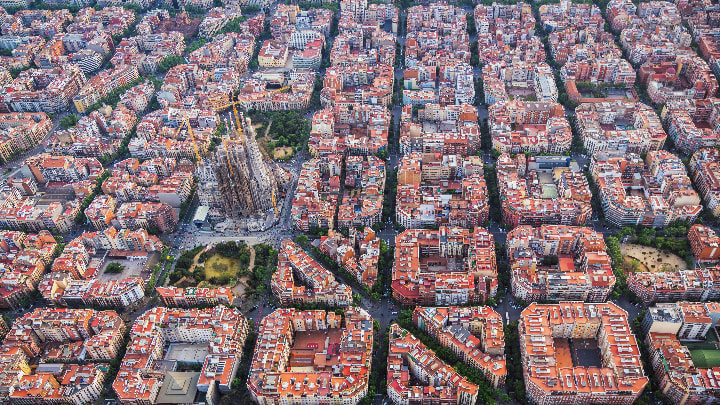
Image of Building, Cityscape, Urban, Outdoors, City,

So long as you’re prepared to pack a raincoat and put your ideas of a beach holiday on the backburner, visiting Barcelona in January may prove a real treat. Throughout the wee months of the new year, the city sees its lowest rates of tourism, which for the most part should work very much in your favor.

In the absence of the bustling droves of summer tourists, Barcelona is as tranquil as it gets come January. That means those choosing to visit in this period will get the pick of the litter when it comes to hotels, with the added benefit of comparatively lower prices.

What that also means for you in your winter wanderlust is that you’ll get to experience everything that the city has to offer without much hassle at all. With fewer crowds, you won’t have to book attractions as early as you might in summer, with some often even available to book on the day.

Take yourself on a tour of Barcelona’s attractions without having to fight for the sights. Bask in the awe-inspiring architecture of the Sagrada Familia, and explore the city’s ancient markets like a local. And if you’re an early riser, why not catch the sunrise over at Park Güell, too?

That isn’t to say Barcelona is devoid of any tourism throughout this period, though. On the contrary, there’s often still a very healthy buzz to the city around this time. In place of the usual tourist crowds, you’ll find many more locals frequenting bars and restaurants in the center than most other times of the year, giving the city a real authentic buzz.

Ski Season

Image of Nature, Outdoors, Snow, Person, Vehicle,

With the local ski season in full swing, a good portion of visitors to Barcelona in January are naturally there to take advantage of its prime location. With as many as 14 fantastic alpine resorts within a few hours’ drive from the city, Barcelona serves as a perfect hub for skiing enthusiasts.

Take a day or two to gear up before a week's trip to one of the nearby resorts, or embrace the best of both worlds in skiing through the day and returning to Barcelona in the evening.

New Year’s Eve

Image of Lighting, Fireworks, City, Metropolis, Urban,

Right from the get-go, both visitors and locals to Barcelona come together to see in the new year in style. Known as as Nochevieja in Spanish, New Year’s Eve celebrations take place throughout the city, with the most notable celebration taking place on Plaça d'Espanya by the Font Magica on Montjuïc, complete with the obligatory countdown and firework display.

In the leadup to the countdown, one of the biggest parties takes place at the Poble Español close by, offering various different music zones for fans of all genres. Up to a thousand people typically come from the world over to party until dawn.

Down in the city, many others still gather on Plaça Catalunya, often with a bottle of Cava in hand. At the stroke of midnight, many will then collectively throw their bottles into the street in celebration – much to the dismay of those who have to clean up in the morning!

Kings’ Day

The rest of January isn’t without its fair share of festivity either. Right away, just as the streets have been cleared up after New Year’s Eve, the city celebrates Kings’ Day. In tribute to the day that the Three Kings visited the baby Jesus in Bethlehem, Barcelona welcomes their ceremonial arrival on the evening of 5 January.

The Three Kings arrive by boat before beginning their annual procession through the streets of Barcelona. Traditionally, children in Spain write letters to the kings in place of Santa Claus, and on Kings’ Day they receive their gifts.

If you happen to be visiting around Kings’ Day, be sure to catch the parade and take part in some of the many local festivities. Locals are likely to be throwing parties, and stores and bakeries will be full of festive sweet treats to try out, such as Tortells de Reis, or Kings’ Cakes.

La Festa dels Tres Tombs

Image of Horse Cart, Vehicle, Wagon, Adult, Male, Man, Person, Boy, Child, Animal, Horse, Mammal,

Kids and animal lovers alike are bound to get a kick out of this Catalan celebration. The Festa Major de Sant Antoni is celebrated on 17 January in honor of Saint Anthony, who was said to have used his healing capabilities to save a number of animals.

On the first Saturday following this feast, La Festa dels Tres Tombs sees a procession of animals such as horses and donkeys parade through the streets around the Escola Pia de Sant Antoni. Alongside the parade, you can also expect to find the streets lined with stalls selling various treats and local crafts.

Wrapping Up

Barcelona in January may not typically top everyone’s bucket list, but that doesn’t mean you should rule it out. The beginning of the new year is a perfect time to experience all that the heart of Catalonia has to offer without having to battle the summer crowds.

Whether you’re an avid skier, a fiend for festivities or simply want to see Barcelona at its most tranquil, January is a fantastic time to plan a visit. Just be sure to pack for the weather!

Robert Heaney
Go City Travel Expert

Continue reading

Interior of Casa Batlló
Blog

Casa Batlló Vs Casa Milà Comparison - Gaudí Houses Compared

Gaudí masterpieces don’t come much more spectacular than Casa Batlló and Casa Milá, eye-popping architectural stars of Barcelona’s fashionable Eixample district. Designed and completed by Gaudí in the early 20th Century, these near-neighbors should be considered bucket listers for aficionados of the maestro’s work. Though, frankly, they’re pretty much essential viewing for anyone who possesses a) even a passing interest in unusual architectural design and/or b) an Instagram account. We took a closer look at these iconic Gaudí houses in our Casa Batlló Vs Casa Milà comparison. Scroll for the lowdown… Antoni Gaudí: a (Very) Short History Born in rural Catalonia in 1852, Antoni Gaudí i Cornet rose from humble beginnings to become the chief exponent of Catalan Modernisme, popularizing an architectural style that’s near-impossible to categorize but is always distinctly, inimitably Gaudí. His calling cards included geometrical forms, neo-Gothic flair, colorful mosaic tiling and structures influenced by his deep love of nature – think bones, tree trunks, butterfly wings, and so on. The majority of Gaudí’s buildings – 12 in all – can be found in Barcelona, and are among the most-visited attractions in town. We’re talking the Sagrada Família, Park Güell, Casa Vicens and two of his most flamboyant confections: the UNESCO-listed Casa Batlló and Casa Milà, all of which are included with a Barcelona pass from Go City. Find out more about the pass and how to get yours here. Casa Batlló: The Lowdown Name: Casa Batlló is named for textile magnate Josep Batlló, who commissioned Gaudí’s building redesign in 1904. It’s known locally as the casa dels ossos (house of bones), for reasons which will become apparent… Vital Statistics: Completed in 1906, it took 99 years before Casa Batlló was designated a UNESCO World Heritage Site in 2005. It’s located on the stylish Passeig de Gràcia in Barcelona’s Eixample district, and is one of the city’s most popular attractions, welcoming around a million visitors every year.  Casa Batlló in Brief: Casa Batlló is a pure flight of fantasy, with a hallucinatory exterior that will appeal to everybody from high-art aficionados to fans of Game of Thrones. Considered one of Gaudí’s crowning glories, it’s truly a sight to behold. The striking dragon-crest roof fairly shimmers with blue-and-green ‘dragon scale’ tiles. Glass, stone and ceramic mosaic gives the facade a textured, rough-hewn look, while the skeletal carapace and creepy skull-mask balconies on the lower levels are what earned Casa Batlló its ‘house of bones’ nickname. Things are no less bonkers inside, where the staircase is designed to resemble a spine and the entrance hall feels  a bit like being in an underwater cave, complete with tortoise-shell skylights. Three Highlights of Casa Batlló: The Noble Floor. The former residence of the Batlló family features a gently undulating ceiling, mushroom-shaped fireplace and huge gallery which protrudes far over the Passeig de Gràcia. Roof Terrace. Ogle fairytale mosaiced chimneys and get close-up views of the dragon’s scaly back. Indoor Garden. This highly decorative terrace, with colorfully tiled floor and flowerpots is a tiny oasis in the heart of Barcelona. Casa Milà: The Lowdown Name: Casa Milà is more commonly known locally as La Pedrera, aka ‘the quarry’, thanks to its unusual rough-hewn facade. Vital Statistics: The last house Gaudí worked on before applying himself full-time to the Sagrada Família, Casa Milá was built between 1906 and 1912, and designated a World Heritage Site by UNESCO in 1984. No more or less popular than its near-neighbor Casa Batlló, La Pedrera also attracts around a million annual visitors. Casa Milá in Brief: La Pedrera was pretty controversial when it was first built. And by controversial we mean the locals hated it. Hence the somewhat unfair nickname. History has of course been much kinder to Gaudí’s legacy and this Barcelona icon is now widely accepted to be one of the finest examples of Catalan Modernisme, all sinuous limestone curves, intricate wrought-iron balconies, and soaring mosaic-clad chimneys. Great paintings, tapestries and frescoes adorn the eye-popping interiors; rooms are also kitted out with curvaceous furnishings by Gaudí himself, each designed to slot seamlessly into the building’s flowing waves and curves. Three Highlights of Casa Milá: Roof Terrace: a total of 28 extraordinary warrior-like stone chimneys stand sentinel on the Casa Milá rooftop, vying for attention against some fairly spectacular 360-degree views of the city skyline. The Whale Attic. Come over all Jonah as you enter what appears to be the belly of a leviathan, thanks to 270 arches representing a whale’s ribcage. If that’s not enough, there’s also a quite excellent Gaudí exhibition to explore up here. Courtyards don’t come much trippier than La Pedrera’s Flower Courtyard and Butterfly Courtyard, in which you can expect fantastical shapes and colors, complemented by beautiful blooms and great Ballard-esque insects that are quite at odds with the far more sober exterior. Casa Batlló Vs Casa Milà Comparison: Which is Best? Who could possibly pick a favorite from these two extraordinary Gaudí Houses? Both Casa Batlló and Casa Milà are like nothing you’ve seen before, each with its own set of architectural quirks and fantastic visual spectacles. Here’s the good news: you don’t have to visit just one or the other. Not only are these dreamlike townhouses just a few minutes’ walk from each other; both are included with a Barcelona pass from Go City. The pass is ideal if you’re planning to see a number of top attractions on your vacation, and includes entry to Casa Batlló and Casa Milà, plus other Gaudí masterpieces including Casa Vicens and tours of the Sagrada Família and Park Güell. It also gives you access to many more Barcelona tours, activities and attractions, like the Picasso Museum and Barcelona Zoo, and could save you up to 50% on regular prices. Find out more about the pass and get yours here. Save on Attractions, Tours and Activities in Barcelona Save money on Barcelona attractions, tours and activities with a pass from Go City. Check out @GoCity on Instagram for the latest top tips and attraction info.
Stuart Bak
Stuart Bak
The W Barcelona Hotel viewed from the coast
Blog

Barcelona in June

As the final frontier before the gargantuan waves of summer tourism, June serves as a unique period of limbo for Barcelona quite unlike the rest of the year. Combining both the early bird tranquility of off-season travel and the electric ambience of peak tourism levels, June sees Barcelona at what is perhaps its most genuine. Whether you’re most keen on its buzzing nightlife, world-renowned beaches, celebrated cultural sites or wealth of incredible events and festivals, a visit to Barcelona in June is sure to help you experience the city at its best. Tourism in June June in Barcelona, as in May, serves as somewhat of a transitive stage for the city. With the winter tourism lull now long passed and the waves of summer visitors yet to come, the May and June ‘shoulder season’ sees tourism rates somewhere in the middle of the two. Many consider this period the best time to visit Barcelona, offering the best of both worlds of the city’s famous bustling atmosphere and nightlife without the overcrowding and queues characteristic of summertime traffic. Visitors in June get the rare chance both to see the Catalan capital thriving with life and to experience its attractions, culture and history without much of a hitch. Visiting Barcelona in June therefore offers a fantastic opportunity to experience the city at its best. Take yourself on a tour of Catalonia’s most celebrated architecture, explore the many cultural hotspots atop Montjuïc, or walk in the footsteps of your favorite soccer legends at Camp Nou. Weather in June June brings with it very pleasant temperatures typically falling between the mid-60s and high-70s, alongside some fairly consistent sunshine and a relatively low chance of rain. That gives June a slight edge on May’s more mild weather and the often overly hot and humid summer climate. If sunbathing on the beach, going for a dip in the Mediterranean or taking a relaxing stroll through the park are up your alley, June is the ideal time to do so. You’ll get to enjoy some of the best weather of the year without having to share it with quite so many others! What to Do in June While the vast majority of Barcelona can be enjoyed throughout the year, conditions in June are ideal for more outdoor-based activities. At the same time, the steadily increasing tourist numbers also mean that the most popular indoor attractions such as the Sagrada Familia can become pretty busy at times. If you’re looking to make the most of the weather, the city’s famous beaches and vast selection of parks are the best way forward. Although they’re bound to be relatively busy with many other visitors having the same idea, they’ll still be far less crowded than in the summer months. And what’s more, aside from the likes of Park Güell’s Monumental Zone, most of them are totally free to enjoy! In much the same way, the weather in June makes it a perfect time to take a tour of the city’s famous diversity of architecture. Spread across the city, you can easily spend a full day or two exploring the works of celebrated Modernist architects like Antoni Gaudí, alongside the more historical buildings common throughout the Gothic Quarter. Music Festivals Primavera Sound Festival – Typically held in early June, Primavera Sound stands as one of the city’s most hotly anticipated music festivals. In contrast to many other music events taking place throughout the year, Primavera Sound is host to a diverse lineup of genres comprising everything from jazz and hip hop to folk and alternative rock. Previous editions of the festival have performances from the likes of Arcade Fire, Pet Shop Boys and White Stripes. While the main sets typically take place over the course of a weekend, the event runs for around a week in total, with additional gigs and performances hosted across the city. Sónar Festival – One of the oldest and most well-known festivals in Europe, Sónar brings together thousands of electronic music fans from across the continent. Taking place over a weekend in mid-June, the festival is typically split into three events, often held in different locations. Sónar de Día offers a selection of concerts and performances taking place throughout the day. Sónar de Noche takes the event into the evening, showcasing some of the biggest names in the electronic scene. Sónar+D offers an accompanying program of creative technology experiences, including digital workshops, product tests and hands-on virtual reality activities. Brunch in the City/Park – June serves as somewhat of a bridge between these two long-running events. Brunch in the City runs from March to June and consists of weekly electronic festivals featuring various international DJs, along with food and beer tents and activities for all ages. The City edition of the event is often regarded as a warm-up to the main summer event, Brunch in the Park. Held on Montjuïc, the Park edition offers much of the same as its little brother, only on a larger scale and running from late June to September. Festival Jardins Pedralbes – Hosted in the gardens of the Palau Reial de Pedralbes, this open-air music festival is host to a series of concerts throughout June. The event showcases both big international names and emerging artists between its two stages. The pleasantly cool evenings of June serve as a fantastic opportunity to relax in these historical gardens with a glass of cava and enjoy a fantastic variety of musical performances. Local & Cultural Events Nit de Sant Joan – Held in celebration of the Summer Solstice, the Feast of Sant Joan is a truly electric event and host to a plethora of crazy parties. Often known as the Nit del Foc (Night of Fire), locals embrace the coming of summer with fireworks and fire displays. Many hold their own parties with friends to celebrate this shortest night of the year, while others take to the beach with picnics and cava to enjoy the bustling ambience. Groups of musicians and performers will also often come together to provide a live soundtrack to the festivities. Corpus Christi – One of the oldest celebrations in Barcelona, the Día del Corpus Christi is a Catholic festival held in honor of the Eucharist. The festival dates back over six centuries and is truly a sight to behold, most notably for the Processó de Corpus Christi and Giants’ Ball processions featuring various giant religious figures and animals of Catalan legends. Barcelona Gay Pride – Joining many other major cities in celebrating the LGBT community, Barcelona’s Gay Pride festival takes place over the course of a week in late June. The event is host to a variety of activities, live performances, talks and exhibitions, culminating with a fun and engaging parade open to all who wish to join. Wrapping Up While every traveler varies in their preferences, it’s difficult to dispute June as one of the very best times to visit Barcelona. Offering peak weather conditions, a bustling yet not overly busy atmosphere and a whole host of exciting events, Barcelona in June truly offers a fantastic balance for just about any visitor to enjoy.
Robert Heaney
Palau Nacional light show in the evening
Blog

Barcelona in May

In the wake of winter and the anticipation of summer, Barcelona in May offers what many consider to be the best of both worlds. Throughout this period, visitors get to experience the busy and electric ambience that the city is known for, while also being able to reap the benefits of visiting ahead of the summertime crowds. Whatever your travel style may be, this is likely the ideal time to plan a visit. If easily accessible attractions and a thriving nightlife aren’t quite enough to convince you, then perhaps the wealth of celebrations and events taking place throughout the city will be. Tourism in May With winter now a distant memory and springtime too on its way out, Barcelona begins a sort of metamorphosis in anticipation of the coming summer months. The beginning of the city’s first ‘shoulder season’, May marks the beginning of a transitive period for the Catalan capital. While tourism rates around this time still stand a ways behind high-season traffic, they’re also significantly higher than throughout the preceding winter months. For many, this is what makes May a perfect time to visit Barcelona. Barcelona’s famed bustling atmosphere is an inherent result of its high throughput of visitors, but that often comes at the cost of overcrowding and queuing for just about every major attraction. In May, however, the city sees just enough tourists to stay true to its character while also leaving much of the city easily accessible and uncrowded. May brings with it pleasant temperatures typically falling between the high-50s and high-60s, alongside some fairly consistent sunshine. Although that may not be prime sunbathing weather, it does mean you can ditch the winter jacket – though an umbrella is still advisable. With that, visiting Barcelona in May is the perfect opportunity to experience the city both inside and out. Explore the famous architecture of the Sagrada Familia without battling too many queues and take a relaxing stroll through Park Güell in the pleasant springtime weather. And why not take some time to enjoy some of the region’s highly-anticipated events and festivities, too? Primavera Sound Festival Held each year in Barcelona’ Forum Building close to Parc del Fòrum, the Primavera Sound Festival stands as one of the city’s most hotly anticipated music festivals each year. In contrast to many other music festivals taking place throughout the year, Primavera Sound is host to a diverse lineup of genres comprising everything from jazz and hip hop to folk and alternative rock. Previous editions of the festival have performances from the likes of Arcade Fire, Pet Shop Boys and White Stripes. While the main sets typically take place over the course of a weekend, the event runs for around a week in total, with additional gigs and performances hosted across the city. Night of the Museums Those who remember the Ben Stiller hit movie Night at the Museum may already have some fantastical idea of what this cultural event entails. While reanimated exhibitions aren’t typically on the table, many of Barcelona’s most important museums come to life in their own way for one night each May. Coinciding with International Museum Day, this event sees a huge array of Barcelona’s museums open their doors to visitors throughout the night, often free of charge. Popular locations such as the MNAC, CaixaFòrum and MACBA offer visitors an opportunity to explore their exhibitions in a new way, alongside hosting a number of cultural activities and performances for all ages to enjoy. Ciutat Flamenco Festival For those with a flair for dancing or a passion for the performing arts, this festival could really be a treat. The Ciutat Flamenco Festival serves as one of the most significant shows dedicated to Flamenco dance and music. Held for roughly two weeks in May, the event grants attendees the opportunity to discover music from some of the most prominent names in the Flamenco scene, while also showcasing the work of newer artists. Don your best outfit and be prepared to experience this passionate performance of Spanish dance. Girona Flower Festival For roughly one week in early May, the nearby city of Girona comes into full bloom, with many of its most popular neighborhoods decorated in all manner of floral arrangements. Displays range from classy and tasteful to purposefully kitsch and quirky, often accompanied by art and light installations, music With over a hundred displays spread across the city, the Flower Festival offers a fantastic means of exploring Girona in a whole different way. The event opens up a number of areas and patios normally closed to the public, allowing you to truly see a side to the city that most others rarely do. Sitting only an hour or so away from Girona by car, coach or train, Barcelona serves as a fantastic base from which to visit the Flower Festival. Once you’re there, pick up an event map from the tourist office or from the many volunteers dotted along the festival route and explore the veritable Eden of Girona in May. Barcelona International Comic Fair This somewhat more niche event speaks to the comic book fans among us. Having now run successfully for over 40 years, the Barcelona International Comic Fair serves as a demonstration of all the important developments in the comic book world. It showcases the works of prominent and upcoming comic book authors, with awards presented for the best among them. Visitors have the opportunity to meet and chat with authors and artists alike, and can attend various concerts, performances and film premieres taking place throughout the festival. If you’re planning a trip to Barcelona in May and want to embrace your inner geek, be sure to swing by this fantastic fiction fair. Wrapping Up Whether you’re looking to experience Barcelona in its prime state without too many crowds or to get in on some of the incredible festivities taking place throughout the month, visiting Barcelona in May is a fantastic way to experience everything that the city has to offer.
Robert Heaney

Have a 5% discount, on us!

Sign up to our newsletter and receive exclusive discounts, trip inspiration and attraction updates straight to your inbox.