
Gaudi Barcelona

The emblematic salamander at the entrance to Park Güell

Alongside its rich cultural heritage, thriving nightlife and globally-celebrated football team, Barcelona is famous for its wealth of stunning architecture. Offering up a unique mix of baroque, Romanesque and modernist architecture, a walk through its streets is enough to know how much the city celebrates its architects.

But very few architects can boast as prolific and accomplished a portfolio as Barcelona’s very own Antoni Gaudí. Known above all for his highly individual modernist style, Gaudí designed and oversaw the construction of a plethora of buildings throughout Barcelona.

Drawing equal inspiration from nature, local tradition and often mysticism, many of his works now sit among the ranks of Barcelona’s best attractions for their often bizarre and mesmerizing designs. UNESCO has dubbed seven particular examples of his work as World Heritage Sites, which are referred to collectively as the Works of Antoni Gaudí.

Sagrada Familia
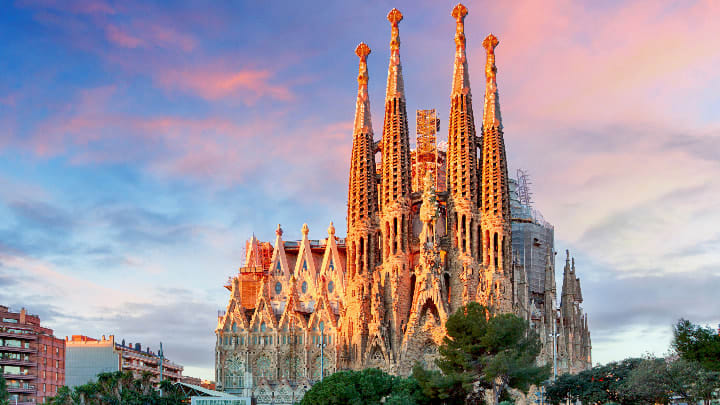
Image of Church,

Location: Carrer de Mallorca, 401

A guide to Gaudí’s finest work would be woefully incomplete without first covering the architect’s magnum opus, Barcelona’s famous Basilica de la Sagrada Familia. One of the most famous religious sites in the world, the church began construction in 1882, when devotees of St. Joseph sought to build a place of worship in his honor.

Gaudí took over as chief architect of the project in 1883, adapting the original plans of his predecessor and introducing Art Nouveau elements to merge with the intended Gothic style. He is credited for having designed and overseen the construction of the basilica’s famous nativity scene, interior apse and crypt during his time on the project.

Intricate models of the church put together in his workshop allowed him to experiment with his plans, and would later form the blueprint for the remainder of the works. Gaudí would come to work on the project for the remainder of his life, and was buried in the crypt alongside its first architect.

The Sagrada Familia now serves as Barcelona’s most visited attraction. While construction continues on the basilica, its planned total of eighteen spires are intended to represent the twelve apostles, the Virgin Mary and the four Evangelists, with Jesus Christ towering above them all.

Park Güell

Image of Nature, Outdoors, Scenery, City,

Location: 08024 Barcelona

Second only to the Sagrada Familia, Park Güell is another of Barcelona’s most visited attractions. While the majority of the park consists of tranquil green space, its main feature is the interior Monumental Zone. Commissioned by Spanish entrepreneur Eusebi Güell, the park was originally built to serve as a stylish social space for Barcelona’s aristocracy.

Gaudí designed this space to serve as a tranquil area from which to enjoy the park’s surrounding beauty, ensuring its features were eccentric while still incorporating naturally into their environment. Much of the park’s symbolism draws inspiration from a combination Catalan nationalism, religious mysticism and ancient poetry.

From the iconic mosaic salamander at its entrance to the sea serpent bench encircling the main terrace which offers panoramic views over the park, the Monumental Zone is best characterized by its somewhat surreal installations.

La Pedrera / Casa Milà

Image of Person, Landmark, Truck, Casa Milà, Traffic Light, Car,

Location: Passeig de Gràcia, 92

Translated literally as the ‘stone quarry’, La Pedrera is best known for its rough-hewn limestone façade, somewhat resembling an open quarry. This titan of a residence was designed and built for the aristocrat Pere Milà i Camps and his wife Rosario Segimon between 1906 and 1912.

Entrancing both inside and out, La Pedrera is composed of two apartment blocks spread across nine stories and constructed around two large, interconnected courtyards. Gaudí, together with his partner Josep Maria Jujol, designed everything from the exterior façade to the individual apartments and the furniture within to incorporate with one another in the duo’s iconic modernist style.

Crowning the residence is the ‘garden of warriors’ rooftop terrace, named after the 28 imposing chimneys that resemble twisted, standing soldiers. The terrace is decorated in a mosaic of marble, broken Valencian tiles and shards of broken champagne bottles and offers almost unparalleled views over the city.

Casa Batlló

Image of Window, Home Decor, Wall, City,

Location: Passeig de Gràcia, 43

Famous for its somewhat visceral, skeletal exterior, Casa Batlló is known locally as la casa dels ossos, or the ‘house of bones’. While not originally built by Antoni Gaudí, the property’s owner, Joseph Batlló, commissioned the architect to redesign the home in 1904.

While only broadly identifiable as a modernist structure, the residence joins Casa Amatller and Casa Lleó to make up the Illa de la Discòrdia, or ‘Block of Discord’, which stands as a celebration of Barcelona’s most prolific modernist architects.

Palau Güell

Image of House, Housing, Staircase, Floor, Indoors,

Location: Carrer Nou de la Rambla, 3-5

Palau Güell was the first of what would come to be many works commissioned by tycoon Eusebi Güell. Designed as both a residence and a venue at which to host high society guests, the urban palace served to offer every conceivable luxury possible of a building. Its opulent interior appears in stark contrast to its relatively undecorated exterior façade.

The mansion is constructed around a central hall and its accompanying receiving rooms. Incorporating towering, ornate walls and pillars, this party hall served as somewhat of an interior courtyard, offering a source of natural light during the day. In the evening, lanterns would be hung from small holes in the domed ceiling to mimic a starry sky.

Casa Vicens

Image of City, Person, Urban, Christmas, Christmas Decorations, Festival,

Location: Carrer de les Carolines, 20-26

Considered Gaudí’s first significant masterpiece, Casa Vicens was the first building in Catalonia to stray entirely from standard architectural norms and practices. With inspiration drawn from the orientalist and Neo-Mudéjar architectural styles, Gaudí’s design incorporated a mixture of Catalan, Islamic, Japanese and English techniques and symbolism.

Commissioned by the Vicens family to serve as a summer residence, Gaudí designed the home to provide a balance of private quarters, social spaces and areas for quiet reflection. Much of the interior furniture was also by his own design in order to compliment the surrounding architecture.

Church of Colonia Güell / Gaudí Crypt

Image of Crypt, Altar, Church, Prayer, Indoors,

Location: Carrer Claudi Güell, 08690 La Colònia Güell

Sitting a short distance outside Barcelona, the Church of Colònia Güell was designed to serve as a place of worship for the workers of Eusebi Güell’s industrial colony. Although Gaudí had drawn up plans for the construction of a full church, various complications meant that the structure was ultimately left unfinished.

The church’s crypt stands as the only completed section of the project. Built partially below ground due to its hillside location, Gaudí designed the crypt to incorporate with its natural surroundings. His use of basalt, brick and stone gives the crypt a more muted, earthy appearance.

Between the use of natural-looking colors and the rough-hewn pillars holding up the ceiling, the crypt has been likened more to a forest grotto or cave. A number of stained glass windows help to provide some vibrancy to the otherwise dim, almost ancient-looking interior space.

Other Works

Although UNESCO dubs these the collective works of Gaudí, they certainly weren’t his only projects. Throughout his professional career, the architect worked on over a dozen major sites throughout Catalonia. His most celebrated works are those that employed the extent of his skills, often straying largely from architectural norms.

For those looking for the full Gaudí experience, some other notable examples of his work throughout Barcelona include Pavellons Güell, the Teresian College, Celler Güell, Casa Calvet and Bellesguard.

Robert Heaney
Go City Travel Expert

Continue reading

best parks barcelona guell
Blog

Best Parks in Barcelona

Parks. Every city dweller's chance to get a little more nature in their life. You can often gauge a city on the quality of its parks. They're the perfect escape from the surrounding hustle and bustle. Find your own little spot, sit back and unwind from the daily grind. And Barcelona is no different, with a range of parks dotted across the city. So, if you're planning a trip to the city, you might be wondering which park is for you? That's why we've put together this list of the best parks in Barcelona. So put on your best pair of reading glasses, or just use your eyes if they still work, and prepare to be informed. Right now. Featuring: Park Guell Parc de la Ciutadella Parc del Laberint d'Horta Parc de Montjuïc Jardins de Pedralbes Jardins de Laribal Park Guell Barcelona is almost synonymous with the works of the late, great Antoni Gaudi. You can find the trail-blazing architect and artist's unique and inspiring works all over the city. However, you needn't visit a museum or walking tour to experience his greatness. Just head down to Park Guell, designed by the man himself at the turn of the 20th Century. There, you'll find strange mosaics, weird sculptures, and architectural monuments to Gaudi's style. Be on the lookout for El Drac, a multicolored lizard mosaic perched prominently between two sets of stairs. Keep in mind that there is a fee for tourists who want to see the best stuff up-close. Of course, you could avoid all that and get a more curated experience by taking a walking tour of the park. That way, you'll dive deeper into the history and meaning of the park's pieces. Parc de la Ciutadella (Ciutadella Park) Situated in the heart of the city, Parc de la Ciutadella, or Citadel Park, was actually built atop the ashes of a 19th Century military fortress. Torn down in a public rebellion against the ruling regime, it now houses one of the best parks in Barcelona. Some of the citadel still stands, so you have the chance to study some beautiful 19th Century architecture. The rest of the park is a paradise of greens and blues, with vast amounts of open space to stretch out and relax. Visitors will also find places to eat, drink, and live music to enjoy. Be sure to check out the massive fountains and other delightful water features that reside inside. And, if all that wasn't enough, Barcelona Zoo is also part of the park. You'll find a reptile house full of strange and beautiful creatures, and the African Savannah area replete with elephants, giraffes, and cheetahs! Perfect for big and little kids alike. Parc del Laberint d'Horta (Horta Labyrinth Park) Parc del Laberint d'Horta, or Horta Labyrinth Park, kind of speaks for itself. It's a huge maze, created at the end of the 18th Century. And, in fact, was part of a private estate until the 1970s. Since it's been open to the public, it has become a must-visit destination. It was even featured in the 2006 film Perfume: The Story of a Murderer. That surely makes it one of the best parks in Barcelona! Over nearly 2500sq feet, you'll get lost in this wonderful labyrinth, and explore the beautiful gardens and surrounding architecture, including the remains of the Torre Sobirana, a medieval palace. Epic. Parc de Montjuïc (Montjuïc Park) Known as the 'park of parks' in Barcelona, Montjuic, or Jewish Mountain, Park is a veritable feast of gardens, forest trails, picnic spots, and beautiful landmarks. Perhaps the most impressive feature is the Jardi Botanic, a huge garden split into five zones representing the planet's different climates and landscapes. Named after the Jewish cemetery housed within, you can make your way up the mountain on foot or take a cable car from Barceloneta Beach, which also has a mountain of activities to enjoy. Your visit might even coincide with one of the many music festivals put on in the park. If all that exploring has your tummy rumbling, grab a bite to eat at one of the many restaurants and cafes the park welcomes. Jardins de Pedralbes (Pedralbes Gardens) If you like a sprinkling of royalty with your park experience, check out the Pedralbes Gardens. Housed within the Palace of Pedralbes, which situated the Spanish Royal Family until the 1930s, the imperial gardens are quite the sight. The beautifully-colored flora is unmissable. Literally - the entire park is full of it, so you won't miss it! There's also the Gaudi-designed Hercules Fountain because, of course, Gaudi got his magnificent creations in here too. There are also music festivals, great places to relax, and cafes to get some sweet refreshments on those warm summer days. Jardins de Laribal (Laribal Gardens) Designed during the Barcelona World Fair in the 1920s, Laribal Gardens is another beautiful spot in the city, and easily one of Barcelona's best parks. Be sure to check out the Font del Gat, a fountain inspired by cats, which also doubles as a bustling picnic area. Feel free to stretch out with a towel, hamper full of food, and relax. Alternatively, you can pick up a bite to eat or a refreshing beverage at one of the nearby cafes. Alongside the Font del Gat, there are many other sculptures and water features to find and admire. And, if you want to get your step-count up, wander over to the Greek Theater. It also has its own gardens to explore. And that's our list of the best parks in Barcelona! You're really spoiled for choice in the city, so be sure to explore as many of them as possible. Of course, parks are just one of Barcelona's many jewels. If you like a little sand with your walk, be sure to check out our picks of Barcelona's best beaches! If all the Gaudi pieces mentioned above tickle your culture bone, there are plenty more Gaudi-centric things to see and do. And, if you're looking to put together a weekend itinerary to make the most of your visit, check out our guide to your weekend in Barcelona. You will love it. Until next time!
Dom Bewley
barceloneta
Blog

Things to do in Barceloneta Beach

You there! Are you planning your trip to Barcelona? If so, you're in luck. There's so much to do and see in the sunny city; there'll never be a dull moment. However, if you're looking to take a break from all the food, culture, and exploring, why not take a stroll to the beach? Barcelona has some great beaches, but its best-known has to be Barceloneta. And why is that? Well, because there are so many things to do there! What things, you ask? Well, read on, and we'll tell you just that. Here's our guide to the best things to do in Barceloneta. Relax Barceloneta is a beach, so, of course, you'll be free to lay a towel down and soak up some sweet sun. At nearly 1,400ft in length, you're sure to find a spot too. It is worth noting that Barceloneta is known to be on the livelier side of Barcelona's beaches, so if you're hoping to escape the hustle and bustle of the city, it might be worth taking some headphones and heading there earlier in the day. That way, you're likely to get the best spot too. Also worth saying that the beach has pretty good wifi throughout if you want to get gramming or watch an episode or two on the sand. However, if you are looking to engage in things of a more lively nature... Nightlife Yes, Barceloneta has a party side too. Groups of party-seekers will often put on some tunes, open some cold drinks, and celebrate through to the early hours. Surely one of them will welcome you with open arms. So, if you've an itch for good times, be sure to check out the beach's goings-on. It may well be scratched. Just remember to stay hydrated, so you don't feel too bad the following day. Cool off with a drink Speaking of nightlife, you'll find a healthy heaping of it at the many bars that line the horizon like a boozy, enticing mirage. They're sure to offer little nibbles to keep you going, but you'll really want a refreshing cocktail to cool off. You can even get it to go and take it to your towel, so you can sip in the sun. It doesn't get much better than that, does it? Sample the local cuisine As well as the many bars that dot the beachside, you'll also find plenty of restaurants and pop-ups to satisfy your hunger. Expect a healthy helping of seafood with Mediterranean tapas, paired with a delicious red wine. Or, just go out on a traditional paella. After a day of beaching or simply exploring the area surrounding Barceloneta, what better way to refuel? Spain's cuisine is known worldwide for its healthiness and heartiness, so what's stopping you? Get active As the water is right there, why not try out some ocean activities while you're at Barceloneta? There's usually windsurfing , kitesurfing and bodyboarding on offer, and if you're an enthusiast, feel free to bring your own gear and go your own way. Or, if you'd rather keep your feet firmly on the dry land, you'll find volleyball nets to strut your stuff, beach tennis, ping pong and even an entire area for gymnastics! The perfect answer if you've had a few too many delicious cocktails during your stay! Go exploring Barceloneta isn't just the beach's name; it's also the name of the seaside town surrounding it. For centuries, Barceloneta was a fishing village that brought a lot of seafood into the Catalan capital. The village itself supposedly inspired the great author Cervantes; the fight between the titular Don Quixote and the Knight takes place in a fishing village eerily similar to Barceloneta. Take a stroll into the town, and you'll be mesmerized by the colorful buildings, cobbled streets, and beautiful flora. Head in during the evening to see local patrons eating, drinking, and enjoying the ambiance. Why not join them for a few? Take a walk Given the beautiful views of the Mediterranean Sea, why not simply take a stroll to drink it all in? There's plenty of sand to wander, and even more sights await you past the beach. For the culturally-minded, there's L'Estel Ferit, a fantastic sculpture that translates to 'the wounded shooting star'. Quite the sight, even in a city full of interesting architecture and art. Speaking of architecture, you can even wander to W Barcelona, a fin-shaped marvel designed by Spanish architect Ricardo Bofill. Part hotel, part rooftop bar, it definitely deserves a look-in if you're partial to a rooftop cocktail or two! Get historical Speaking of things to do in Barceloneta, the beach hides many things beyond its golden sand. Check out Port Vell and gaze upon the myriad yachts and boats that line the coast. You might not be able to afford one, but you can certainly look at them and pretend. Alternatively, you'll also find Museu d'Historia de Catalunya here. The museum, which charts the history of Catalonia, will give you an insight into the history, culture, and politics of Barcelona and the surrounding area throughout time. And when we say throughout time, we mean all time. Beginning in the Palaeolithic era, all the way through to the present day, you'll learn a lot. Then, end your visit with the amazing views from the museum's terrace! And that's our list of the best things to do at Barceloneta beach! Be sure to pack some sunscreen and enough spending money to make the most of your visit! Are you looking for more suggestions to make your trip to Barcelona one to remember? We've got you covered. Why not check out some of the other beaches the city has to offer? Or, get your Gaudi on with the best walking tours for fans of the trailblazing architect. Alternatively, try out one of the many art galleries and museums commemorating Spain's rich culture. And finally, are you spending the weekend in Barcelona? Here's our guide to making the most of your short stay. Until next time!
Dom Bewley
Art at the Picasso Museum in Barcelona (Image credit: Museu Picasso)
Blog

Museu Picasso vs Museu Nacional d'Art de Catalunya - (MNAC) Comparison

Barcelona has quite the pedigree when it comes to art. Not to put too fine a point on it, we’re talking about the self-same region that nurtured Pablo Picasso, Salvador Dalí and Joan Miró. Heck, this part of Spain is about as central to the development of European art as just about anywhere else on the continent. Nowhere is this more apparent than in the city’s fine art museums, among which the extraordinary Museu Nacional d'Art de Catalunya and epic Museu Picasso are among the very best. We took a closer look at these two titans of the Barça art scene, including a little bit of history and the treasures you can expect to find within… Museu Picasso: The Lowdown Vital Statistics: Opened in 1963, Barcelona’s Museu Picasso was the world’s first museum dedicated entirely to the maestro’s work, and the only one to open in his lifetime. Even today, the museum’s collection of 4,000+ pieces, located in the very neighborhood where Picasso lived and studied as a teenager, makes it one of the three largest Picasso collections on the planet, alongside the Picasso Museum in Paris, and the mighty Prado in Madrid. The museum attracts over a million visitors annually. Picasso Museum in Brief: Picasso’s fledgling art career first took wing in the medieval streets of the medieval Gothic Quarter. Here’s where he lived with his family, studied at the School of Fine Arts, and found inspiration for his celebrated ‘Les Demoiselles d'Avignon’ at a Carrer d'Avinyó brothel. It’s appropriate then that this extensive collection of his work – and particularly his earlier, pre-Cubist work – should be exhibited here, close to the very neighborhood Picasso once called home. This is no ordinary museum either. Art of this quality deserves a setting just as impressive, and the series of five adjoining medieval palaces in Le Ribera, in which the collection is housed, more than delivers. The mind-boggling number of exhibits (some 4,251 at last count) is helpfully organized into sections that primarily cover Picasso’s early years, training period and celebrated Blue Period, taking in a fairly substantial hoard of sketches and paintings from those eras, as well as a much smaller collection of pieces from his Cubist period and beyond. Museu Nacional d’Art de Catalunya: The Lowdown Vital Statistics: A stalwart of the Barcelona art scene since 1934, MNAC is *the* go-to for anyone with even a passing interest in Catalan art from the last 1,000 years. Set high on Montjuïc hill, this majestic collection is displayed within the historic Palau Nacional, a jaw-dropping confection that marries elements of St Peter's Basilica, Santiago de Compostela Cathedral, and other major masterpieces of European architecture. Something of a work of art in its own right then, this palatial Italian-style confection also just happens to command some of the best Barcelona panoramas in town. No wonder then that it draws in a similar number of tourists to the Picasso Museum – around a million – every year. MNAC in Brief: Go for the art and stay for the sweeping city views: visitors to the museum enjoy access to the roof terrace for unrivaled panoramas of the skyline, taking in everything from the Montjuïc Magic Fountain below to the familiar lines and angles of the Sagrada Família, and the Mediterranean beyond. It’s worth taking a peek inside too, of course. For here’s where you can marvel at Romanesque religious murals par excellence, lovingly transported here from crumbling medieval churches in the Pyrenees, as well as key pieces from the Gothic and Renaissance eras, and some of the modern masterworks that inspired Dalí, Picasso, Gaudí and Miró. In summary, MNAC boasts what is quite possibly (nay, almost certainly) the finest collection of Catalan art, ancient and modern, on this planet we call Earth. Museu Picasso: Highlights & What to Expect The Museu Picasso works hard to convey the artist’s relationship with Barcelona, from the formative years spent learning his craft in this very district to his continuing connection with the city in death. Guided tours of the local neighborhood flesh this out, revealing Picasso’s family homes, teenage hangouts and more. One such tour is included with a Barcelona pass from Go City, which also includes entry to the museum, as well as other Barcelona attractions including Gaudí’s Casa Batlló and the Sagrada Família. Find out more about the Barcelona pass and buy yours here. Cool fact: during renovations in 1960, the Mural paintings of the Conquest of Majorca were discovered concealed beneath plaster in Palau Aguilar, one of the five medieval palaces in which Museu Picasso is housed. Considered a masterpiece of 13th-century Catalan art, these magnificent murals now form the focal point of the Gothic galleries at MNAC. Back to the present day Museu Picasso now, where highlights include: ‘The First Communion’ and ‘Science and Charity’. Some of his earliest major works, these oil paintings date from 1896-1897, when Picasso was still a teenager. Must-see Blue Period works at the museum include ‘The Dead Woman’, a striking portrait of a recently deceased subject, rendered in the trademark sickly blues and greens Picasso favored between 1901 and 1904. In 1957, Picasso set about re-imagining Velazquez’s iconic 17th-century royal portrait ‘Las Meninas’, bringing his own inimitable style to the project across 58 (count ‘em) separate paintings. The resulting collection, displayed in its entirety here is, quite frankly, unmissable. MNAC: Highlights & What to Expect  For an overview of Catalan art across the centuries, the Museu Nacional d'Art de Catalunya is second-to-none, taking in everything from medieval Romanesque and Gothic murals to Renaissance masterpieces and modern art. Highlights of this 300,000-strong collection are many, but here are a few you absolutely must not miss: Baroque and Renaissance Spanish art provides some of the museum’s undisputed highlights. We’re talking masterpieces from the likes of El Greco, Velázquez, Zurbarán and more. Don’t miss one of the collection’s signature pieces: the unsettling ‘Martyrdom of Saint Bartholomew’ by José de Ribera’, in which the titular Bart’s desperate, pleading eyes seem to meet the gaze of the unsuspecting viewer (i.e. you). Murals including the Master of Taull’s majestic ‘Apse of St Taull’ and the epic Linear Gothic Catalan masterpiece that is the Mural paintings of the Conquest of Majorca, are among some of the finest examples of early medieval Romanesque art anywhere on the planet. The modern art collection covers around 150 years from the early 19th century onwards, with Romantic, realist and neoclassical pieces that preempt the work of Gaudí, Miró, Picasso et al. Check out sculptures by Campeny and the Vallmitjana brothers, and paintings by Flaugier and Fortuny, for the win. Top tip: admission to MNAC is free after 3PM on Saturdays and on the first Sunday of each month. You can book tickets for these as well as paid entry slots here. Save on Attractions, Tours and Activities in Barcelona Save money on Barcelona attractions, tours and activities with a pass from Go City. Check out @GoCity on Instagram for the latest top tips and attraction info.
Stuart Bak
Stuart Bak

Have a 5% discount, on us!

Sign up to our newsletter and receive exclusive discounts, trip inspiration and attraction updates straight to your inbox.