
2 Days in Barcelona

Published: July 18, 2024
Avinguda Diagonal from above splitting Barcelona in two

While exploring a city as large and culturally rich as Barcelona in a short span of time may seem an intimidating task, it’s actually perfectly doable once you put together a solid plan of everything you’re genuinely interested in seeing.

Whether you’re passing through for a couple days or looking to take a weekend city break, two days in Barcelona should be plenty of time to see a good portion of what the city has to offer. Covering everything from the city’s stunning architecture to its complex history, we’ve put together our own suggested itinerary to take you on a whirlwind tour of the beloved Catalan capital.

The itinerary below includes a mix of sightseeing, museums and shopping destinations. Feel free to take suggestions as inspiration and mix-and-match them with the attractions and activities that most interest you. Use the suggested visit timings to help decide how best to lay out your trip.

Day 1 - Sightseeing
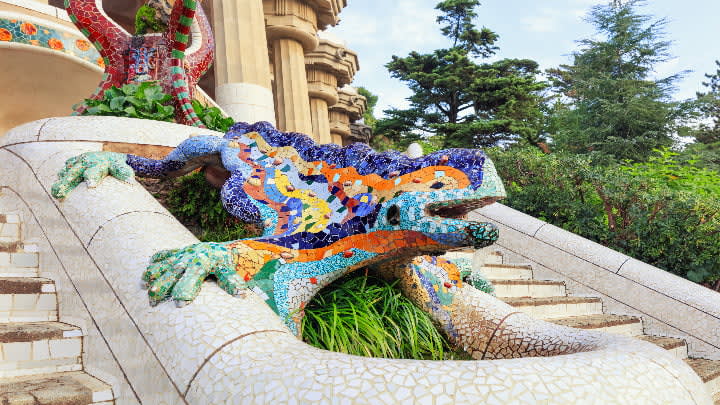
Image of

What better way to acquaint yourself with Barcelona than by packing your first day full of the city’s best sights? As a city famous for its mix of gothic and modernist architecture along with the unique labyrinthine design of its streets, it’s only fitting that you get a taste of these right away.

Park Güell – One of renowned modernist architect Antoni Gaudí’s most famous works, this park is most well-known for its central Monumental Zone. From the mosaic salamander at its entrance to the sea serpent bench encircling the main terrace, this eccentric space is a perfect place to start your day.

Recommended visit: 1h – 2h

Sagrada Familia – The Belle of Barcelona’s ball, this yet unfinished basilica is truly a sight to behold. Take some time to explore the rich architectural mastery of this UNESCO World Heritage Site on your own, or book onto a guided tour for a full insight into the site’s artistic, cultural and historic significance.

Recommended visit: 1h – 1h30

Avinguda Diagonal – One of Barcelona’s most popular and important streets, Avinguda Diagonal runs diagonally through the city, cutting it in two. A vast array of stores and restaurants are dotted throughout the length of the avenue.

Recommended visit: 45m

Casa Milà – Also known as La Pedrera (‘the stone quarry’), this modernist building was the final residence designed by renowned architect Antoni Gaudí. As per its nickname, it’s most famous for its rough-hewn exterior façade, somewhat resembling an open stone quarry.

Recommended visit: 15m – 1h30

Casa Batlló, Casa Amatller and Casa Lleó i Morera – This trio of modernist buildings are widely considered the most important on Barcelona’s famous Illa de la Discòrdia, or ‘Block of Discord’. Showcasing the masterpieces of Barcelona’s prominent modernist architects Antoni Gaudi, Josep Puig i Cadafalch and Lluís Domènech i Montaner, these buildings are eccentric in design both inside and out.

Recommended visit: 15m – 2h

Plaça de Catalunya – Considered to be Barcelona’s city centre and the meeting point of both the old and modern city, this square is a favorite for social gatherings thanks to its wealth of shopping outlets and restaurants.

Recommended visit: 15m – 2h

La Rambla – Perhaps the city’s most famous street, La Rambla spans from Plaça de Catalunya all the way to the Columbus Monument on the seafront. You’ll find a vast array of streetside cafés and souvenir stands across the length of the street.

Recommended visit: 30m – 2h

Mercat de la Boqueria – Often considered one of the best markets in the world, this historical market houses all sorts of fresh, local produce along with stands to get yourself a hearty lunch while on the go.

Recommended visit: 45m

Plaça Reial – Particularly popular in the evening, this square is home to a whole host of bars, restaurants and some of Barcelona’s most famous nightclubs. Why not finish your day here with a fresh dish of Catalan cuisine and a glass or two of the local region’s renowned wines?

Recommended visit: As long as you want

Day 2 – Culture

Image of City, Road, Street, Urban, Alley, Path, Person, Bicycle, Vehicle,

Your second day in Barcelona – should you choose to follow our itinerary – will take you on a cultural tour of the city and the local region. If art, music and history are up your alley, then the following are sure to give you a real kick.

Palau de la Musica Catalana – A true marvel of modernist architecture, this UNESCO World Heritage Site has been host to a magnificent array of musical performances since 1908. Bask in its colorful exterior from outside, book onto a guided tour of the venue, or even attend one of its legendary musical performances for yourself.

Recommended visit: 1h – 3h

Gothic Quarter – Barcelona’s Gothic Quarter sits immediately north of La Rambla and houses some of the city’s best sights. It’s worth spending a decent period of time here to explore everything the historic streets have to offer.

Recommended visit: 2h

Barcelona Cathedral – Known officially as the Cathedral of the Holy Cross and Saint Eulalia, this immense structure is a case study in Gothic Revival architecture. It’s expertly-crafted neo-Gothic façade makes way to a somewhat more unassuming yet nevertheless still imposing interior common to traditional Catalan churches.

Recommended visit: 30m – 1h30

Museu d'Història de Barcelona – If you’re a history buff visiting Barcelona, this should be your trip’s Mecca. As the name might suggest, the MUHBA will take you on a tour of key points throughout the city’s history, from as recent as the Spanish Civil War to as far back as prehistory.

Recommended visit: 3h – 5h

Museu Picasso – Housing over 4,000 of Pablo Picasso’s works, this museum possesses one of the world’s most complete collections of the famous Spanish artist’s paintings.

Recommended visit: 2h

Carrer de Salomó ben Adret – At the heart of the Gothic quarter, this street is replete with charming bars, restaurants and cafés. A perfect rest stop to draw a close to your whirlwind trip.

Recommended visit: As long as you want

Getting Around

Our recommended attractions are listed in such an order to allow you to easily walk from one to the other, though most are also within short walking distance of transport hubs should you prefer to take public transport. Alternatively, a Bus Turístic will also allow you to hop on and off along a similar route while offering an audio commentary of the sights along the way.

Robert Heaney
Go City Travel Expert

Continue reading

Art at the Picasso Museum in Barcelona (Image credit: Museu Picasso)
Blog

Museu Picasso vs Museu Nacional d'Art de Catalunya - (MNAC) Comparison

Barcelona has quite the pedigree when it comes to art. Not to put too fine a point on it, we’re talking about the self-same region that nurtured Pablo Picasso, Salvador Dalí and Joan Miró. Heck, this part of Spain is about as central to the development of European art as just about anywhere else on the continent. Nowhere is this more apparent than in the city’s fine art museums, among which the extraordinary Museu Nacional d'Art de Catalunya and epic Museu Picasso are among the very best. We took a closer look at these two titans of the Barça art scene, including a little bit of history and the treasures you can expect to find within… Museu Picasso: The Lowdown Vital Statistics: Opened in 1963, Barcelona’s Museu Picasso was the world’s first museum dedicated entirely to the maestro’s work, and the only one to open in his lifetime. Even today, the museum’s collection of 4,000+ pieces, located in the very neighborhood where Picasso lived and studied as a teenager, makes it one of the three largest Picasso collections on the planet, alongside the Picasso Museum in Paris, and the mighty Prado in Madrid. The museum attracts over a million visitors annually. Picasso Museum in Brief: Picasso’s fledgling art career first took wing in the medieval streets of the medieval Gothic Quarter. Here’s where he lived with his family, studied at the School of Fine Arts, and found inspiration for his celebrated ‘Les Demoiselles d'Avignon’ at a Carrer d'Avinyó brothel. It’s appropriate then that this extensive collection of his work – and particularly his earlier, pre-Cubist work – should be exhibited here, close to the very neighborhood Picasso once called home. This is no ordinary museum either. Art of this quality deserves a setting just as impressive, and the series of five adjoining medieval palaces in Le Ribera, in which the collection is housed, more than delivers. The mind-boggling number of exhibits (some 4,251 at last count) is helpfully organized into sections that primarily cover Picasso’s early years, training period and celebrated Blue Period, taking in a fairly substantial hoard of sketches and paintings from those eras, as well as a much smaller collection of pieces from his Cubist period and beyond. Museu Nacional d’Art de Catalunya: The Lowdown Vital Statistics: A stalwart of the Barcelona art scene since 1934, MNAC is *the* go-to for anyone with even a passing interest in Catalan art from the last 1,000 years. Set high on Montjuïc hill, this majestic collection is displayed within the historic Palau Nacional, a jaw-dropping confection that marries elements of St Peter's Basilica, Santiago de Compostela Cathedral, and other major masterpieces of European architecture. Something of a work of art in its own right then, this palatial Italian-style confection also just happens to command some of the best Barcelona panoramas in town. No wonder then that it draws in a similar number of tourists to the Picasso Museum – around a million – every year. MNAC in Brief: Go for the art and stay for the sweeping city views: visitors to the museum enjoy access to the roof terrace for unrivaled panoramas of the skyline, taking in everything from the Montjuïc Magic Fountain below to the familiar lines and angles of the Sagrada Família, and the Mediterranean beyond. It’s worth taking a peek inside too, of course. For here’s where you can marvel at Romanesque religious murals par excellence, lovingly transported here from crumbling medieval churches in the Pyrenees, as well as key pieces from the Gothic and Renaissance eras, and some of the modern masterworks that inspired Dalí, Picasso, Gaudí and Miró. In summary, MNAC boasts what is quite possibly (nay, almost certainly) the finest collection of Catalan art, ancient and modern, on this planet we call Earth. Museu Picasso: Highlights & What to Expect The Museu Picasso works hard to convey the artist’s relationship with Barcelona, from the formative years spent learning his craft in this very district to his continuing connection with the city in death. Guided tours of the local neighborhood flesh this out, revealing Picasso’s family homes, teenage hangouts and more. One such tour is included with a Barcelona pass from Go City, which also includes entry to the museum, as well as other Barcelona attractions including Gaudí’s Casa Batlló and the Sagrada Família. Find out more about the Barcelona pass and buy yours here. Cool fact: during renovations in 1960, the Mural paintings of the Conquest of Majorca were discovered concealed beneath plaster in Palau Aguilar, one of the five medieval palaces in which Museu Picasso is housed. Considered a masterpiece of 13th-century Catalan art, these magnificent murals now form the focal point of the Gothic galleries at MNAC. Back to the present day Museu Picasso now, where highlights include: ‘The First Communion’ and ‘Science and Charity’. Some of his earliest major works, these oil paintings date from 1896-1897, when Picasso was still a teenager. Must-see Blue Period works at the museum include ‘The Dead Woman’, a striking portrait of a recently deceased subject, rendered in the trademark sickly blues and greens Picasso favored between 1901 and 1904. In 1957, Picasso set about re-imagining Velazquez’s iconic 17th-century royal portrait ‘Las Meninas’, bringing his own inimitable style to the project across 58 (count ‘em) separate paintings. The resulting collection, displayed in its entirety here is, quite frankly, unmissable. MNAC: Highlights & What to Expect  For an overview of Catalan art across the centuries, the Museu Nacional d'Art de Catalunya is second-to-none, taking in everything from medieval Romanesque and Gothic murals to Renaissance masterpieces and modern art. Highlights of this 300,000-strong collection are many, but here are a few you absolutely must not miss: Baroque and Renaissance Spanish art provides some of the museum’s undisputed highlights. We’re talking masterpieces from the likes of El Greco, Velázquez, Zurbarán and more. Don’t miss one of the collection’s signature pieces: the unsettling ‘Martyrdom of Saint Bartholomew’ by José de Ribera’, in which the titular Bart’s desperate, pleading eyes seem to meet the gaze of the unsuspecting viewer (i.e. you). Murals including the Master of Taull’s majestic ‘Apse of St Taull’ and the epic Linear Gothic Catalan masterpiece that is the Mural paintings of the Conquest of Majorca, are among some of the finest examples of early medieval Romanesque art anywhere on the planet. The modern art collection covers around 150 years from the early 19th century onwards, with Romantic, realist and neoclassical pieces that preempt the work of Gaudí, Miró, Picasso et al. Check out sculptures by Campeny and the Vallmitjana brothers, and paintings by Flaugier and Fortuny, for the win. Top tip: admission to MNAC is free after 3PM on Saturdays and on the first Sunday of each month. You can book tickets for these as well as paid entry slots here. Save on Attractions, Tours and Activities in Barcelona Save money on Barcelona attractions, tours and activities with a pass from Go City. Check out @GoCity on Instagram for the latest top tips and attraction info.
Stuart Bak
Stuart Bak
Palau Nacional light show in the evening
Blog

Barcelona in May

In the wake of winter and the anticipation of summer, Barcelona in May offers what many consider to be the best of both worlds. Throughout this period, visitors get to experience the busy and electric ambience that the city is known for, while also being able to reap the benefits of visiting ahead of the summertime crowds. Whatever your travel style may be, this is likely the ideal time to plan a visit. If easily accessible attractions and a thriving nightlife aren’t quite enough to convince you, then perhaps the wealth of celebrations and events taking place throughout the city will be. Tourism in May With winter now a distant memory and springtime too on its way out, Barcelona begins a sort of metamorphosis in anticipation of the coming summer months. The beginning of the city’s first ‘shoulder season’, May marks the beginning of a transitive period for the Catalan capital. While tourism rates around this time still stand a ways behind high-season traffic, they’re also significantly higher than throughout the preceding winter months. For many, this is what makes May a perfect time to visit Barcelona. Barcelona’s famed bustling atmosphere is an inherent result of its high throughput of visitors, but that often comes at the cost of overcrowding and queuing for just about every major attraction. In May, however, the city sees just enough tourists to stay true to its character while also leaving much of the city easily accessible and uncrowded. May brings with it pleasant temperatures typically falling between the high-50s and high-60s, alongside some fairly consistent sunshine. Although that may not be prime sunbathing weather, it does mean you can ditch the winter jacket – though an umbrella is still advisable. With that, visiting Barcelona in May is the perfect opportunity to experience the city both inside and out. Explore the famous architecture of the Sagrada Familia without battling too many queues and take a relaxing stroll through Park Güell in the pleasant springtime weather. And why not take some time to enjoy some of the region’s highly-anticipated events and festivities, too? Primavera Sound Festival Held each year in Barcelona’ Forum Building close to Parc del Fòrum, the Primavera Sound Festival stands as one of the city’s most hotly anticipated music festivals each year. In contrast to many other music festivals taking place throughout the year, Primavera Sound is host to a diverse lineup of genres comprising everything from jazz and hip hop to folk and alternative rock. Previous editions of the festival have performances from the likes of Arcade Fire, Pet Shop Boys and White Stripes. While the main sets typically take place over the course of a weekend, the event runs for around a week in total, with additional gigs and performances hosted across the city. Night of the Museums Those who remember the Ben Stiller hit movie Night at the Museum may already have some fantastical idea of what this cultural event entails. While reanimated exhibitions aren’t typically on the table, many of Barcelona’s most important museums come to life in their own way for one night each May. Coinciding with International Museum Day, this event sees a huge array of Barcelona’s museums open their doors to visitors throughout the night, often free of charge. Popular locations such as the MNAC, CaixaFòrum and MACBA offer visitors an opportunity to explore their exhibitions in a new way, alongside hosting a number of cultural activities and performances for all ages to enjoy. Ciutat Flamenco Festival For those with a flair for dancing or a passion for the performing arts, this festival could really be a treat. The Ciutat Flamenco Festival serves as one of the most significant shows dedicated to Flamenco dance and music. Held for roughly two weeks in May, the event grants attendees the opportunity to discover music from some of the most prominent names in the Flamenco scene, while also showcasing the work of newer artists. Don your best outfit and be prepared to experience this passionate performance of Spanish dance. Girona Flower Festival For roughly one week in early May, the nearby city of Girona comes into full bloom, with many of its most popular neighborhoods decorated in all manner of floral arrangements. Displays range from classy and tasteful to purposefully kitsch and quirky, often accompanied by art and light installations, music With over a hundred displays spread across the city, the Flower Festival offers a fantastic means of exploring Girona in a whole different way. The event opens up a number of areas and patios normally closed to the public, allowing you to truly see a side to the city that most others rarely do. Sitting only an hour or so away from Girona by car, coach or train, Barcelona serves as a fantastic base from which to visit the Flower Festival. Once you’re there, pick up an event map from the tourist office or from the many volunteers dotted along the festival route and explore the veritable Eden of Girona in May. Barcelona International Comic Fair This somewhat more niche event speaks to the comic book fans among us. Having now run successfully for over 40 years, the Barcelona International Comic Fair serves as a demonstration of all the important developments in the comic book world. It showcases the works of prominent and upcoming comic book authors, with awards presented for the best among them. Visitors have the opportunity to meet and chat with authors and artists alike, and can attend various concerts, performances and film premieres taking place throughout the festival. If you’re planning a trip to Barcelona in May and want to embrace your inner geek, be sure to swing by this fantastic fiction fair. Wrapping Up Whether you’re looking to experience Barcelona in its prime state without too many crowds or to get in on some of the incredible festivities taking place throughout the month, visiting Barcelona in May is a fantastic way to experience everything that the city has to offer.
Robert Heaney
Crowds of tourists on a beach in Barcelona
Blog

Barcelona in August

At the peak of summertime, August marks one of the two busiest months for Barcelona. Between its highly favorable weather and plethora of world-renowned sights and attractions, it’s no surprise that hundreds of thousands pick the city as their summer destination. While crowds and queues are of course inevitable, these are largely what gives the Catalan capital its famed bustling atmosphere. And given the plethora of festivals and events taking place throughout the month, you can expect those crowds to be electric. If busy and thriving are what you’re looking for, then Barcelona in August may be the trip for you. Tourism in August It’s no secret that Barcelona in August is busy. Really busy. Alongside July, this is when the city sees its largest throughput of visitors. Hotels tend to get swept up at a moment’s notice, accommodation rates are at their highest and the city’s attractions are operating at peak capacity. While to some this may sound like a nightmare, this is the whole appeal to many visitors. Barcelona is famous for its thriving atmosphere, bustling streets and energetic nightlife. And for that, serious crowds are a necessity. Just note that more tourists also means you’ll likely need to book your desired attractions well in advance. The exact reasons behind Barcelona’s summertime tourism spike are no challenge to discern. Between its stellar location on the Mediterranean and average temperatures of 80 – 90°F, many come to enjoy the city’s world-famous beaches. Pair those with the existing waves of tourists interested in Barcelona’s architecture, history, cuisine and nightlife, and it’s no surprise that this is the busiest time for the city. Those who aren’t so keen on the crowds may be better off planning a trip during the spring and fall ‘shoulder seasons’, when the city is still busy enough to maintain its buzz but quiet enough to be able to explore without the need to wade through the crowds. Festa Major de Sant Roc Dating back over 400 years, one of August’s largest events is the Festival of Sant Roc. Held in honor of Saint Roch, the celebration takes place each year on Plaça Nova in the heart of the Gothic Quarter, right beside the Barcelona Cathedral. While it may be contained to a smaller area than many other neighborhood celebrations held around the year, the festival is jam-packed full of activities. Typically taking place over the course of roughly a week, the event sees various games, traditions, processions, performances and dances take place, with something for just about all ages. One of the most common troupes of the festival is La Cucaña, a greasy, rotating pole which children will attempt to traverse safely in return for a prize. Another is El porró llarg, a bizarre glass drinking vessel with an extremely long spout from which visitors will attempt to drink wine, much to the amusement of onlookers. Another key part of the celebration is known as the Festival of the Dog. Legend says that when Sant Roc was sheltering within the city’s Roman walls while suffering from the plague, the local baker’s dog helped nurse him back to health by bringing him panellet cakes to eat. This portion of the festival therefore pays homage to the saint’s savior pooch with a canine exhibition. Locals will bring along their own dogs to celebrate, and there are even some dog training shows for those with excess energy. Festa Major de Gràcia From August 15th to 21st, Barcelona is host to what is widely considered its most festive and most accommodating street festival. The event offers a packed program of live performances, concerts, parades, dances and activities taking place throughout the Gràcia neighborhood. The festival is perhaps best known for its iconic decorated streets. With each street allocated its own theme for the year, the walkways of Gràcia truly come to life with vibrant and whacky displays. Most decorations will be created using sustainable and recycled materials, and each street competes to offer the most creative display in hopes of winning the annual grand prize. Festa Major de Sants Should you happen to miss out on the Gràcia Festival, fret not – The Sants Festival picks up right where Gràcia leaves off. Host to a wide array of Catalan traditions, this event offers much of the same decorated streets concerts, dances, performances and activities for all ages as its predecessor. Castells are one of the main traditions of the Sants Festival, with a large number of castellers working together to attempt to build the largest human towers. Correfocs are another, translated literally as ‘fire runs’, in which performers dressed as devils will parade around with fireworks to the entertainment of onlookers standing at a safe distance. DGTL Festival A spin-off of the renowned festival held in Amsterdam, DGTL is an event quite unlike any other. Offering live underground house and techno sets from prodigious artists and DJs, this is not an event to be missed for fans of the underground music scene. Held each year in Parc del Fòrum, the event is characteristically accompanied by mesmerizing art and light installations, turning all areas of the venue into its own immersive clubbing experience. The event maintains an ethos of sustainability, employing the likes of solar panels, exclusively vegetarian food options, cashless transactions and eco-friendly packaging. Music Festivals As if Barcelona’s nightlife scene wasn’t enough, August is a month replete with music events for fans of all genres. Alongside the DGTL festival covered above, attendees come from the world over to revel in the city’s impressive musical festivities. Some of the most popular events include the Mas i Mas Festival, the Cap Roig Festival and Brunch in the Park. Wrapping Up Whether you’re keen to explore the city’s unique wealth of architecture and history, relax on its world-famous beaches in prime weather or enjoy the buzz of its nightlife and the many festivals taking place throughout the month, visiting Barcelona in August could be an ideal trip for those who enjoy a more bustling city experience. While you can expect to have to fight crowds and make advance booking for your attractions of choice, not to mention your hotel or apartment, you’ll be rewarded with the opportunity to experience a city positively thriving with life. Barcelona is never quite as alive as it is in summer, which you’re bound to discover for yourself should you choose to visit in August.
Robert Heaney

Have a 5% discount, on us!

Sign up to our newsletter and receive exclusive discounts, trip inspiration and attraction updates straight to your inbox.