
Why London in May is a secret worth sharing

March is a good time to head to London's parks

Whisper it quietly – London in May feels a lot like the more popular summer months to come. Daylight hours stretch from 5:30AM until 8:30PM, temperatures nudge towards 20°C, and rain showers seem to lessen by the day.

It means May in London is all about getting outside. Visit the likes of Borough Market and you’ll soon have more than enough goodies for a picnic in a Royal Park. Then cruise along the Thames for picturesque scenes of London’s historic skyline or meet the residents of London Zoo in their outdoor paddocks. These are just some of the great al fresco attractions that await visitors to the British capital in May.

Wild beasts (and where to see them)

Image of Animal, Lion, Mammal, Wildlife,

Choose to stay in southwest London and you may be a little early for Wimbledon fortnight but you will have the chance to soak up the sun in Richmond Park thanks to the improving weather in London in May.

The largest of London’s parks at 1000 hectares and a Site of Special Scientific Interest to boot, this former royal hunting ground still provides a habitat for several hundred fallow deer whilst King Henry’s Mound offers vistas reaching St Paul’s Cathedral.

But it’s fashionable Chelsea that's the center of attention in May, when the Chelsea Flower Show takes over the grounds of the borough’s Royal Hospital – a home for military veterans. An annual event par excellence since 1912, attracting senior royals and a smorgasbord of A-list celebrities, this is much more than a garden show, occupying hours of television and pages of newspaper coverage.

Further north, Regent’s Park is home to animals as diverse as penguins and tigers, being the site of ZSL London Zoo. A filming location in the first Harry Potter movie and a major conservation project, the zoo looks after around 20,000 animals, from leaf-cutter ants to less numerous pygmy hippos.

All the world’s a stage
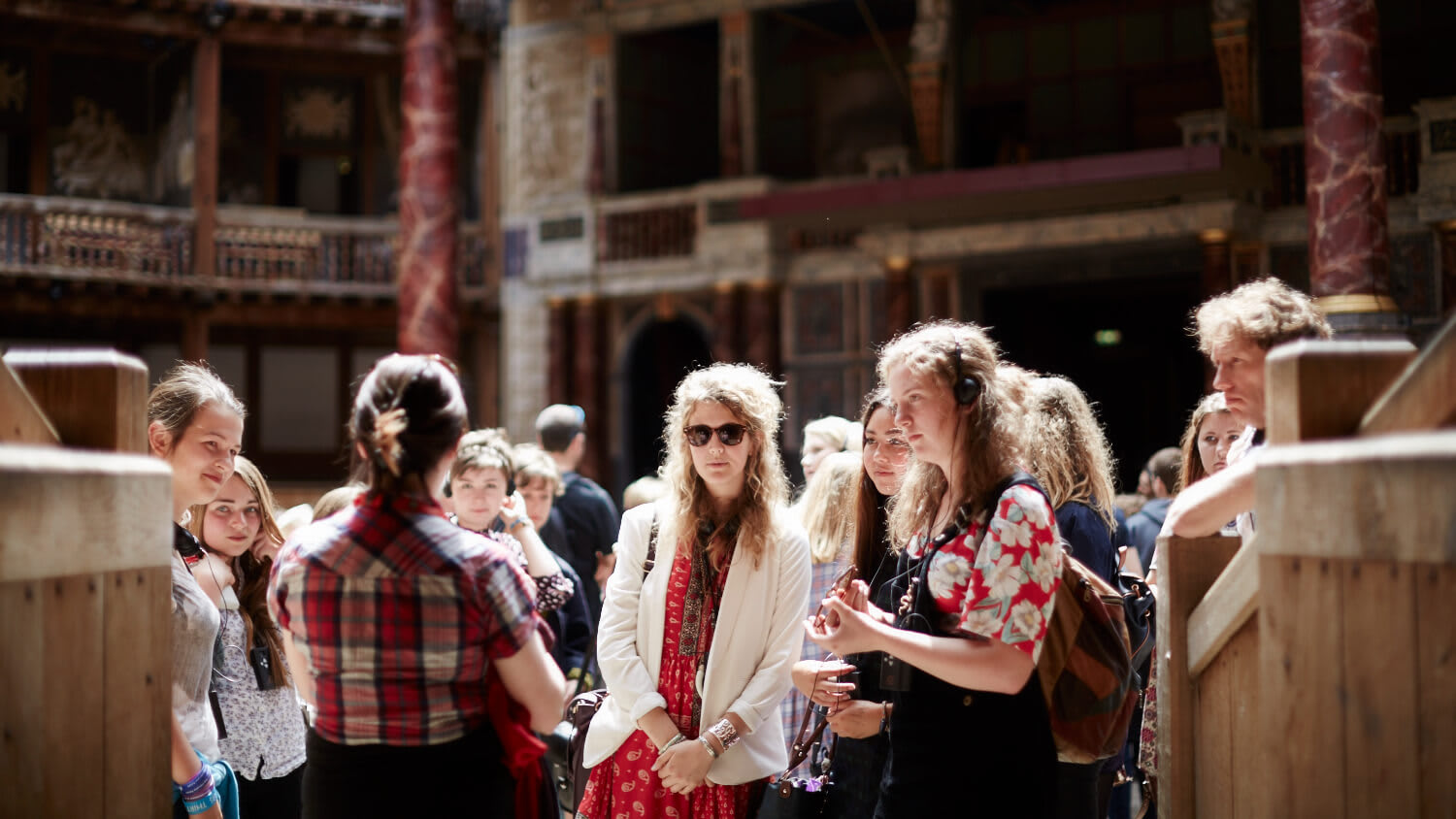
Image of Adult, Female, Person, Woman, Face, Happy, Head, Smile, People, Boy, Male, Teen, Bag, Handbag,

The zoo isn’t the only reason to visit Regent’s Park, whose Open Air Theater kicks off its season of performances as the calendar hits May. Amphitheater style in form, weather conditions mean no performance is the same twice for the 1240 audience members who’ve come to enjoy the show.

The South Bank’s Globe Theater also sees its actors hit the reproduction Elizabethan stage come May, though if you don’t make it to a performance of Romeo and Juliet or Hamlet, it’s still possible to head behind the scenes with a Globe Theater Tour.

Don’t forget that London is home to the West End, perhaps second only to New York’s Broadway for the quality of its shows. Its 38 theaters are packed out on a nightly basis with the latest in musicals, comedies and plays, whilst Hollywood blockbusters can be enjoyed in the comfort of the Curzon Soho Cinema.

Explore London’s top shopping destinations
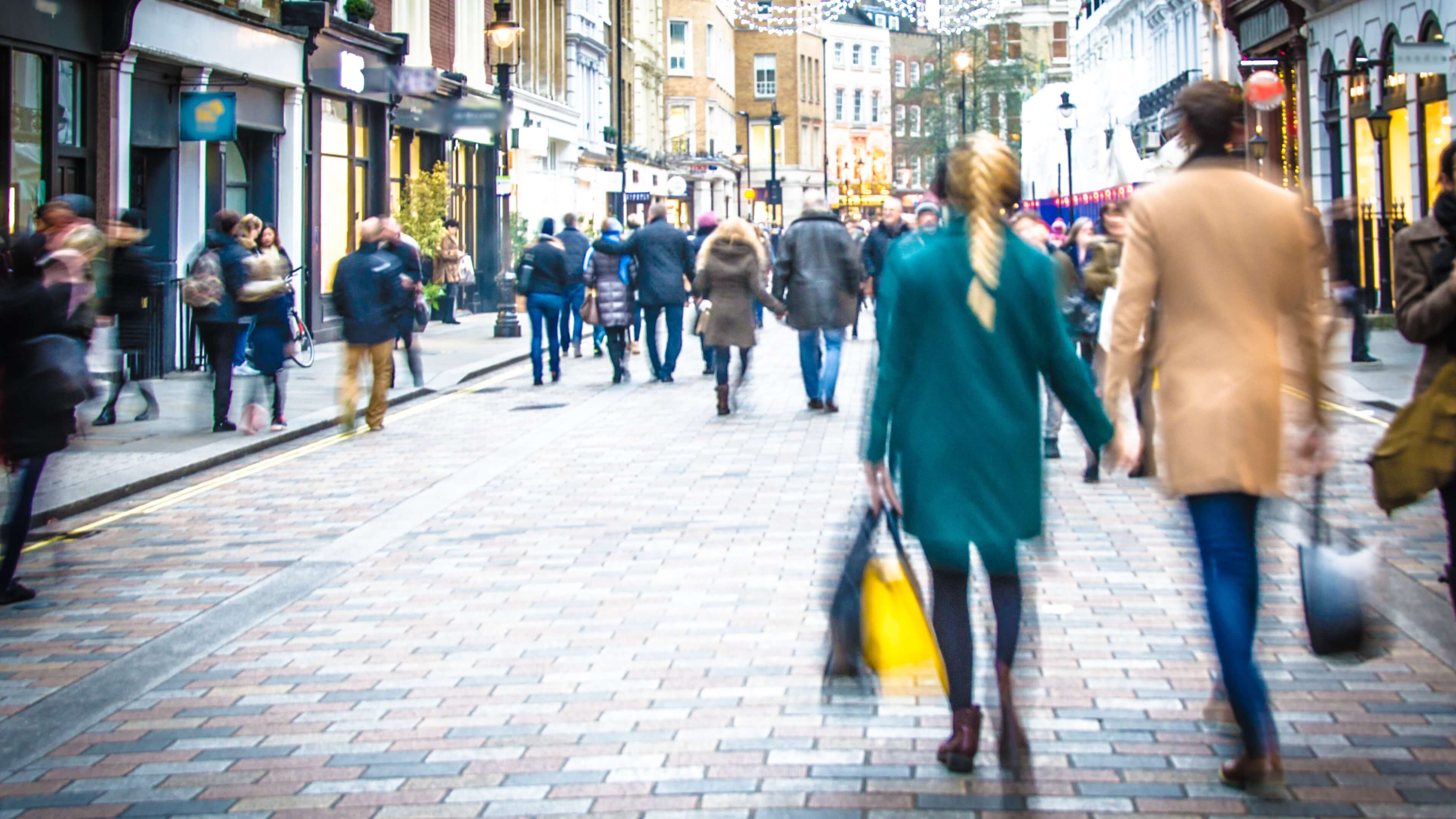
Image of Person, Walking, Pedestrian, Adult, Female, Woman, Bag, Handbag, City, Coat, Shoe, Urban,

Dating back to at least 1276, Borough Market would have been known to Shakespeare and his troupe of actors, albeit in a slightly different form than the market takes today. Back then, and until the early 2000s, it served as a wholesale and retail vegetable market. It was then transformed to become a hub for curries rather than carrots and top-notch pies rather than pineapples as the street food craze took hold.

Combining everything from food stalls to antiques and bric-a-brac, Portobello Road offers something different each day of the week (excluding Sundays when traders are given the day off but the stores lining the street are still open). The main day for antiques is Saturday, when a bit of friendly haggling may well get you that souvenir of your trip for a bargain price.

The other big name in shopping has to be Oxford Street. This broad central London thoroughfare will be able to scratch any shopping itch, since there’s around 300 stores including most of the big names and a fair few flagship stores too.

Discovery the importance of sea power to British history

Image of Face, Happy, Head, Person, Smile, Boy, Child, Male,

Say ‘flagship’ to a sailor and they’ll probably point you in the direction of HMS Belfast, the Royal Navy’s command vessel for the D Day landings in World War Two. Now a museum ship moored between London and Tower Bridge, visitors are able to explore nine decks to discover what life was like on the high seas in peace and war time.

Belfast is just one of a series of things to do in London in May visible on Thames City Cruises alongside the Houses of Parliament, London Eye and Tate Modern. Four piers dotted along the river allow you to hop-on and hop-off as you choose, with the full journey occupying the historic stretch of the river from Westminster Pier to Greenwich, a part of London bursting with attractions.

Among them are the Royal Observatory and Greenwich Meridian, from where the world takes its timings. The orange ball on the top of the observatory continues to drop at precisely 1PM each day, connected to an atomic clock – the most accurate timepieces in existence.

But the naval links don’t stop there. As well as the scientific treasures awaiting in the National Maritime Museum, including objects used by Captain Cook in his ‘discovery’ of Australia, visitors to Greenwich can also step aboard the fastest tea clipper that ever set sail – the Cutty Sark. Compare the life of sailors onboard to that of HMS Belfast built just 70 years later, or soak in the atmosphere with a traditional afternoon tea in sublime surroundings.

Unleash the secret of London in May!

Thanks to relatively stable weather conditions you won’t have to worry too much about what to wear in London in May. Instead, you can concentrate on enjoying all that London has to offer. Travel with Go City, and you’ll also have the peace of mind of knowing you’re getting substantial savings on admission compared to turning up at ticket gates on the day!

Ian Packham
Go City Travel Expert

Continue reading

London Eye
Blog

Things to do in South Bank London

Born out of the 1951 Festival of Britain and home to the London Eye, London’s South Bank occupies a prime area of riverside between Blackfriars and Lambeth Bridges. With views across the Thames to the Houses of Parliament, and galleries, theaters and other major attractions to keep you entertained, the South Bank is an unmissable part of the London cultural scene. Check out the top things to do in South Bank London right here! Enjoy the riverside location With so many familiar landmarks and photographic opportunities it would be difficult to list them all, London’s South Bank is a part of the capital you’ll want to tackle on foot. Running uninterrupted from Lambeth Bridge to the west through to Tower Bridge in the east, the Queen’s Walk follows the banks of the Thames past many of the neighborhood’s big ticket attractions. However, don’t miss the temptation to detour down its warren of side streets, which amongst other points of interest include the graffiti of Leake Street tunnel and the Old Vic Theatre – established in 1818 and still one of London’s most important performances spaces. Initially constructed as a temporary attraction to celebrate the new millennium in the year 2000, the London Eye has become a firm fixture on London itineraries. With a diameter of 120 meters, it’s one of the world’s largest Ferris wheels, although what sets it apart from the competition is its unrivalled views of the Houses of Parliament and St Paul’s Cathedral. On clear days, the views stretch 65 kilometers. Sticking firmly in the area, Gabriel’s Wharf is a little bit of authentic London within the glitz and glamor of the riverside. A pedestrianized thoroughfare lined with independent stores, cafés and restaurants, it has something for everyone, including access to the urban beach which appears on the Queen’s Walk each summer. Take your pick of South Bank’s museums When it comes to things to do in South Bank London, its museums should be high on your must-do list. Edging its southern boundary, the Imperial War Museum blends spectacular displays – the main atrium is hung with a Spitfire and V2 rockets – and the voices of ordinary citizens during times of conflict. Recognizable by the giant naval guns that dominate its front façade, also keep an eye out for the slither of Berlin Wall that sits in the gardens. Green spaces remain the theme of London’s Garden Museum. Using the former Church of St Mary-at-Lambeth as its exhibition space, it displays objects from 400 years of gardening, including the recreation of a 17th Century knot garden. Because of its previous life, the gardens also contain several tombs, such as that to Vice-Admiral William Bligh, the man who survived the Mutiny on the Bounty. Next door to the Garden Museum is the London residence of the Archbishop of Canterbury, the country’s most senior Church of England cleric. Lambeth Palace opens its gardens to the public just a few times each year, most commonly on the first Friday of the month during the spring, with admission fees going to local charities. Spend an afternoon at the Southbank Centre The bare concrete form of the Southbank Centre is an unavoidable presence filling 11 acres of prime real estate with auditoria, galleries, libraries and their adjoining meeting points. Providing performance space for no less than eight orchestras, traveling art exhibitions and a busy calendar of live events, the center is a hub of action right through the day. The Hayward Gallery hosts three or four exhibitions on modern and contemporary art each year, with past smash hit shows dedicated to Roy Lichtenstein and Bridget Riley. Meanwhile, the National Theatre, the brainchild of Sir Lawrence Olivier, has brought Hollywood royalty to its stage – Helen Mirren, Glen Close and Julie Walters are just a few of its well-known names. Things to do at the Southbank Centre also include looking for books at the secondhand market, admiring the tricks of the skateboarders in the Undercroft and soaking in the river views from the rooftop garden bar – and that’s when there’s no official event taking place! For epic cinema experiences, turn your attention to the Odeon BFI IMAX a three minute walk away. Containing the largest screen in the UK, screenings vary between specially created movies and some of the top blockbusters of the moment. Things to do in South Bank with the kids Surely one of the most unusual locations for a day out with the kids, South Bank’s County Hall is a listed building, putting it on a par with Westminster Bridge and the BBC’s Broadcasting House for national significance. But enter its interior and you’ll be faced with a very different scene from when it was home to the Greater London Council in the 1980s. Situated on the riverfront beside the London Eye, its central portion has been taken over by Shrek’s Adventure!, comprising a live immersive walk-through of a brand new story involving the world’s favorite ogre. Monsters – human and otherwise – are also in abundance amid the rides and live actors of The London Dungeon next door. Featuring 19 shows and two rides, it takes visitors on a tour of a thousand years of history, stopping by events such as the 1605 Gunpowder Plot and the streets of Whitechapel as they were terrorized by Jack the Ripper. Altogether more wholesome is the SEA LIFE Center London Aquarium. In the same County Hall building, highlights include the Shark Walk tunnel, a small colony of penguins and the country’s largest living coral reef in a tank 12 meters long. Discover the wonder of London’s South Bank Welcome to London’s South Bank, a small area of the British capital big on attractions. Easily accessible by train and Tube, this once humble south London neighborhood now contains some of the most loved attractions in the city. Things to do in South Bank London include floating above the Thames in one of the pods of the London Eye and sinking to the depths of the ocean in the London Aquarium. In between, there’s narrow streets dating back centuries, important museum collections and a fine array of restaurants too. Explore with Go City and you’ll be able to make great savings as you discover the South Bank for yourself!
Ian Packham
A row of red telephone boxes covered in snow
Blog

Visiting London in January

January is London’s quietest month when it comes to visitor numbers, meaning there are usually some great flight and hotel deals to be had. What many people don’t realize is that London in January remains a hive of activity. Not only is it still possible to experience the Christmas festivities, but also to grab a bargain in the January sales and celebrate Spring Festival with the capital’s Chinese community. Weather in London in January   London in January is typified by short days and cloudy skies. Whilst milder than most other capitals in northern Europe, temperatures struggle to hit double figures, with top daytime temperatures reaching eight or nine degrees Celsius. Rain can be expected at almost any time, although significant rainfall is limited to about a third of the month. Snow in the heart of the capital is rare, and deep snow falls even rarer. If weather forecasts hint at the possibility of a sprinkling of snow, the best places to enjoy the spectacle are attractions on the city’s outskirts such as Richmond Park or the Royal Botanic Gardens, Kew. When it comes to staying warm, be sure to pack plenty of layers, a trustworthy pair of waterproof boots and some thick socks. Then you’ll be ready for anything the unruly British weather might throw at you whilst exploring all that London vaunts, from New Year partying to renowned museums. New Year in London   London’s New Year’s Eve celebrations are beamed live across the globe. Even so, there’s nothing quite like being there in person. The countdown begins long before the midnight fireworks light up the skies above the London Eye, with restaurants booking up way in advance. The fireworks are followed by a New Year's Day Parade. One of London’s newest traditions – having first taken place in the late 1980s – the spectacle starts at noon in upmarket Piccadilly before passing through Trafalgar Square on route to the Houses of Parliament. The 10,000 participants form an eclectic mix of dancers, musicians and performers from every continent, alongside the homegrown delights of London’s Pearly Kings and Queens. But that’s certainly not the end of the seasonal festivities. Christmas in London doesn’t conclude until Twelfth Night (Epiphany) on January 6. Only then are the Christmas lights switched off, window displays removed, and Christmas trees taken down. The day is marked on the banks of the Thames at Shakespeare’s Globe by the appearance of the Holly Man. A character from pre-Christian folklore akin to the Green Giant, he symbolizes new life and is welcomed by suitably-clad dignitaries before wassailing (blessing) the river and the city. Grab a bargain   As shopping destinations go, London in January has got to be up there with the best of them. By the start of the month the biggest sales of the year are already in full swing. Few stores want to miss out on the action, with Harrods and Selfridges among the well-known names slashing prices. Although the crowds tend to form at the start of this period, many of the best discounts are to be had when the sales are wrapping up in the middle of the month. They are swiftly followed by more shopping opportunities at the London Art Fair. Collating works from over 100 of London’s independent galleries, the fair has become one of the best places to scrutinize the capital’s up-and-coming artistic talent in close quarters. And whilst all the works of painting, sculpture and photography are for sale, browsers are also very welcome. Discover major cultural events   Not content with one lot of New Year’s celebrations, the end of January (or start of February) sees another moment of feasting, this time for Chinese New Year or Spring Festival. Shifting on an annual basis with the new moon, the largest commemorations outside of Asia begin with a street parade in Chinatown containing a series of finely-decorated floats. Firecrackers then echo across Trafalgar Square to launch a day-long festival of lion dances, musical performances and a plentiful supply of authentic street food. It’s a Spring Festival tradition to mark the new year from high-up, with The View from The Shard and ArcelorMittal Orbit the perfect way to do this. January’s other big event is Burns Night on January 25. Scotland’s unofficial national day, restaurants across the capital join in with honoring the poetry of Robert Burns, author of Auld Lang Syne. Expect Scottish salmon to make an appearance, alongside haggis, neeps (turnips) and tatties (potatoes) rounded off with a portion of whisky-dosed cranachan. Or you could forgo this raspberry and cream concoction and jump straight to a whisky tasting at one of London’s cocktail bars. Tick off a museum or two   January’s rainier days are just the excuse you’ve been looking for to jump headlong into London’s museums and galleries. Whatever your interests, you can pretty much guarantee there’s a collection somewhere in the capital that suits. For an overview of two million years of humanity look no further than the British Museum, whose riches include the Rosetta Stone and the Anglo-Saxon treasures of the Sutton Hoo ship burial. Less celebrated but still worth any amount of time you can dedicate to them are Kensington Palace and the Royal Greenwich Observatory. The palace in Hyde Park was the birthplace of Queen Victoria and is presently the home of Prince William and his young family. Meanwhile, the Royal Greenwich Observatory has been leading the way in mapping and timekeeping for four centuries. Pierced by the prime meridian, it’s one of the most photogenic places on Earth to have your photo taken with one leg in the eastern hemisphere and the other in the western. Whilst in the area, take a turn at some of Greenwich’s additional attractions, including the Cutty Sark, the last tea clipper sailing ship to be built before steam power took over. Capable of conducting the journey between Chinese ports and the southeast of England in a record-breaking three months, this elegant masted vessel kept Londoners’ obsession with tea fed for just eight years before swapping to a role in the wool trade. Don’t miss your chance to save with Go City There’s plenty to see and things to do in London in January. Many of the capital’s top attractions welcome Explorer Pass holders, allowing you to save on standard admission costs. So, if you’re considering January in London because of the deals available, don’t forget to add Go City to your list of budget-stretching buys.
Ian Packham

Have a 5% discount, on us!

Sign up to our newsletter and receive exclusive discounts, trip inspiration and attraction updates straight to your inbox.