
Best Rome Souvenirs

Published: July 18, 2024
Souvenirs of Rome including a mug and a selection of fridge magnets

A trip to the Eternal City is unforgettable for so many reasons: its world-class pizza, those beautifully preserved ancient monuments, romantic strolls through the gardens of the Villa Borghese. But, if your memory ain’t what it used to be, you’ll probably want a memento of your vacation to take home with you. Or maybe just a special gift for a loved one. Either way, we’re here to help, with our guide to the best souvenirs in Rome.

Best Rome Souvenirs
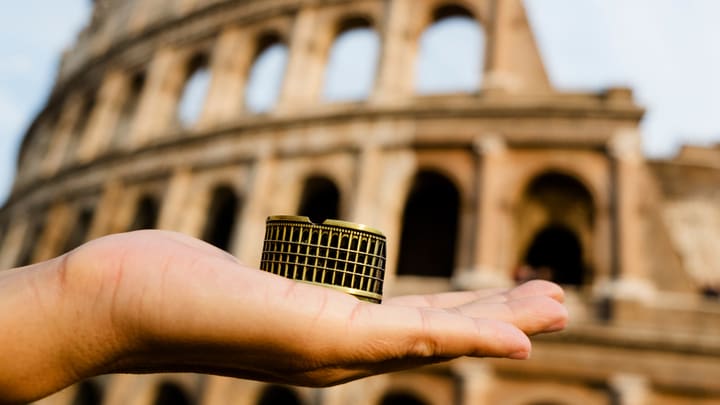
Image of Finger, Hand, Person, Adult, Male, Man, Photography, Boy, Child,

One tourist’s trash is another’s treasure and, like most capital cities worth their salt, Rome is awash with affordable trinkets and knick-knacks that will continue to bring a wistful smile to the face of their owners for many years to come. We’re talking those ubiquitous Vespa fridge magnets – available in every color under the Italian sun – and little ornaments in the shape of the Trevi Fountain, the Capitoline Wolf, the Mouth of Truth and the Pantheon. Chief among these is, of course, the Colosseum. There's seemingly no end to souvenirs related to the world’s most famous amphitheater. Keyrings, wine stoppers, mugs, t-shirts, tea towels, gladiator figurines, even snow globes – if you can think of it, it probably exists.

What else? You can get rosary beads, crucifixes, jewelry and votive candles from the official Vatican gift shops in St Peter’s Square. Or, indeed, pick up the cheaper knock-off varieties elsewhere. You can even get an effigy of Pope Francis in bronze or marble. Or treat yourself to a more affordable plastic bobblehead Pope, though you’re unlikely to find the last of these in or around the Vatican itself...

And sure, you could go shopping for expensive Italian haute couture along the exclusive Via dei Condotti, but who needs to get their threads from Armani, Valentino, Dolce & Gabbana when you can make like Pope Francis and head for Gammarelli instead? Opened in 1798, this shop sells a vast selection of ecclesiastical garments and is official tailor to the Pope himself. Pick up a pair of his famous bright red socks for yourself or for a relative, smug in the knowledge that these make a way better gift than the novelty ‘days of the week’ socks you send your dad every birthday and Christmas.

Image of Shoe, Sneaker, Adult, Male, Man, Person, High Heel,

Personalized Rome Souvenirs

Nothing says ‘thinking of you’ like a gift you’ve had personalized for someone, and what could be more Italian than a piece of marble? These two things come together in perfect harmony at La Bottega del Marmoraro on Via Margutta, just round the corner from the Spanish Steps. On entering this tiny hole in the wall, you might legitimately feel like you’ve inadvertently stepped into the workshop of an ancient Roman craftsman: walls are festooned with inscribed marble slabs and statues and busts crowd the corners. Friendly proprietor Enrico Fiorentini will happily inscribe whatever message you like into a marble tablet, for the ultimate in personalized gifts. Prices for small tablets with short messages start at just a few euros and you’re guaranteed a high-quality souvenir for your dough. Pro-tip: give some thought to an inscribed saying or motto that will mean a lot to a friend or loved one and try not to leave with a stone reading, for example, ‘Gaz woz here 2022’.

Liquid Gold
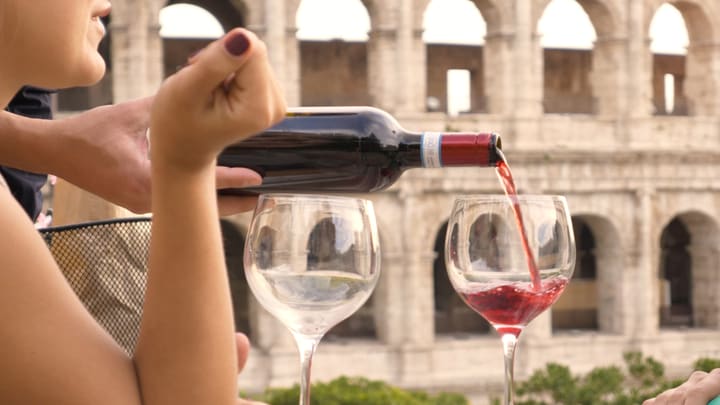
Image of Alcohol, Beverage, Adult, Female, Person, Woman,

Wine, glorious wine. Italy’s reputation for excellent vino is virtually unmatched, as anyone who has quaffed a chianti or guzzled a pinot grigio will no doubt attest. You’ll find fine wines just about everywhere here, from Tuscany to Puglia and Sardinia. But if you’re looking for something a little more local to Rome, try picking up a couple bottles of fruity red Cesanese, the Lazio region’s signature tipple, though certainly less ubiquitous than the (equally superb) local Merlot. Or grab some dry whites from Lazio’s Castelli Romani commune just south of the city. You’ll find these in any decent Rome wine shop, or at the Campagna Amica, a weekend market next to the Circus Maximus that deals almost exclusively in produce – including wine – from the Lazio region.

Easily one of the best food markets in Rome, this is also the place to get your hands on authentic local oils. Think rich, velvety extra virgin olive oil, and earthy aromatic truffle oil. Pair with some fine balsamics for the perfect souvenir gift... to yourself, natch.

Chocolate and Cheese

Image of Food, Cheese, Meat, Pork,

While you’re there, why not really fill your boots and stock up on regional cheeses? Sure, you can also get these in Rome’s fantastic cheese shops, but what could be more authentic than getting free tasters straight from the farmer who made them? Pick your favorites and splash out on kilos of creamy buffalo mozzarella, pungent Pecorino Romano and soft, sweet ricotta. Your only challenge will be making it back onto home soil without scoffing the whole delicious lot.

There’s also prosciutto, pickles, preserves and pasta galore to be found at the market, so you’re unlikely to go away empty-handed. Re: pasta, we strongly recommend buying yours here rather than succumbing to the short-lived schoolboy giggles promised by Rome’s ubiquitous packs of phallic pasta shapes. Trust us: no-one will be laughing when you inadvertently serve them up to the in-laws at your next dinner party.

Prefer the sweet stuff? The Italian chocolate-making tradition is the stuff of legend, so expect to find dozens of places selling sweet treats. The best of these are to be found in the stores of genuine artisan chocolate producers, such as Moriondo and Garglio near the Pantheon. With almost two centuries of chocolate-making experience, you can be sure the quality is going to be high. Many of their chocs are made to traditional 19th-century recipes.

Classic Rome Souvenirs
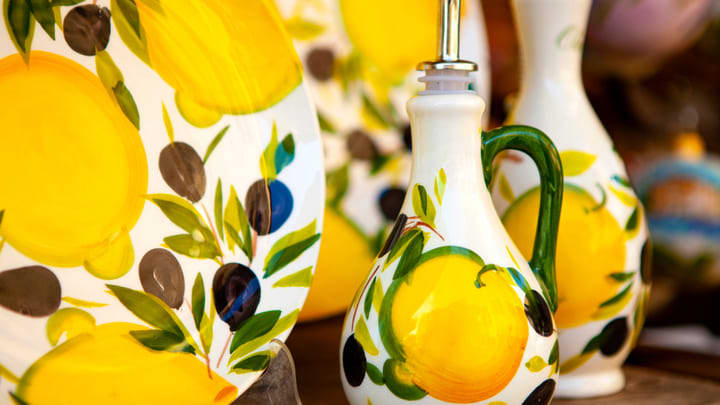
Image of

Some of the best Rome souvenirs are also some of the simplest. How about some fine Italian leather, for example? The century-old Mancini store is just a hop and a skip from the Pantheon and stocks the briefcases and suitcases that made its name way back in the day, as well as belts, purses, wallets, and plenty more well-crafted accessories. Or seek out smaller, family-run leather shops, which may well be more willing and able to make bespoke items for you on request. Leather gladiator skirt and sandals, anyone?

Meanwhile, the ceramics and glassware on display in so many shop windows and stall fronts around the city are not all destined to smash into a million pieces in your luggage on the flight home. For the good stuff – and we mean robust, good quality ceramics made by genuine artisans – dodge the tourist traps and make for Studio Forme, whose unique vases, plates, cups and ornaments are a color-popping cut above. Considered one of the very best souvenir shops in Rome, L’Artigianato on Piazza Navona is also great for ceramics... and so much more. Murano glass? Check. Designer Italian kitchenware and home furnishings? Yep, available right here. Chess and checker boards? You bet. Statues and busts of Roman emperors? Oh, go on then!

Save on things to do in Rome

Save on admission to Rome attractions with Go City. Check out @GoCity on Instagram and Facebook for the latest top tips and attraction info.

Stuart Bak
Stuart Bak
Freelance travel writer

Stu caught the travel bug at an early age, thanks to childhood road trips to the south of France squeezed into the back of a Ford Cortina with two brothers and a Sony Walkman. Now a freelance writer living on the Norfolk coast, Stu has produced content for travel giants including Frommer’s, British Airways, Expedia, Mr & Mrs Smith, and now Go City. His most memorable travel experiences include drinking kava with the locals in Fiji and pranging a taxi driver’s car in the Honduran capital.

Continue reading

St. Peter's Basilica viewed from St. Peter's Square
Blog

Rome in March

As the clocks prepare to jump forward, Rome is propelled into one of its most eventful months of the year so far. From religious festivities to athletic events, the city takes on a whole new buzz throughout this period. Between the newfound electric atmosphere and more pleasant springtime weather, Rome in March has plenty to offer. Visiting Rome in March Average Temperature: 43 - 63°F • Average Rainfall: 7 days/mth • Average Sunshine: 7 hours/day Spearheading the beginning of spring, March stands to many as one of the truly best times to visit Rome. Though still in its low season with much of the capital remaining relatively quiet by tourism standards, a number of events see Rome take on more of a charged atmosphere throughout the month. What that typically means is that, outside of large event days, many of the city’s top attractions and landmarks should be relatively straightforward to visit and absent of too many crowds. On top of that, visitors throughout this period can usually benefit from off-peak airfare and hotel rates, sometimes making for quite the substantial discount against high-season summertime prices. To further sweeten the pot, March typically sees the weather in Rome begin to improve significantly. Temperatures throughout the month tend to range from comfortably cool to rather warm, and while you’d be best advised to pack an umbrella for the relatively high likelihood of rain, you’ll most likely be treated to largely clear, sunny days throughout most of your trip. Things to do in March No trip to Rome is ever complete without touring some of the ancient city’s most lauded historical landmarks. The famous Colosseum remains the world’s largest standing amphitheater and provides a window into the gory pastimes of the lost civilization, while the Pantheon remains a marvel of religious architecture. While you’re at it, be sure to take some time to explore the world’s smallest country with a jaunt into Vatican City. Despite its mere 0.2-square-mile footprint, the site is home to some of the most stunning and historically-rich buildings on the planet. As the beating heart of Roman Catholicism, the Vatican boasts the masterful architecture and artwork of the Sistine Chapel, as well as one of the world’s most precious historical collections within the Vatican Museums. For some stellar photo ops, make your way to Trevi Fountain and the Spanish Steps, where the smaller crowds of Rome in March should hopefully allow you the freedom to snap that perfect shot. But if you’re looking for something a little different, the likes of the Pyramid of Cestius and the ruins of the Roman Forum make for some slightly more niche photos. If you find yourself with enough time during your trip, why not try to fit in a little more of Italy? Destinations such as Naples, Florence and historic Pompeii serve as a fantastic opportunity to experience more of the country’s celebrated history, architecture, cuisine and culture. Sitting only a short train journey from Rome, they each make for a great day trip away from the capital. For those with a taste for the macabre, there’s somewhat of a darker and lesser-seen side to the Italian capital. The Roman Catacombs, for example, are a set of over sixty subterranean passages running for miles beneath the city, lined floor to ceiling with the skeletal remains of a civilization long since passed. In the same vein, the Capuchin Crypt is a small space located beneath the church of Santa Maria della Concezione dei Cappuccini, adorned with the skeletons of thousands of Capuchin friars buried by their order in centuries gone by. What's On in March Easter As the proud home to one of the world’s most important religious sites, it should come as no surprise that Rome takes its Catholic celebrations very seriously. Thousands of faithful pilgrims make their way to the Vatican each year to join in what may be the most significant Easter celebration on the planet, complete with a full program of masses, processions and traditions overseen by the Pope himself. While Vatican events are entirely free, those interested should be sure to book tickets in advance to avoid disappointment. Throughout the Easter period, many retailers, bakeries and cafés throughout Rome offer up a whole host of festive fare. Most common among these treats is colomba, a traditional dove-shaped cake made from a soft dough, not too dissimilar to panettone more commonly eaten around Christmas time. Somewhat ironically given the brief influx of visitors is the fact that Easter is one of the few times when Rome is almost completely empty. With most visitors and locals alike taking part in celebrations at the Vatican or at home, this is the perfect opportunity for those with less of an interest in the holiday to enjoy some of the city’s often busiest attractions and venues at their quietest – most of which remain open throughout the Easter period. Festa della Donna Coinciding with International Women’s Day on March 8, Italy’s Festa della Donna sees Rome in bloom with bright yellow Mimosa flowers in honor of its female population. The day serves as somewhat of a more Italian Valentine’s Day, with many men traditionally treating their partners to dinner and a bunch of pretty Mimosas. Many women also take the day as an opportunity for a girls’ night out, gathering for dinner and drinks and often dressing fittingly in all yellow. A staple of Roman life for the best part of a century (or even longer, depending on who you ask), the Festa della Donna serves to recognize women’s day-to-day efforts and sacrifices. St. Patrick’s Day Second home to all manner of expats from around the world, Rome makes sure to put on a show for some of the year’s most popular international events. Early on March 17, one or more of Rome’s central churches will host a mass in honor of Ireland’s patron saint for the city’s growing Irish population, and many venues throughout the city host special events throughout the day (many alcohol-related). If you’re looking to celebrate in true Irish fashion, you’ll want to make your way to one of Rome’s Irish pubs to sink a few pints of Guinness with your fellow visitors and expats. Some of the most popular venues include The Druid’s Den, The Fiddler’s Elbow, Finnegan’s and Scholars Lounge, most of which have live bands playing traditional Irish ditties through to the wee hours of the morning. As you stumble between pubs or back to your hotel in the evening, keep your eyes peeled to see some of the city’s most iconic landmarks bathed in a lush Irish green as part of Tourism Ireland’s Global Greening marketing campaign. Having now run for over a decade, this campaign has in previous years seen the likes of even the Colosseum and Trajan’s Column don their Irish jackets for the day. Run Rome Marathon Get your training shoes ready and lumber up ahead of your trip to Rome in March for one of the world’s most stunning marathons. Each March, Run Rome draws in hundreds of Romans and visitors alike for an exhilarating 26-mile exploration of the eternal city. The course takes avid athletes on a whirlwind tour across the antique cobblestones of Rome, beginning by the Colosseum and continuing along the Fori Imperiali and through St. Peter’s Square at the Vatican. Passing by many of the city’s most iconic landmarks, a ticket for the Run Rome Marathon means admission to a rare open-air museum available only to the athletically ambitious.
Robert Heaney
The Trevi Fountain in Rome, illuminated at dusk
Blog

5 Days in Rome

Packed to bursting with more household-name attractions than you could shake a very large scepter at, Rome is one big open-air museum. Think the Colosseum, the Pantheon, the Roman Forum, the Baths of Caracalla, the Circus Maximus and St Peter’s Basilica. And that’s just for starters. There are also lush green parks to relax in, hills to climb for sigh-inducing city views and, of course, all the authentic wood-fired pizza and creamy gelato you can eat. Spend five days in Rome and you’ll just about scratch the surface of this endlessly fascinating city, experiencing just enough of its atmospheric cobbled lanes, charming piazzas and ancient monuments to whet the appetite for a second visit. The sheer number of things to see and do around the city is staggering, making it difficult to know where to even start. Fear not though: our suggested 5-day Rome itinerary is here to help guide and inspire you. Day 1: Ancient Rome Bucket List Bonanza There’s no point beating about the bush: you came to Rome to snap a selfie in front of the Colosseum. Everything else is just gravy, right? So let’s dive straight in with a day one itinerary that takes in not just one, but four of Ancient Rome’s biggest hitters. First stop on your self-guided walking tour is – you’ll be pleased to hear – the Colosseum. Grab that much-anticipated snap then step inside to experience the largest and best-preserved ancient amphitheater ever built. It doesn’t take a whole lot of effort to imagine the roar of the crowd baying for gladiator blood in one of the deadly battles that were staged here on an almost daily basis nearly 2,000 years ago. Suitably roused, it’s onwards to the Roman Forum, the city’s ruined former heart, which contained markets, temples, brothels and more, then up Palatine Hill where, legend has it, Rome’s mythical twin founders Romulus and Remus were raised by a she-wolf. Wildflowers grow among the ancient ruins atop this verdant oasis and there are excellent views of the Forum and Aventine Hill from one side, and the Circus Maximus, Colosseum and Capitoline Hill from the other. Not ready to throw in the towel just yet? Continue your walk to the ancient Baths of Caracalla, a spa complex that would have accommodated up to 1,300 bathers at a time back in the day. If you still have energy after that, you’re not a million miles from Aventine Hill, atop which stars of the show include the legendary Mouth of Truth (Bocca della Verità) and a keyhole through which you can view the dome of St Peter’s Basilica framed by perfectly manicured cypress trees. After all that, your first large glass of chilled pinot grigio will be richly deserved. Pro-tip: Go City’s Rome Explorer Pass includes an audio tour that covers part of this itinerary, taking in the Colosseum, Forum and Palatine Hill. Day 2: Villa Borghese Footsore and hungover, you’ll be looking for something a little less taxing on day two of your 5-day Rome itinerary. Step forward Villa Borghese, Rome’s great green lung, packed with beautiful villas, gardens and monuments. Grab a picnic from the morning market on Campo dei Fiori – some salami, pecorino and fresh focaccia ought to fit the bill – and find a shady spot among the park’s towering plane and pine trees to stretch out, savor your lunch and enjoy some blissful Rome relaxation. Afterwards, pop by the Galleria Borghese, home of landmark works by Italian masters, including Raphael’s Deposition, Caravaggio’s Saint Jerome, and Bernini’s dramatic Apollo and Daphne sculpture in smooth Carrara marble. There’s also a temple, a slew of grand villas, several fountains and gardens, a lake and a puppet theater to explore in and around the park. The ever-popular Spanish Steps are tantalizingly close by, too, should you wish to tick off another of the city’s top attractions before returning to your hotel. Day 3: Trastevere For the third of your five days in Rome, head for the laidback Trastevere neighborhood. Just downriver from the Vatican, it feels a long way from the honking car horns of the city center, with oodles of atmospheric alleys, pretty piazzas and Instagrammable ocher-colored houses with painted shutters, vines that wrap around wrought-iron balconies and window boxes that burst with joyful blooms. Take time to visit the duo of stunning churches here. One of Rome’s oldest, the Basilica of Santa Maria in Trastevere has sections that date from the 4th Century, as well as a Romanesque 12th-century bell tower and incredible mosaics by artist Pietro Cavallini. Cavallini’s masterpiece, a huge fresco depicting the Last Judgment, can be seen at the nearby Church of Santa Cecilia in Trastevere, alongside several other fine medieval artworks. Climb Janiculum Hill for sweeping views along the Tiber to the dome of St Peter’s Basilica and beyond, find your inner zen in the Japanese garden at the Botanical Gardens, and take in a little more art at the Palazzo Corsini where the collection includes fine pieces by Caravaggio, van Dyck, Rubens and more. Reward yourself with an authentic artisan gelato – flavors in these parts range from traditional stracciatella to a somewhat more challenging artichoke sorbet – and stick around for evening, when Trastevere’s piazzas burst into life as locals come together for fine wine, delicious local craft ales and the best thin and crispy pizza this side of Naples. Day 4: Vatican City and Castel Sant’Angelo There aren’t many cities you can visit where you get two countries for the price of one, but this is one of them, and a visit to the Vatican City should be considered an essential part of any 5-day Rome itinerary worth its salt. You’ve spent the last three days snapping St Peter’s Basilica from various other vantage points around the city. Now’s your chance to get inside and see Michelangelo’s iconic dome up close, with its biblical scenes by Botticelli, Perugino and Michelangelo himself. The basilica also contains dozens of other works of fine art and sculpture, including Michelangelo’s Pieta and Bernini's vast bronze Baldacchino, as well as relics such as St Peter’s chair and tomb. And of course no visit to Rome would be complete without visiting the planet’s most famous fresco on the planet. You can get a combi ticket for access to the Sistine Chapel as well as several other Vatican museums, including impressive collections of classical sculpture, modern art and more. Sure, there’s a lot to take in here, but if you arrived early enough it’s worth making time to pop over to Castel Sant’Angelo for a quick mooch around. This imposing cylindrical fortress was commissioned by Emperor Hadrian as a family mausoleum 2,000 years ago. It’s now a fantastic museum chock-full of frescoes, sculptures, paintings and military weaponry, all topped off with far-reaching views across the Eternal City from the lofty castle terrace. Day 5: A Spot of Souvenir Shopping Now’s the time to mop up any of those must-see attractions that you just didn’t have time to visit. Whaddya mean you haven’t thrown a coin into the Trevi Fountain yet? Or enjoyed the uniquely mesmerizing experience of watching rain cascade through the Pantheon’s oculus during a downpour? Make time to grab some gifts for loved ones and a few souvenirs for yourself. We’re talking fruity Lazio region wines and olive oils, tangy pecorino cheeses and – naturally – armfuls of Colosseum keyrings, Forum fridge magnets, Vatican votives and Trevi Fountain t-shirts. Finish up with an atmospheric evening stroll through baroque Piazza Navona, pausing for a romantic selfie at Bernini’s Fontana dei Quattro Fiumi (Fountain of the Four Rivers), before settling in at one of the local trattoria for wood-fired pizza and a few local craft ales. Save on things to do in Rome Save on admission to Rome attractions with Go City. Check out @GoCity on Instagram and Facebook for the latest top tips and attraction info.
Stuart Bak
Stuart Bak
Italian National Republic Day Air Show
Blog

Rome in June

Waving off the final days of spring, Rome prepares to welcome the busiest period of the year. Ahead of the academic summer break and the waves of holiday-making families, many choose this month to experience all that Rome has to offer during one of its most idyllic periods. A trip to Rome in June comes packaged with glorious Mediterranean weather, a bustling city atmosphere and a host of hotly-anticipated seasonal events. Visiting Rome in June Average Temperature: 63 - 84°F • Average Rainfall: 4 days/mth • Average Sunshine: 9 hours/day Standing as the boundary between spring and summer, June is very much a period of transition for Rome. Throughout the month, the city waves off the final days of the spring shoulder season and beckons in the coming flocks of summertime tourists. Though Rome can rarely ever be considered quiet, owing to the largely evergreen nature of its most popular attractions, you can expect Rome to get a whole lot busier from June onwards. Come sufficiently early in the month, and you may just be fortunate enough to benefit from the final few off-season deals on airfare and accommodation prices. For the rest of June, though, the eternal city truly begins to fill up with visitors from across the globe, all vying for a chance to experience Rome’s unique blend of culture, cuisine and history. If you’re keen to join in on Rome’s famous bustling atmosphere, then this is the time to come. As summer rolls around, Rome’s renowned Mediterranean climate falls into place. Average temperatures flirt between pleasantly mild and comfortably warm, aided by regular sunshine and low rainfall. Whether you see yourself exploring the ancient city’s streets or sunbathing on a traditional Italian terrace, Rome’s weather in June is hard to beat. Things to do in June Known as the eternal city, Rome is widely popular for its vast collection of world-class historical sites. Most popular is naturally the Colosseum, one of the most recognizable UNESCO World Heritage Sites and the world’s largest standing amphitheater. Also protected by UNESCO is the Pantheon, the maintenance of which permits visitors a remarkable window into daily life in ancient Rome. Second only to these lauded historical sites, Vatican City is one of the most popular sights in Rome. The beating heart of Roman Catholicism and the smallest country in the world, the Vatican is famous for being the permanent residence of the Pope and the site of the famous Sistine Chapel, where Michelangelo’s legendary frescoes continue to inspire onlookers. Also popular with many tourists is the expert Baroque craftsmanship of Trevi Fountain and the monumental Spanish Steps traversing the steep slope between Piazza di Spagna and Piazza Trinità dei Monti. Around this time of year, these areas can get very busy during peak times, so it’s best to visit early in the day if you want to enjoy them in their more authentic state. Those looking to retrace the steps of Europe’s most notable historical empire can explore the ruins of the Roman Forum, once the site of important Roman governmental buildings. A similar site stands atop Palatine Hill, Rome’s most ancient area and the supposed location of the fabled Lupercal cave of ancient Roman myth. For those with a taste for the dark and macabre, there’s a hidden underworld to Rome waiting to be explored. The Rome Catacombs comprise hundreds of miles of subterranean tunnels stretching far beneath the city, notable for housing the remains of thousands of ancient Romans. While much of Rome is easily accessible on foot, a Big Bus Rome pass offers an alternative means of getting around while giving your feet a likely well-needed rest. With its hop-on, hop-off policy and its main route passing by many key landmarks and attractions, accompanied by optional audio commentary packed with local insights, this is one of the most convenient and comfortable ways to explore the city. What's On in June Republic Day On June 2, Italy celebrates its most important public holiday with the Festa della Repubblica, marking the anniversary of the formation of the Italian republic in 1946 and the resulting unity of previously fractured Italian states into one uniform nation. As a public holiday, many stores and services are likely to remain closed for the day. While some take the opportunity to kick back with a day off work, many flock to grab a seat along Via dei Fori Imperiali to watch the annual military parade, attended by all departments of the Italian military and their accompanying marching bands. One of the parade’s highlights is a flyover by the Frecce Tricolori, in which nine Italian Air Force aircraft soar overhead, leaving streaks of green, white, and red smoke in the sky. Rock in Roma It wouldn’t be a European summer without the introduction of festival season. Rock in Roma takes place over multiple weeks and draws in thousands of rock fans of all shapes, sizes and nationalities to enjoy the stellar performances of some of the world’s biggest names in rock. Previous editions have included sets by the likes of the Red Hot Chili Peppers, Phoenix and Marilyn Manson. Lungo il Tevere One of the most hotly anticipated festivals of the year, Lungo il Tevere (‘Along the Tiber’) attracts hordes of visitors keen to join in on its unique and exciting program of riverside events and activities. It isn’t difficult to notice when the festival comes to town, with the banks of the Tiber simply brimming with all manner of event stands, art installations and interactive exhibits. The event typically lasts the duration of summer, with a vast program of evening shows, performances, improvised theater and live music concerts by local bands at its core. During the daytime, though, the venue stands as somewhat of an interactive expo of art installations, unique photo ops and street arcade games like air hockey and foosball. Usually accompanying the festival is a market of local vendors selling all manner of wares, from vintage records to hand-crafted jewelry. Sometimes present at the market are the likes of tarot readers and petting zoos hosted by local animal shelters charities. The festival also hosts a number of pop-up restaurants, cafés and bars, offering cuisine and beverages both local and international.
Robert Heaney

Have a 5% discount, on us!

Sign up to our newsletter and receive exclusive discounts, trip inspiration and attraction updates straight to your inbox.