
Things to do in Trastevere Rome

Published: July 18, 2024
A cobbled street full of typical ocher-colored houses in Trastevere, Rome

Just downriver from the Vatican, Trastevere shares with its ecclesiastical neighbor a distinctly different flavor to the rest of Rome: quieter, less hectic and, well, more Trastevere. Not for this laid back neighborhood the impatient car horns and frantic bustle of via del Corso, the chaotic crowds that plague the Trevi Fountain or the tat-toting tourist traps hawking trashy trinkets. No: the pace of life in Trastevere is far more gentle – well, during the day anyway (its lively nightlife is part of its enduring charm).

Wander this medieval labyrinth of cobbled lanes, piazzas and hidden squares and you’ll soon feel a world away from Rome’s chaotic center. This in spite of Trastevere being a mere half an hour’s walk from bucket-list Rome attractions including the Colosseum, Roman Forum and Spanish Steps. But, trust us, Trastevere is another essential addition to your itinerary of must-sees when visiting the Eternal City. Without further ado then, here’s our guide to the best things to do in Trastevere Rome.

Fill Your Instagram Feed
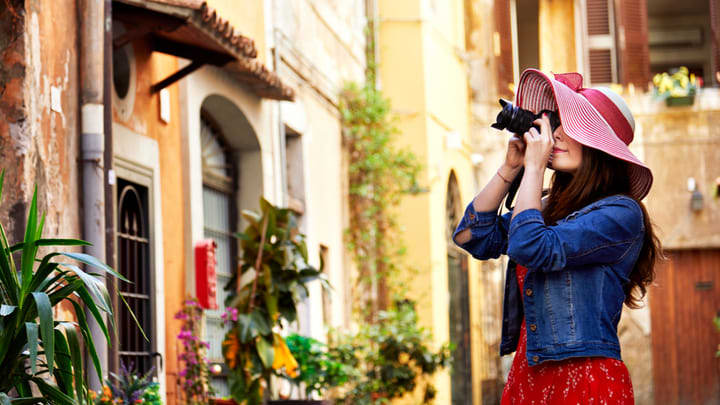
Trastevere is a neighborhood that just begs to be photographed. And it’s easy to while away a few hours just strolling its atmospheric alleys, pausing to people-watch over espresso and cannoli in cobbled piazzas, and snapping its achingly photogenic medieval churches, brightly painted window shutters, quirky cast-iron door knockers and that ubiquitous Rome style icon, the strategically positioned Vespa scooter. Washing hangs from balconies across narrow lanes where ocher-colored houses fairly drip with ivy and flower-crammed window boxes pop with bright blooms. Heck, even the graffiti here looks great on Instagram! Get snapping!

Have a Religious Experience
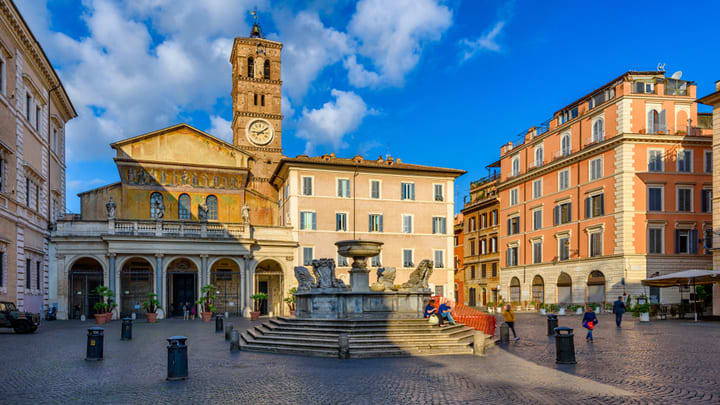
Did you know Rome has close to a thousand churches? Well, you do now. Better still, every single one of them is free to visit: great news for art-lovers and aficionados of fine architecture. And, boy, does Trastevere have some beauties! The Basilica of Santa Maria in Trastevere is one of Rome’s oldest, with parts dating back to the 4th Century, and many of its finer features dating from medieval times, among them a striking 12th-century Romanesque bell tower and beautifully preserved religious mosaics by artist Pietro Cavallini. Visit the nearby Church of Santa Cecilia in Trastevere to view Cavallini’s huge Last Judgment fresco, considered by many to be his masterwork, and see the Martyrdom of Saint Cecilia, a baroque marble statue by Renaissance sculptor Stefano Maderno.

Climb the Janiculum
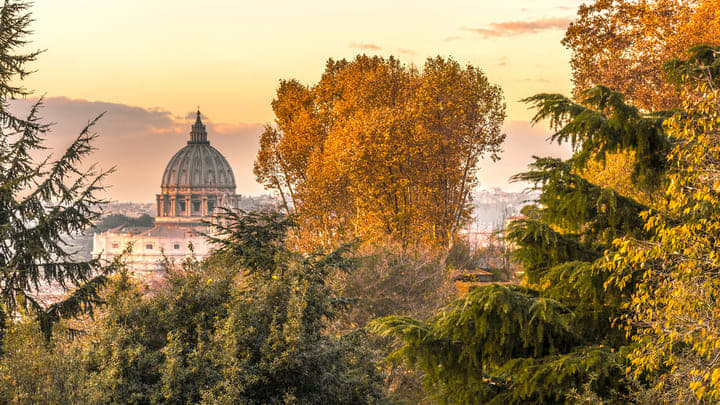
At 88 meters, Janiculum Hill is the second highest in Rome (after the soaring Monte Mario). Pack some piquant Italian salamis, freshly baked focaccia, a wedge of pecorino and that all-important bottle of barolo and reward yourself with a picnic overlooking the city when you reach the summit. It’s around a 25-minute walk (or 5 minutes in a cab) from Trastevere to the top. Take in those majestic views of St Peter’s and the Eternal City as you lunch, then have a stroll round the various attractions up here. Don’t miss the imposing statue of Garibaldi on horseback and the monumental 17th-century fountain with decorative marble carvings of dragons and eagles, the Borghese family emblems. Time your visit to catch the daily cannon fire at noon, a tradition that dates back to 1847.

Have a Gelato on Piazza Trilussa

A favorite place for locals to meet and mingle, Piazza Trilussa is a bustling small square that overlooks Ponte Sisto and the Tiber. Grab yourself an authentic gelato from nearby Otaleg! (yep, that’s ‘gelato’ written backwards) where the rainbow of unusual flavors includes kiwi, mango with chocolate and, um, an artichoke sorbet. Slurp slowly from the excellent people-watching vantage point that is the piazza’s monumental fountain, before taking a stroll across the medieval bridge.

Visit the Museo di Roma

The Museo di Roma in Trastevere is set inside a converted 17th-century Carmelite convent with a picture-perfect apricot-colored facade. Step inside to discover a treasure trove of art and artifacts relating to the Eternal City. As well as historical scenes lovingly recreated in life-size – one depicting boozy revelry at a local inn being a particular highlight – visitors can expect exhibitions that focus primarily on Roman life in the 18th and 19th centuries, with stories told through the eyes of local artists. Chief among these is 19th-century watercolor maestro Ettore Roesler Franz, whose many works of disappearing urban and suburban views are well represented here, providing a fascinating insight into the rapid development of the city in the late 1800s.

Relax in the Botanical Gardens
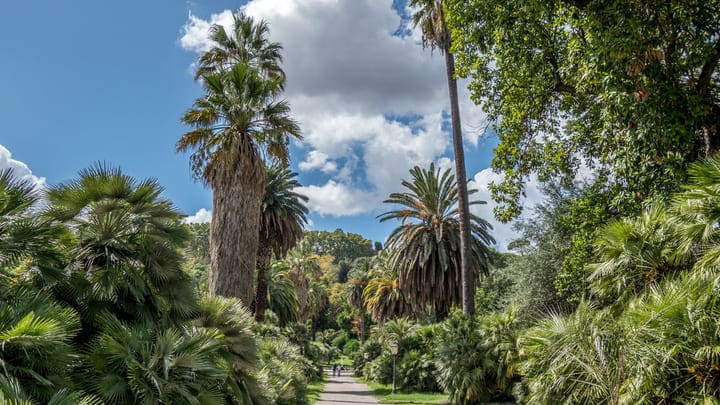
There are more than 3,000 species of plants to explore at the Orto Botanico, set on the slopes of Janiculum Hill overlooking the baroque 17th-century Palazzo Corsini. This peaceful oasis feels a million miles from the bustle of the city – stroll among the bonsai trees and trickling waterfalls in the ultra-zen Japanese Garden and you’ll soon see what we mean. There’s also a sensory garden, a rose garden, several greenhouses containing tropical plants, and a fine bamboo grove sited next to a section of the city’s ancient Aurelian Walls, built way back in the 3rd Century. Hop over to the Palazzo Corsini afterwards to view its collection of artworks by Caravaggio, van Dyck, Rubens and more.

Hunt for Flea Market Treasure

Porta Portese’s Sunday flea market is the biggest in Rome, stretching for around a mile from its entrance at the imposing city gate that gives the market its name. Incurable rummagers are in for an absolute treat here, where with the right amount of dedication to the hunt and an expert knack for haggling, you might just walk away with that rare 1994 Judge Dredd comic that’s eluded you all these years. But be warned: there’s an awful lot of trash here, too. Mountains of it, in fact. So be prepared to kiss a lot of frogs before you find your prince. Above all though, have fun! Pro-tip: take cash with you as stallholders here generally don't accept credit cards.

Enjoy the Fabulous Trastevere Nightlife

Trastevere really comes to life at night, as locals hit the piazzas for pizza, beer and a catch-up. Wood-fired, wafer-thin, ultra-crispy and hot from the oven, the pizza in Rome is – perhaps unsurprisingly – among the best on the planet. Locals swear by Pizzeria ai Marmi, a Trastevere institution with huge marble tables and a smattering of outdoor seating. Choose your toppings and get stuck in, but note that Romans consider pizza a meal for one. Trading slices is fine, but ask for a single pizza between two at your peril! Trastevere also has some great bars serving up fine local craft ales: dodge the ubiquitous Peronis and Morettsi and head to Ma Che Siete Venuti a Fà on Via Benedetta for its ever-changing selection of artisanal ales. Just across the lane, Bir & Fud offers more of the same, with a side order of excellent, Neapolitan-style wood-fired pizza. The best of both worlds.

Save on things to do in Trastevere Rome

Save on admission to Rome attractions with Go City. Check out @GoCity on Instagram and Facebook for the latest top tips and attraction info.

Stuart Bak
Stuart Bak
Freelance travel writer

Stu caught the travel bug at an early age, thanks to childhood road trips to the south of France squeezed into the back of a Ford Cortina with two brothers and a Sony Walkman. Now a freelance writer living on the Norfolk coast, Stu has produced content for travel giants including Frommer’s, British Airways, Expedia, Mr & Mrs Smith, and now Go City. His most memorable travel experiences include drinking kava with the locals in Fiji and pranging a taxi driver’s car in the Honduran capital.

Continue reading

Woman taking photographs in a picturesque square in Trastevere, Rome
Blog

Week in Rome

Planning to spend a week in Rome? Well, lucky you! Many visitors to the Eternal City make the error of booking just two or three days here, then end up rushing around, frantically trying to tick off as many bucket-list attractions as possible. The best way to experience this sometimes chaotic city is sloooowly, pausing for Italian espresso and cannoli when the mood takes you and lingering at attractions like the Colosseum and St Peter’s Basilica long enough to get a real feel for the place, rather than just a few hurried photographs. There’s so much to see and do in Rome. Seven days feels just about right to enjoy a relaxed sightseeing break and to really fall in love with the place. Do bear in mind though that time spent queueing at the more popular attractions will add up. So decide on your must-sees, book skip the line tickets where possible and be inspired by our suggested itinerary for a week in Rome. Day 1: Ancient Rome Good news! Many of the most sought-after attractions in Rome are within fairly easy walking distance of each other. It’s perfectly possible, for example, to experience the well-preserved ancient ruins of the Colosseum, Roman Forum and Palatine Hill in a single day. Start at the Colosseum, where a tour of the interior really brings this vast amphitheater to life. Close your eyes and imagine the roar of the crowd baying for thieves and swindlers to be thrown to the lions 2,000 years ago. Wander the avenues of the Roman Forum, taking in huge arches, ruined temples, great columns and spooky headless statues before heading up Palatine Hill. It’s here, among the colorful wildflowers, hilltop ruins and sweeping views of the ancient city, that Romulus and Remus, Rome’s mythical founders, are said to have been raised by a she-wolf. If you've got enough gas left in the tank after all that, spend your first evening in town getting to know atmospheric Piazza Navona, with its beautifully illuminated Bernini fountain, theatrical street entertainers and fairytale churches and palazzos. Day 2: Villa Borghese and a Few Bucket List Biggies This one is a little hectic, and you may wish to skip one or two of the attractions on the list and return to them on a less packed day. Start your morning with a visit to the Pantheon, one of Rome’s best-preserved Ancient Roman structures, with its fine portico featuring 12 grand Corinthian columns, checkerboard marble floors and impressive concrete dome complete with oculus, a central opening that allows sunlight (and indeed rain) to pour inside. It’s less than half a mile from here to the Trevi Fountain. And can you truly say you’ve visited Rome before you’ve jostled your way through the crowds to toss in your coin? Another half mile takes you to the foot of the Spanish Steps. Steel yourself for the 135-step climb to the top, where the majestic Trinità dei Monti church with its elaborate decorative features and pair of 17th-century anamorphic frescoes are your well-deserved reward. Spend the afternoon exploring Villa Borghese’s sumptuous formal gardens and exquisite villas, and pay a visit to the Galleria Borghese, where landmark works include Caravaggio’s Saint Jerome, Raphael’s Deposition, and Bernini’s Apollo and Daphne sculpture. Or, you know, just grab a smooth, creamy gelato and sit on the lawns people-watching for a few hours. Day 3: Trastevere A week in Rome most definitely merits at least one day spent exploring the medieval cobbled lanes, atmospheric alleyways and pretty piazzas of Trastevere, a laidback neighborhood just downriver from the Vatican. Here’s where to find beautiful churches, ocher-colored houses draped in vines and brightly blooming window boxes, and some of the finest pizza this side of Naples – wafer-thin, crispy crusted, wood-fired and fresh from the oven. A walk up Janiculum Hill reveals sweeping city panoramas, as well as plenty of Instagrammable attractions, including an imposing statue of Garibaldi on horseback, a monumental 17th-century fountain with marble carvings of eagles and dragons, and a sprawling botanical garden. Day 4: Museums and More If ancient artifacts are your thang, you’ve come to the right place. The Capitoline Museums atop Capitoline Hill are reached via a long and graceful Michelangelo-designed staircase, and the climb is well worth it for the multiple museums containing classical statues, medieval bronzes, Roman pottery and a veritable treasure trove of paintings and sculptures from the likes of Caravaggio, Rubens, Titian and van Dyck. Highlights here (and, believe us, there are many!) include the famous statue of the Dying Gaul and the symbolic Capitoline Wolf, a large bronze piece depicting the mythical Romulus and Remus being suckled by the she-wolf who raised them. Afterwards, wander downriver to take your chances with the Mouth of Truth (Bocca della Verità) – a forbidding medieval marble mask that invites you to place your hand inside its mouth, at peril of having it bitten clean off if you've ever told a lie. Then, hopefully with both hands intact, make your way to Aventine Hill for one of the coolest views in town: the dome of St Peter’s Basilica framed by an avenue of perfectly manicured cypress trees, seen through the keyhole of an otherwise fairly unassuming door. Magical. Day 5: The Appian Way A walk on the Appian Way is an absolute must when spending a whole week in Rome. Seemingly frozen in time, much of this ancient Roman road remains unaltered since Julius Caesar marched his armies along it 2,000 years ago. The fine cobbled avenue stretches around 40 miles south of the city (significantly shorter than in its heyday when it went all the way to Brindisi!). Beyond the soaring pines that flank the road are fields and fields containing dozens of ancient monuments to explore. We’re talking catacombs, mausoleums, temples, Roman baths and stacks more. Take a bike to cover more ground and make a real day out of it – a market-sourced picnic of salamis and cheeses will be the icing on the cake. Day 6: The Vatican Museums It should go without saying that the Vatican should be on your Rome itinerary and it’s worth setting a whole day aside for, just in case you become transfixed by the beauty of the Sistine Chapel Ceiling for, like, three hours (not entirely unheard of, but also not recommended unless you want to take home a neck brace as a souvenir of your visit). Other highlights of the Vatican’s complex of museums include Raphael’s unfinished Transfiguration, an ancient marble statue depicting Trojan priest Laocoön and his sons being attacked by sea serpents, and a gallery of fine 16th and 17th-century tapestries. Make sure to take a close look at the ceiling in this one: though apparently sculpted in relief, it is in fact completely flat. That’s down to 18th-century painters whose skill at painting light and shadow meant they were able to create an utterly convincing 3D illusion. Day 7: Souvenir Shopping Whaddya mean you haven’t bought any souvenirs to take home yet? Better get yourself down to the weekend Campagna Amico market by the Circus Maximus. This is the place for the best local produce, with everything sold here grown, reared, pressed, baked or brewed within a 100-kilometer radius. Pick up fruity Lazio wines, moreish extra virgin olive oils and fine cured meats to gift to friends and relatives, then head to Rome’s main tourist drags for the lovably naff novelty nick-nacks you so desperately need in your life: Colosseum keyrings, Trevi Fountain snow globes and plastic Pope Francis figurines for the win. Save on things to do in Rome Save on admission to Rome attractions with Go City. Check out @GoCity on Instagram and Facebook for the latest top tips and attraction info.
Stuart Bak
Stuart Bak
Statues lining the halls of the Vatican Museum
Blog

Rome in November

Considered by some to be one of the best periods in which to visit the eternal city, November sees Rome in one of its quietest states. With a couple major cultural events taking place throughout the month, combined with likely some of the year’s smallest queues and crowds at most major attractions, a trip to Rome in November is tough to beat. Visiting Rome in November Average Temperature: 46 - 64°F • Average Rainfall: 8 days/mth • Average Sunshine: 4 hours/day Ahead of the incoming surge in holiday-season visitors, Rome in November typically tends to experience a rare moment of serenity. Though the Italian capital can never truly be considered quiet, this is one of the few periods in which you may just get to see the city’s top attractions without excessive crowds. Alongside fairly straightforward admission to the likes of the Colosseum and Vatican Museums, visiting in this period should also come with the added benefit of low-season airfare, hotel rates and prices in some venues, often at quite a substantial discount on summertime rates. With winter just around the corner, Rome’s weather continues to dip, with temperatures typically ranging between cool and pleasantly mild for much of November. For the most part, you’ll want to pack warm clothes and assume that you’ll be in for at least one day of rainfall per week. Things to do in November A staple of just about any trip to the eternal city should be to explore the city’s renowned UNESCO World Heritage Sites. Taking pride of place is the Colosseum, the world’s largest-standing ancient amphitheater, followed close behind by the Pantheon, a former Roman temple, each of which offer visitors a unique insight into the daily lives and pastimes of a civilization long since passed. Rome’s historical trail continues through the Roman Forum, where iconic ruins now stand as mere whispers of the city’s once major administrative district. Following the trail to its origin will place you atop Palatine Hill, the cradle of Roman civilization and home to the city’s most ancient ruins. Equally remarkable but comparatively underrated are the likes of the 120-foot tall Pyramid of Cestius, resting place of priest and magistrate Gaius Cestius and his family from the 1st century BC. The site is a prime example of Egyptian influence in Rome in the wake of the empire’s conquest of Egypt in 30 BC, alongside landmarks such as the Flaminian Obelisk and Obelisk of Montecitorio on Piazza del Popolo and Piazza di Monte Citorio, respectively. Aside from its world-class historical sites, Rome is incredibly well regarded for its many photogenic open spaces. Topping the list are naturally the expert craftsmanship of the Trevi Fountain and the impressive Spanish Steps bridging between Piazza di Spagna and Piazza Trinità dei Monti. Those looking for the best photo ops should be sure to catch these spots early in the day, ahead of most of the crowds. Another key player in the Rome package is Vatican City, the beating heart of Roman Catholicism and the permanent residence of the Pope. Aside from its huge religious value, the site is also famous for being the smallest country in the world, and remains incredibly popular for its wealth of lauded cultural offerings such as the Sistine Chapel, St. Peter’s Basilica and the vast collection of the Vatican Museums. For somewhat of an alternative means of exploring Rome in November, a Big Bus tour offers a quicker and more rewarding way to get between attractions, enabling customers to hop on and off more or less at their leisure with stops near most popular sites. Optional audio commentary is provided at no extra cost, offering greater insights into Rome’s famous streets and monuments in a variety of major languages. Those with an eye for the macabre may know of the more hidden underbelly to the Italian capital. Just below the bustling city streets, the Rome Catacombs stretch for miles, lined with hundreds of centuries-old Roman skeletons. Though most of the passages are closed to the public, a small number are accessible to visitors. Should you find yourself with a day or two spare, you might want to take the time to discover more of Italy’s prime culture, cuisine and historical sites. The likes of Naples, Florence and Pompeii stand just a short train ride from Rome, each of which make for a fantastic day trip away from the capital. What’s On in November All Saints’ Day November 1 marks an important day for many Romans, held in honor of all Catholic saints collectively. The day takes on somewhat of a more somber character, with many families traditionally spending the day visiting the graves and resting places of loved ones. As a public holiday, you should expect a number of services, stores and restaurants to remain closed for the day, though many museums – excluding the Vatican Museums – should be operating regular hours. Romaeuropa Festival One of Rome’s most anticipated cultural events to take place each year, Romaeuropa brings together hundreds of artists across a wide range of disciplines and from a variety of countries to help put together an impressive program of dance, music, theater, circus and digital arts performances. Over the course of several months, Rome becomes the true cultural epicenter of Italy, with artists both established and upcoming sharing their multidisciplinary talents and passions for thousands to enjoy. Performances tend to range from classical compositions to cutting-edge technological displays, covering just about the whole spectrum of the modern performing arts. Don’t miss your chance to save with Go City Fewer tourists, nice weather, and the whole city of Rome to explore... What more do you need? Maybe a way to save on admissions to Rome's main attractions? Go City can help you with that: in addition to the discounts it provides, the list of experiences and attractions included in the Explorer Pass will help you put together an itinerary for your trip.Fai un buon viaggio!
Robert Heaney

Have a 5% discount, on us!

Sign up to our newsletter and receive exclusive discounts, trip inspiration and attraction updates straight to your inbox.