
Barcelona in December

El Corte Ingles shopping mall adorned in Christmas lights

Barcelona in December sees the coming together of two different cities; the famous Catalan metropolis and a festive holiday wonderland. Experience all that Barcelona has to offer year-round matched with all the spectacle and warmth of the holiday season.

Winter in Barcelona
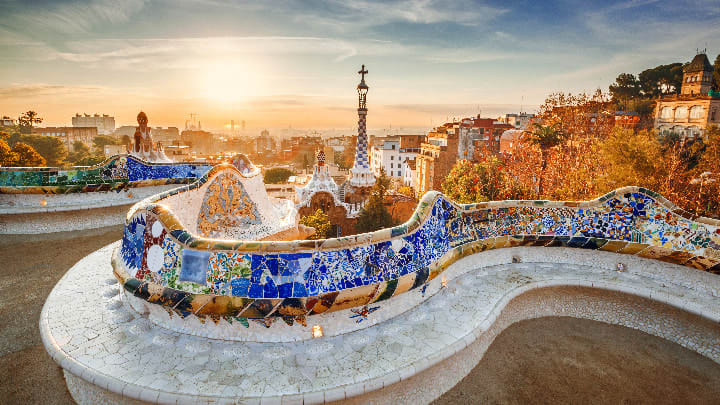
Image of Nature, Outdoors, Scenery, City, Landscape, Water,

With winter well and truly in swing, Barcelona has long since waved off the torrents of high-season tourists. While you can always expect plenty of visitors throughout the year, tourism rates are typically halved come December. What this means for you, should you choose to visit in this period, is a totally different side to Barcelona than you might see in summer.

Aside from the much more bearable weather averaging around a mild 60°F, you’ll find the city far less crowded than during its peak. Where you might have had to book long in advance to visit top sites like the Sagrada Familia and La Pedrera, quick and easy admission to just about any attraction should now be no difficult feat.

Due to the later sunrise in winter, typically taking place around 6:30 in December, a popular start to the day is to visit Park Güell to watch the sun come up. Naturally, this means that not getting there early enough will likely make it hard to find a good spot, so be sure to plan accordingly.

Barcelona Ski Season

Image of Adult, Male, Man, Person,

December also marks the early days of the Barcelona ski season, with avid skiers often passing through the city on their way to the Pyrenees. Should skiing be your thing, there are 14 fantastic alpine ski resorts within range of the city.

With most of these resorts reachable within four hours by car, they’re perfect for visiting for a day or two before returning to the city once again. Note that a number of these resorts cross over into Andorra and France, with Andorra only accessible by car.

Día de la Constitución

Image of Adult, Female, Person, Woman, Male, Man, Handbag, People,

Visiting Barcelona in December does come with one slight caveat, though. On December 6, Spain celebrates Día de la Constitución (Constitution Day), in commemoration of the approval of the Spanish Constitution in 1978 and the subsequent return of Spanish democracy. As a public holiday, most schools and workplaces will take the day off, and many will flock to Barcelona to celebrate.

Locals refer to this as a ‘mini high-season’, and for good reason. You can expect restaurants, bars and attractions to be crammed with visitors once again, perhaps even more so than during summer. Should Constitution Day fall either side of a weekend, the festivities are likely to last the full three days.

Christmas Markets

Image of Cap, Hat, Adult, Male, Man, Person, Female, Woman, Flower, Flower Arrangement, Flower Bouquet,

We’d be remiss to discuss a trip to Barcelona in December without expanding on the city’s many holiday festivities.

From the final weeks of November, the city of Barcelona evolves into somewhat of a winter wonderland. The streets are adorned with all manner of festive decorations and lights, which are truly a sight to behold in the evening. But where the holiday spirit really shines through is the city’s many Christmas markets.

Europe is world famous for its holiday markets. While Germany, Austria and the Czech Republic are some of the most renowned destinations, Barcelona can more than hold a candle to them with its own spirited selection of merry merchants.

Throughout the city, you can explore a multitude of markets selling all manner of festive fare, from mulled wine to roasted chestnuts. Local artists also take the holiday season as an opportunity to sell their crafts, baked goods, artisan wines and spreads, homemade candies and Christmas ornaments, among a wide selection of other things.

You’ll find plenty of different markets dotted around the city, but the largest and most famous is Fira de Santa Llúcia. Found on Avinguda de la Catedral, this market dates back over 200 years to 1786. Given its history and popularity, it’s wise to give yourself plenty of time to visit should you want to pick up some souvenirs from your trip, as crowds are almost inevitable.

Caga Tió

Image of Hat, Cap,

Neither Spain nor Catalonia in particular are shy about their traditions, and this is never more true than at Christmas.

Early in December, the Caga Tió makes an appearance in many Catalan homes. The Caga Tió or Tió de Nadal is a relatively small wooden log with two front legs and a jolly face, often adorned with a traditional Christmas hat.

Children are given the responsibility of taking care of the Tió throughout the season. This typically involves putting a blanket around the little log and feeding it fruit, nuts, bread and candy, much like kids elsewhere might leave out milk and cookies for Santa Claus.

Should you ever be fortunate enough to spend Christmas with a Catalan family, you’ll then get to see the true colors of the Tió. Translated literally as the ‘poop log’, children will beat (yes, beat) the Tió in hopes of having it ‘poop out’ gifts, which they should then find hidden beneath the blanket.

El Caganer

Image of Figurine, Adult, Female, Person, Woman, Baby, Boy, Child, Male,

The toilet-humor traditions don’t end with the Caga Tió, though. Wandering through the Christmas markets dotted throughout Barcelona in December, you’re likely to come across a common figure on display.

Often depicting various celebrities, public figures and fictional characters going number two, El Caganer is a staple of Catalan Christmas. Originally depicted between the 17th and 18th Centuries as a young peasant caught short between the three wise men in the nativity scene, many families now adorn their own scenes with their choice of Caganer.

Contrary to the apparent profane nature of the display, El Caganer is viewed as a sign of good luck to the people of Catalonia. Harking back to ancient pagan ideas, the Caganer’s ‘deposit’ is supposed to represent the fertilization of the soil and high productivity for the year ahead.

You’ll find both Caga Tió and El Caganer throughout Barcelona in December, and you can even pick up your own from just about every market stall. Why not bring both home and enjoy your very own Catalan Christmas?

Wrapping Up

Should you choose to visit Barcelona in December, you’re sure to be rewarded handsomely. Not only will you be able to see all that the city has to offer without all of the high-season crowds, but you’ll also be able to indulge in many of the region's winter festivals.

Explore the city at your leisure without having to plan too far ahead, and finish each day with a merry glass of mulled wine and a relaxing jaunt throughout the festively-lit streets and various Christmas markets stretching throughout.

Robert Heaney
Go City Travel Expert

Continue reading

Barcelona in March
Blog

Barcelona in March

As Barcelona waves goodbye to winter and beckons in the spring, the city begins to enjoy the best of all worlds – Sunny days and mild temperatures, a bustling atmosphere without too many crowds, and a whole host of events to keep spirits high. Choosing to visit Barcelona in March may prove a rewarding decision no matter your travel style. Many would consider the spring period the best time to take a trip to the Catalan capital. Take this chance to explore everything the city has to offer without battling constant crowds and jump into one of the many local festivities and events.   Tourism in March Spring offers the city of Barcelona a delightful grace period in which tourism rates begin to rise gradually without taking over the city as can be expected in the summer months. With temperatures averaging between the low-40s and high-50s, you can bet on mild but sunny days and cool but pleasant evenings. While it may not be the best time for a dip in the Mediterranean, and while you’ll likely need to pack a jacket or two, March offers the ideal opportunity to explore everything that Barcelona has to offer. In booking your trip, you’ll find yourself blessed by lower airfares, cheaper hotels and pretty much your pick of the litter for accommodation. But the biggest benefit of visiting Barcelona in March will be the opportunity to see just about anything you want without any of the summertime hassle. You shouldn’t have to fight huge crowds to get into your choice of attractions, and booking should often be available for the same day. This would be the perfect opportunity to explore the Sagrada Familia without having to wade through the tourists. Or wander around Park Güell during one of its quietest and most tranquil times. Or visit Barcelona Zoo without all of the summer break kids taking up the best viewing spots. Your trip will truly be your own in spring.   Sant Medir Early in March, locals to the old town of Gràcia take to the streets to observe the Sant Medir parade and all of the festivities it brings with it. The event is most well-known for the many candies, toffees and treats thrown to onlookers by those within the procession of horses, floats and lorries. Following in the footsteps of a local baker who began the annual procession in the 19th Century after miraculously recovering from illness, the celebration has since become known locally as the dolça festa, the ‘sweet festival’ for the many treats gifted to the enthused observers. If you happen to be visiting within the first week of March and feel like embracing your inner child, be sure to make your way to the parade with a spare bag in hand ready to join the many expectant kids to catch all the candy you can!   Barcelona-Sitges International Vintage Car Rally The referenced media source is missing and needs to be re-embedded. This is truly one for the vintage vehicle buffs. For over half a century now, Barcelona has been witness every March to an enthused procession of nostalgic and bygone automobile models. For two days, the city’s coastal routes of Barcelona and Sitges growl with the sound of hundreds of these beasts for onlookers to revel at. The rally has become a staple for vintage car enthusiasts the world over, with many flocking to the city each year for the event. As such, the streets surrounding the rally route often like to capitalize on this increased custom with various events, live music, merchant stalls, wine tasting sessions and workshops.   Barcelona Marathon Having indulged in the many food-based festivities of the fall and winter seasons, many locals and visitors start training for the Barcelona Marathon. The 26-mile route takes runners on an athletic tour past some of the city’s most iconic monuments. Beginning at the foot of Montjuïc, the course loops around the inner districts of the city, past the likes of Camp Nou in the west and Parc del Fòrum in the east, before looping back around via the coast. If running is your thing, why not train up for a few months before your trip for a unique way to explore the city?   Barcelona Beer Festival Barcelona in March is also typically host to the Barcelona Beer festival, which has grown rapidly since its inception in 2012 to host around 30,000 attendees each year. The festival brings together more than a thousand accredited professionals to celebrate and share their love of brewing beer. Offering many hundreds of variations of beer and a whole host of different activities, beer lovers both local to and visiting Barcelona can truly revel in their shared beverage passions. The event also offers a range of shows and live music for attendees to enjoy. Why not go grab yourself a beer or three during your springtime visit?   St. Patrick’s Day While St. Patrick’s may not be a strictly Catalan or even a Spanish event, that doesn’t necessarily mean that it isn’t embraced by those who want to celebrate. There’s always sure to be a sizable group of expats and tourists gathering at their nearest Irish Pub to sink a few pints of Guinness. Among the most popular venues are Flaherty’s, the George Payne and the Wild Rover.   Wrapping Up Springtime is often overlooked by many as an ideal time to visit Barcelona. While it may not offer the same warm days and perfect swimming weather as summer, it compensates handsomely by allowing you to see Barcelona in a more quiet and authentic state. Alongside the benefits of lower tourism rates, you’ll also have the opportunity to observe and even participate in many of the region’s most hotly anticipated events of the year. Whether you’re looking for a genuine cultural experience or simply a relaxing trip to the heart of Catalonia, visiting Barcelona in March will almost certainly pay dividends.
Robert Heaney
Crowds of tourists on a beach in Barcelona
Blog

Barcelona in August

At the peak of summertime, August marks one of the two busiest months for Barcelona. Between its highly favorable weather and plethora of world-renowned sights and attractions, it’s no surprise that hundreds of thousands pick the city as their summer destination. While crowds and queues are of course inevitable, these are largely what gives the Catalan capital its famed bustling atmosphere. And given the plethora of festivals and events taking place throughout the month, you can expect those crowds to be electric. If busy and thriving are what you’re looking for, then Barcelona in August may be the trip for you. Tourism in August It’s no secret that Barcelona in August is busy. Really busy. Alongside July, this is when the city sees its largest throughput of visitors. Hotels tend to get swept up at a moment’s notice, accommodation rates are at their highest and the city’s attractions are operating at peak capacity. While to some this may sound like a nightmare, this is the whole appeal to many visitors. Barcelona is famous for its thriving atmosphere, bustling streets and energetic nightlife. And for that, serious crowds are a necessity. Just note that more tourists also means you’ll likely need to book your desired attractions well in advance. The exact reasons behind Barcelona’s summertime tourism spike are no challenge to discern. Between its stellar location on the Mediterranean and average temperatures of 80 – 90°F, many come to enjoy the city’s world-famous beaches. Pair those with the existing waves of tourists interested in Barcelona’s architecture, history, cuisine and nightlife, and it’s no surprise that this is the busiest time for the city. Those who aren’t so keen on the crowds may be better off planning a trip during the spring and fall ‘shoulder seasons’, when the city is still busy enough to maintain its buzz but quiet enough to be able to explore without the need to wade through the crowds. Festa Major de Sant Roc Dating back over 400 years, one of August’s largest events is the Festival of Sant Roc. Held in honor of Saint Roch, the celebration takes place each year on Plaça Nova in the heart of the Gothic Quarter, right beside the Barcelona Cathedral. While it may be contained to a smaller area than many other neighborhood celebrations held around the year, the festival is jam-packed full of activities. Typically taking place over the course of roughly a week, the event sees various games, traditions, processions, performances and dances take place, with something for just about all ages. One of the most common troupes of the festival is La Cucaña, a greasy, rotating pole which children will attempt to traverse safely in return for a prize. Another is El porró llarg, a bizarre glass drinking vessel with an extremely long spout from which visitors will attempt to drink wine, much to the amusement of onlookers. Another key part of the celebration is known as the Festival of the Dog. Legend says that when Sant Roc was sheltering within the city’s Roman walls while suffering from the plague, the local baker’s dog helped nurse him back to health by bringing him panellet cakes to eat. This portion of the festival therefore pays homage to the saint’s savior pooch with a canine exhibition. Locals will bring along their own dogs to celebrate, and there are even some dog training shows for those with excess energy. Festa Major de Gràcia From August 15th to 21st, Barcelona is host to what is widely considered its most festive and most accommodating street festival. The event offers a packed program of live performances, concerts, parades, dances and activities taking place throughout the Gràcia neighborhood. The festival is perhaps best known for its iconic decorated streets. With each street allocated its own theme for the year, the walkways of Gràcia truly come to life with vibrant and whacky displays. Most decorations will be created using sustainable and recycled materials, and each street competes to offer the most creative display in hopes of winning the annual grand prize. Festa Major de Sants Should you happen to miss out on the Gràcia Festival, fret not – The Sants Festival picks up right where Gràcia leaves off. Host to a wide array of Catalan traditions, this event offers much of the same decorated streets concerts, dances, performances and activities for all ages as its predecessor. Castells are one of the main traditions of the Sants Festival, with a large number of castellers working together to attempt to build the largest human towers. Correfocs are another, translated literally as ‘fire runs’, in which performers dressed as devils will parade around with fireworks to the entertainment of onlookers standing at a safe distance. DGTL Festival A spin-off of the renowned festival held in Amsterdam, DGTL is an event quite unlike any other. Offering live underground house and techno sets from prodigious artists and DJs, this is not an event to be missed for fans of the underground music scene. Held each year in Parc del Fòrum, the event is characteristically accompanied by mesmerizing art and light installations, turning all areas of the venue into its own immersive clubbing experience. The event maintains an ethos of sustainability, employing the likes of solar panels, exclusively vegetarian food options, cashless transactions and eco-friendly packaging. Music Festivals As if Barcelona’s nightlife scene wasn’t enough, August is a month replete with music events for fans of all genres. Alongside the DGTL festival covered above, attendees come from the world over to revel in the city’s impressive musical festivities. Some of the most popular events include the Mas i Mas Festival, the Cap Roig Festival and Brunch in the Park. Wrapping Up Whether you’re keen to explore the city’s unique wealth of architecture and history, relax on its world-famous beaches in prime weather or enjoy the buzz of its nightlife and the many festivals taking place throughout the month, visiting Barcelona in August could be an ideal trip for those who enjoy a more bustling city experience. While you can expect to have to fight crowds and make advance booking for your attractions of choice, not to mention your hotel or apartment, you’ll be rewarded with the opportunity to experience a city positively thriving with life. Barcelona is never quite as alive as it is in summer, which you’re bound to discover for yourself should you choose to visit in August.
Robert Heaney
Waterfall feature in front of the Palau Nacional
Blog

Barcelona in April

Springtime is thought by many to be the best time to visit Barcelona. With the city still slumbering somewhat in the absence of peak-season tourists, its streets and attractions are usually relatively quiet and uncrowded. Throw in temperatures averaging between 50°F and 65°F alongside near-constant sunlight, and you can be certain a trip to Barcelona in April is sure to be a pleasant one. Tourism in April April serves as somewhat of a transition month for Barcelona as far as tourism concerned. It marks the boundary between the low-season winter and early spring months and the shoulder-season months leading up to summer. With that, tourism rates tend to rise gradually throughout the month. This is what makes the spring season ideal for many visitors. While the city has yet to be bombarded by the waves of summer tourists, there are still plenty of people around to give Barcelona its trademark buzz. You’re sure to be able to visit your attractions and restaurants of choice without too much hassle, but you can also depend on the nightlife to be booming. Take this opportunity to take a casual tour of Gaudí’s masterpieces, not last of all the Sagrada Familia and Park Güell. Walk in the footsteps of soccer legends at Camp Nou. Take a quiet stroll through Barcelona’s many famous markets, or sit back and enjoy a whirlwind tour of the city’s best attractions atop a Bus Turístic. Easter Weekend While Easter Sunday may sometimes fall at the end of March, it’s typically considered an April celebration. And as such, it serves as one of the best reasons to visit Barcelona in April. Visitors are welcome to join the locals in celebrating the long weekend and attending the many processions and masses taking place throughout the city. Throughout Semana Santa, or Holy Week, the streets tend to be thriving with festivity. Alongside the religious processions, many retailers, chocolate stores and bakeries will be stocked up on festive treats and various types of Easter fare. Just be sure to note that the Friday and Monday either side of Easter Sunday are public holidays, meaning many stores, bars and restaurants are likely to be closed. However, businesses will still typically operate under regular weekend hours on Saturday and Sunday. Fira per la Terra (Earth Festival) Held in conjunction with Earth Day, celebrated globally on April 22, Barcelona hosts la Fira per la Terra, or the Earth Festival. Spread across two days, the event sees locals and visitors alike come together in Parc Central de Nou Barris in celebration of the little green planet we call our home The eco-fair typically offers an open market, live music and a host of environment-focused talks and events. Many stalls will showcase environmentally friendly products, whether locally produced, recycled, ecological or all of the above, in an effort to encourage attendees to live a more sustainable lifestyle. There’s often quite the atmosphere throughout the festival, with attendees all sharing in their common passion to fight climate change and protect the environment. For those more activism-oriented or any visitors simply interested in attending a very wholesome event, this is not a festival to be missed! Diada de Sant Jordi (Saint George’s Day) Spain loves both its saints and its feast days, so the calendar is packed full of religious holidays and festivals throughout the year. Barcelona is no stranger to its own celebrations and, in many ways, likes to take each event up a step. So it should come as no surprise that the patron saint of Catalonia, Sant Jordi, is honored in a very big way indeed. The Diada de Sant Jordi is not a public holiday, so the vast majority of stores and restaurants will remain open. And that’s just as well, because it’s also Catalonia’s answer to Valentine’s Day. Sometimes referred to as the Book and Rose Day, it’s customary for locals to gift each other – you guessed it – books and roses. While the exchange of roses is an internationally recognized gesture of love, the swapping of books serves as a celebration of culture. On this day, La Rambla and its adjoining streets can typically be found lined with stalls offering all manner of books and flowers. While the books at these stalls will typically be offered in a wide array of languages, the city takes this opportunity to encourage the protection and promotion of the Catalan language in particular. This annual festival continues to bring well-deserved international attention to Catalan authors and publishers, and typically sees a massive boost in their output. It’s no coincidence that April 23 is also host to World Book Day – it was this exact festival that led the UNESCO General Assembly to declare it so! When visiting Barcelona in April, book lovers and couples alike should make their way to La Rambla to share in the city’s celebration of love and culture. Feria de Abril (April Fair) While the more famous Feria de Abril is held each year in Seville, Barcelona’s own celebration can easily hold a candle to its bigger brother. Typically held in Parc del Forum for around a week at the end of April, the festival offers a range of activities for all ages, often alongside live music and performances. For younger visitors and families, the event offers a fairground area housing the obligatory Ferris wheel alongside various other rides, game stalls, food stands and similar amusements. The other side of the fair is composed of the casetas, a host of marquee tents housing various organizations, political parties, merchants and food stands. The largest caseta, Caseta de la Fecac, is run by the event’s organizers and offers a series of free events and concerts by top artists and performers from around the country. If you’re in Barcelona in April and enjoy the atmosphere of a classic fair, be sure to pencil the Feria de Abril into your itinerary. Wrapping Up For many, Barcelona in April is nothing short of idyllic. With just enough crowds to give the city its renowned bustling atmosphere without clogging up the top attractions, visitors can be sure they’ll be getting the very best of both worlds. And with such engaging events taking place throughout the month, there’s certainly no shortage of festivity. Whether you’re looking for a quieter time to explore the city’s famous architecture, an opportunity to stroll through its many famous parks in pleasant weather or simply the chance to let loose in the evening, April could be the perfect time to plan your trip to Barcelona.
Robert Heaney

Have a 5% discount, on us!

Sign up to our newsletter and receive exclusive discounts, trip inspiration and attraction updates straight to your inbox.