
Is London safe?

Published: July 18, 2024
The streets of London are often crowded with shoppers

Although crime rates have risen in recent years, this shouldn’t take away from the fact London is one of the safest cities in the world. Its nine million residents move about without worrying much about their day-to-day safety, and the vast majority of its 30 million annual visitors go home with nothing but warm words for its attractions, if not the prevailing weather conditions.

Is London safe? Broadly speaking yes, noting that nowhere can ever be declared 100% trouble free. With that in mind, here’s all you need to know about staying safe in London as a visitor to help ensure you don’t become one of the unlucky few who fall victim to a crime.

How safe is London?

Image of Adult, Female, Person, Woman, Male, Man, Railway, Train, Vehicle, Head, Mobile Phone, Phone,

Visitors to London face the same risks as in any big urban environment. So as one of the largest cities in Europe, it has its fair share of dodgy characters whilst ranking favorably against Paris, Madrid and Zurich when it comes to personal safety.

Its crime statistics can be misleading for those who don’t know London well. For instance, the boroughs (neighborhoods) responsible for some of the capital’s most important landmarks, like the Tower of London and Shakespeare’s Globe Theatre have some of the highest crime rates.

What the statistics don’t say is that much of this crime takes place in residential housing estates away from these attractions. The crime figures related to supercool areas of the capital, such as east London’s Dalston, should be much more concerning for visitors. Pickpocketing is a particular problem.

At the opposite end of the spectrum, the leafy suburbs around Richmond in the west are the safest. However, the best tip for any visitor worried about safety in London is to assume petty crime can take place anywhere, and act with caution accordingly.

London’s global status means terrorism also sadly remains a threat, although the likelihood of getting caught up in an attack is tiny. There’s little you can do to mitigate against this threat except immediately call the emergency services on 999 if you see anything suspicious.

Common threats to safety in London
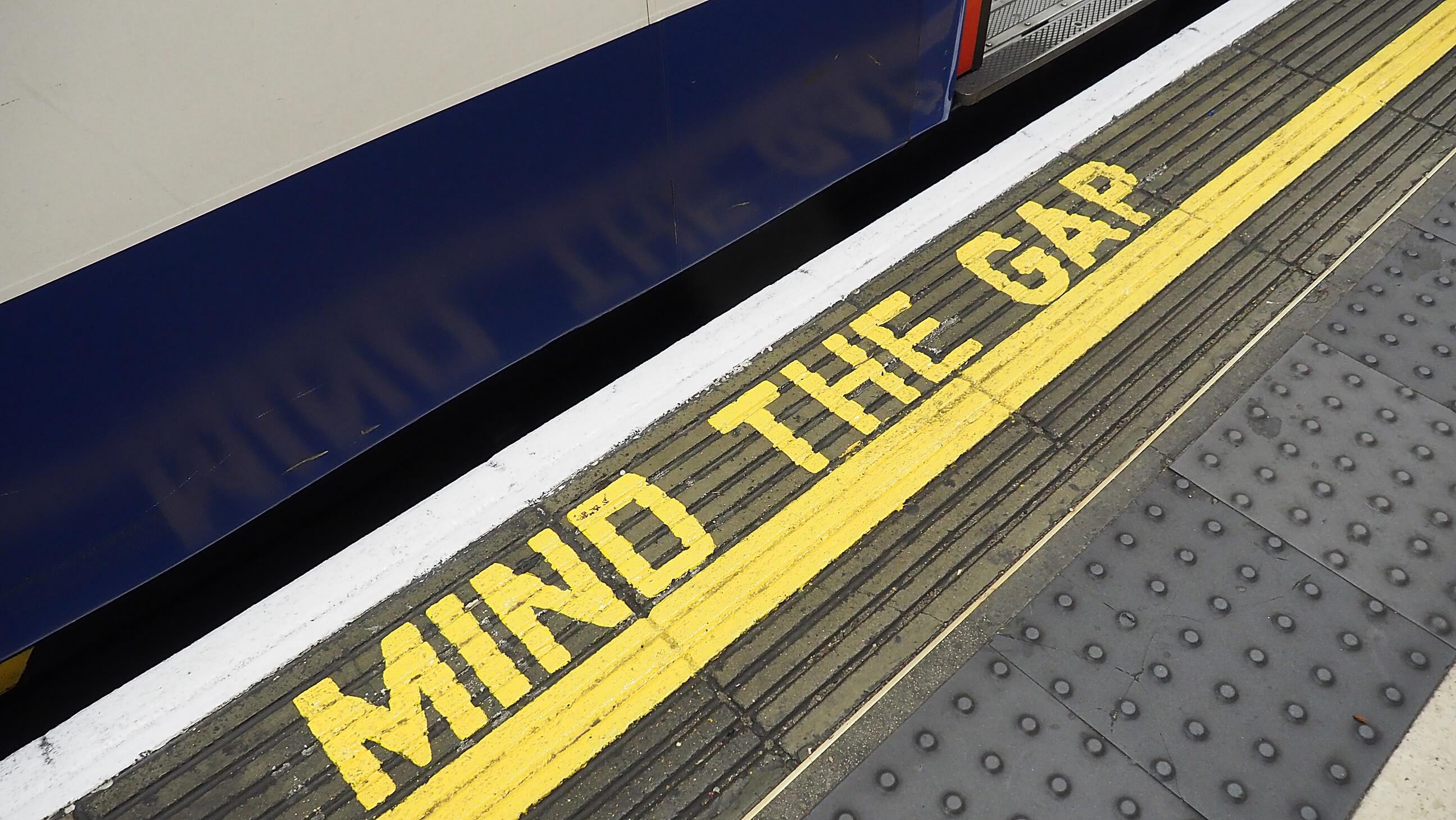
Image of Terminal, Railway, Train, Train Station, Vehicle, Subway,

For the most part, staying safe in London is about following common sense and trusting your instincts. In other words, you shouldn’t do anything you wouldn’t do at home. Then the biggest risks you’re likely to face are currency counters with unfair exchange rates and looking the wrong way when crossing a road – the British drive on the left.

The risk of pickpocketing or mugging is highest where large crowds congregate, since they provide criminals with plenty of cover. Keep a close eye on valuables in crowded spaces, and never place money or a phone in your back pocket.

Being aware of your surroundings is always important. Criminals may attempt to steal your bank card and PIN through well-practiced distraction techniques at ATMs, whilst mopeds have been used for snatch and grab crimes against those using their phones in public. Use ATMs inside bank branches whenever possible – they are not usually hard to find.

At the same time, never leave a bag unattended, for example, when going to a bar or counter to order food and drinks. Not only is there a risk of it being stolen, but also of it getting blown up by the bomb squad as a security risk.

If you find yourself in need of help, you shouldn’t worry about approaching uniformed police officers. No officer can demand identification, nor will they issue fines to be paid on the spot. Any who do are scammers pretending to be plain-clothes officers.

Is London safe at night?
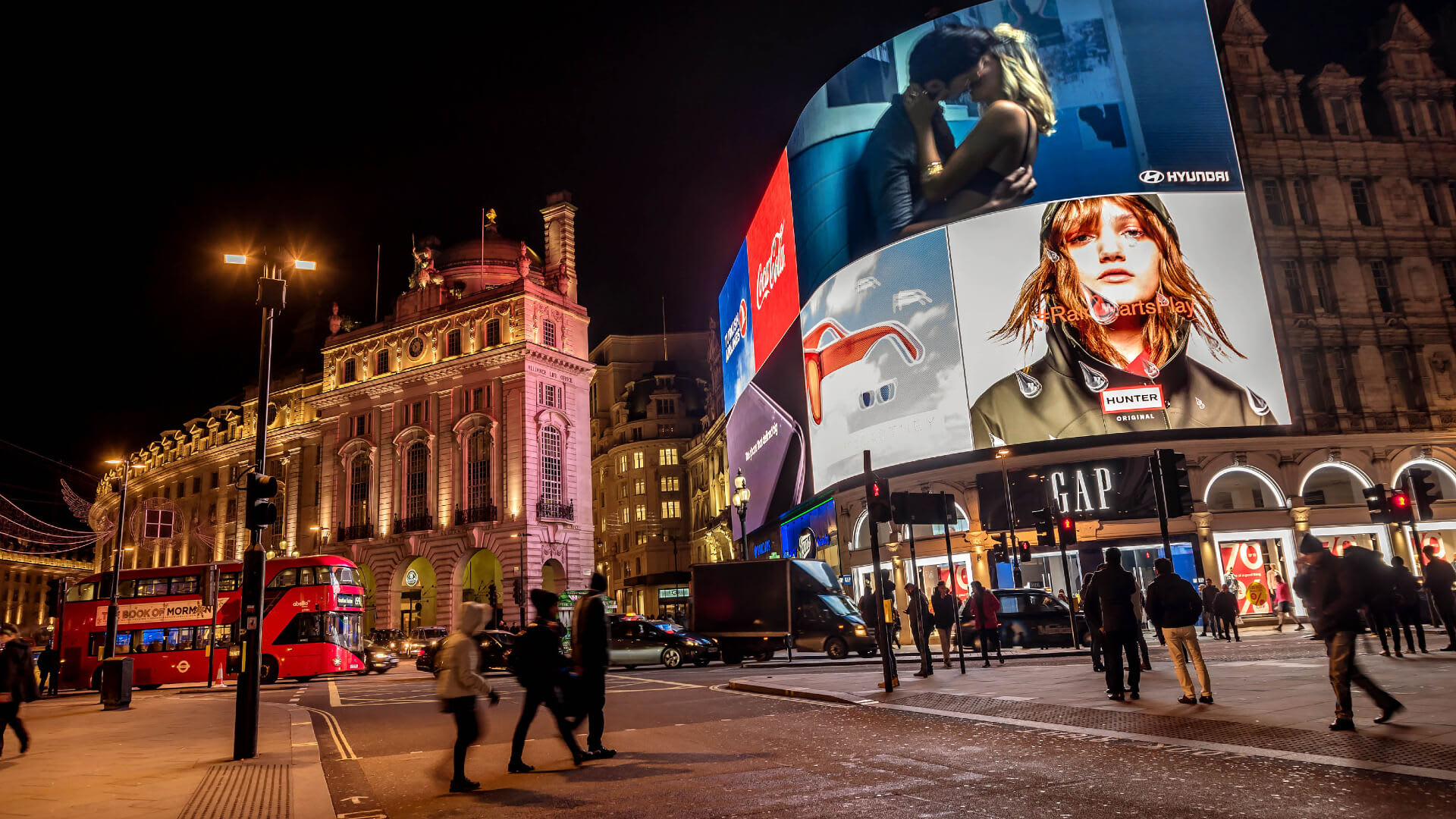
Image of City, Metropolis, Urban, Advertisement, Truck, Vehicle, Road, Street, Person, Traffic Light, Adult, Female, Woman, Car, Bus,

Increasingly becoming a 24-hour city, evenings in London can be sublime, with the city’s landmarks lit up and its pubs coming alive. Travel across Piccadilly Circus at midnight, and you could be mistaken for thinking it was the middle of the day.

It’s best to stay on well-lit streets after dark all the same, which will often have the added security of CCTV cameras. If you choose to walk, do so confidently. Otherwise opt for London’s public transportation.

Both its red buses and Underground trains are safe at night, though best avoided during the rush hours of 5 – 7PM because of overcrowding. Certain bus routes, usually denoted by an ‘N’, operate throughout the night to link major locations such as train stations. The main Tube network shuts down around midnight. But the advent of the Night Tube sees a service on some central lines night-long on Fridays and Saturdays.

Alternatively, visitors can hail a black cab (licensed taxi) from the roadside. As they notoriously don’t like traveling south of the river, you can also arrange a minicab (radio taxi) by phone or uber via the app. All vehicles must clearly display a tamper-proof licensing sticker on the windshield. If they do not have one, you’re getting into an unlicensed vehicle whose driver will not have undergone the relevant checks.

Is it safe to visit London as a single woman?

Image of Person, Walking, City, Adult, Female, Woman, Road, Street, Urban, Girl, Teen, Pedestrian, Accessories, Bag, Handbag, Male, Man, Pants, Photography,

Most women who visit London solo find the city a refreshing contrast to previous experiences traveling alone. Although there are only a handful of women-only spaces – including Kenwood Ladies’ Bathing Pond on Hampstead Heath – being a single woman shouldn’t stop you ticking off your bucket list attractions.

Contrary to popular opinion, most Londoners are quite happy to help if you get stuck – seeking out another woman will increase your chances of success further. Free walking tours and Hop-On Hop-Off sightseeing buses provide the safety of a group.

If you’re concerned about unwanted male attention in bars and pubs, wearing a wedding band can act as a deterrent. Venues will often have a security presence on the door to keep a lid on any trouble, whilst bar staff are increasingly aware of potential issues. The city’s plethora of loud and proud gay bars have long been known as a hassle-free night out for women should all else fail.

Save on top London attraction admission

Explore and save with Go City. Our Explorer Pass not only saves you money on London attraction admission but means you can leave your wallet at home, removing any worry about carrying around large amounts of cash!

Ian Packham
Go City Travel Expert

Continue reading

King's Cross Square London
Blog

Things to do in King’s Cross London

Don’t let fans of the wizarding world of Harry Potter hear you say it, but there are many more things to do in King’s Cross London than attempt entry to Platform 9 3⁄4 for the Hogwart’s Express... No longer an area to be avoided, a huge amount of effort has gone into making King’s Cross a London neighborhood where people want to live, work and relax. Long before Google and Microsoft, one of the earliest institutions to recognize the potential was the newly formed British Library. But beyond its exhibition space you’ll also find a refreshed canal side and plenty of places to enjoy a cup of tea or pint of ale with new friends. Let’s take a look at London’s King’s Cross in a little more detail. Delight in being bookish Much to the amusement of passing commuters, there’s always a steady stream of people having their photograph taken as they push a trolley through the wall to Platform 9 3⁄4 – which sadly doesn’t lie between platforms 9 and ten but beside a small supermarket. Book fans of all kinds can also delight in the miles of shelving which makes up the British Library – permitted by law to collect one of every book published in the English language. It is also responsible for looking after some of the most important documents in British history. Displayed in its ground floor exhibition hall is a Shakespeare first folio and an original copy of Magna Carta. Agreed by King John in 1215, it prevents unlawful arrest and was the start of trial by a jury of peers. Other important artefacts include the hand painted pages of the Lindisfarne Gospels and Beatles’ lyrics in the writing of Paul McCartney. Check out the King’s Cross museums The temporary exhibitions at the multi-million-dollar biomedical research establishment the Crick Institute are no less insightful, helping to bring to life advances in the understanding of the way our bodies function that are resulting in new and better treatments for the world’s biggest health risks. The nearby Foundling Museum was created to help tell the story of the Foundling Hospital. Set up by a wealthy philanthropist in the 1730s, it became the first home for at risk children in Britain. But its collection has a far broader remit, containing paintings by some of the country’s most important artists of that time, including William Hogarth, Thomas Gainsborough and Joshua Reynolds. The upper floor then describes the hospital’s connection with composer George Frideric Handel, who lived in London for many years. In an interesting twist, the house next door would also be occupied by Jimi Hendrix. Another King’s Cross museum worth consideration is the London Canal Museum, whose collection of stories and artefacts help detail the emergence of the capital’s canal network as well as its relatively rapid decline at the hands of the railways. Enjoy nature in the heart of London Stepping out from beyond the red brick edifice of the British Museum or shining glass and steel of the Crick Institute you’ll be mere paces from Regent’s Canal. Reborn as a place to spend your leisure time after a generation of being ignored, its towpath provides an alternative behind the scenes view of the neighborhood, as well as little gems including the Word on the Water floating bookshop. It may not have the physical grandeur of the Royal Botanic Gardens, Kew but Camley Street Natural Park is one of several pockets of green space you wouldn’t even know existed without being told. The park’s visitor center is worth stopping by, although nothing can beat a pleasant few minutes beside the pond as wildlife envelops you from all around. It’s an all the more impressive feat given the tracks running to London Saint Pancras International – the capital’s Eurostar terminus – run across the back of it. On the opposite side of these tracks you’ll be able to find a similarly idyllic spot, the churchyard of St Pancras Old Church. In its churchyard is the Grade I registered mausoleum to Sir John Soane, founder of the British Museum, which became the unlikely starting point for another recognizable London sight – its red telephone boxes. Meanwhile, on the other side of the canal is Gasholder Park, a small but ingenious reinvention for old engineering. Take in a show Should you get hungry, Granary Square has become a solid choice when it comes to food, with plenty on offer whatever your tastes. A new public square featuring a thousand bubbling water jets that move and light up in different colors, its food options include national restaurant chains like the monolithic Dishoom and authentic British pubs alongside the canal. In the summer months, there’s often a big screen by the waterside showing tennis from Wimbledon amongst other big sporting events like World Cup soccer matches and the Olympic Games. The live entertainment gets even better than that though, with both the Shaw Theatre and the Bloomsbury Theatre only a short distance away. Between them, they host high-quality drama from the UK regions, which often see their way to Broadway and off-Broadway, alongside providing residencies for orchestras and regular live comedy and music nights. The Gagosian Gallery may not have the same heritage, but it does display some of the best 20th and 21st Century artworks outside of a national collection and has shown the works of everyone from Pablo Picasso to Damien Hirst. And if shopping is your raison d’etre, there’s Coal Drops Yard, whose stores are sure to inspire you to get your wallet out. Visit King’s Cross with Go City King’s Cross has moved on a lot since the statue of George IV at a road crossing was removed to build its station in 1845. Having existed in various guises since then, today it’s a neighborhood that has rediscovered its mojo and has become a choice place to spend time in the capital once more. Make the most of your trip to London by traveling with Go City and you can make incredible savings on top attractions such as the Tower of London and the Cutty Sark, the only remaining tea clipper ship of its kind in the world. Be sure to share the resulting snaps with @GoCity on Instagram and Facebook to show us just what a good time you’re having exploring all the things to do in King’s Cross London!
Ian Packham
Aerial shot of London's Westminster neighborhood
Blog

Things to do in Westminster London

Often used as a descriptor for all the goings on in the British parliament, the Westminster neighborhood of London is actually a city within a city. One of the richest areas of the capital financially, historically and culturally, it’s an area jampacked with sights, from the grandeur of Buckingham Palace to bronze and stone statues of giants from the country’s past. As a tourist, you’re probably going to spend at least a day here, so don’t forget to check out all the great things to do in Westminster London before hitting the thoroughfares of The Mall or Petty France. Meet with Big Ben Occupying one of few areas of the Thames riverbank in central London not directly accessible to the public, the Houses of Parliament are a symbol of democracy throughout the world. Showing off the pomp and financial power of the Victorian era – when the complex was rebuilt after a massive fire – Big Ben has to be one of the most snapped structures in the world. In fact, to be strictly accurate the name doesn’t refer to the tower but to its largest bell. Its structure was renamed the Elizabeth Tower in honor of Queen Elizabeth II’s Diamond Jubilee – that’s 60 years on the throne. The parliamentary chambers have witnessed many historic moments, including several important speeches by Sir Winston Churchill, the country’s wartime leader. The underground lair protected by secrecy and thick steel girders where the government sought sheltered office space during the London Blitz can be explored at the Cabinet War Rooms a few hundred meters away. But if it’s hundreds of years of history you’re keen to discover, Westminster Abbey should be the next on your list of things to do in Westminster London. Forming a loose triangle alongside the Houses of Parliament and Cabinet War Rooms, its origins predate the Norman Conquest of 1066. Since then it has seen the coronation of every British monarch except two. The simple wood coronation chair is almost lost in this celebration of monarchy and nationhood. Walk amid royalty Cross into St James’ Park and you’ll be treading the same path that royalty has since at least the sixteen hundreds. At the park’s southern end is Birdcage Walk, once the location of a long-disappeared royal aviary. However, some of the park’s most popular residents remain its pelicans, whose generations have waddled their way around the lake for almost 400 years since first being gifted by one of the Tsars of Russia. At its western end St James’ links up with Green Park on the opposite side of The Mall, and Buckingham Palace – official residence of the British monarch. A short route through the palace gardens is open to the public over the summer as part of tours to the state rooms. Two further royal residences just around the corner can be admired from afar. Clarence House has provided homes for the late Queen Mother as well as the Prince of Wales. Next door’s Saint James’ Palace is the oldest of central London’s remaining palaces, although you’ll need ambassadorial credentials to take a look inside. Make time for the museums in Westminster No such career choice is necessary to enjoy the spectacle of the red frock coats and bear-skin hats of the Household Cavalry and their allied foot troops at the Changing of the Guard outside of Buckingham Palace. About as dramatic a way to switch shifts as it’s possible to get, it takes place every day in the summer and several times a week over the winter with music, marching and plenty of horsemanship on show. To learn more about the division responsible for the protection of the head of state – Queen Victoria endured numerous assassination attempts – there’s the Household Cavalry Museum. Situated between Whitehall and Horse Guards Parade, visits not only allow a peek into 350 years of history but also the chance to see the Changing of the Guard ceremony from a very special vantage point. Attached to Buckingham Palace, the Queen’s Gallery is open throughout the year, displaying important artefacts from the Royal Collection. These include gilded silverware purchased by George III and paintings by Van Dyke, official artist to King Charles II. The works of more modern artists can be seen at Mall Galleries just off Trafalgar Square. Home to the Federation of British Artists, it’s also a major player in the contemporary figurative arts scene. Spend some time by the Thames Although it’s partially blocked off by the Houses of Parliament, the River Thames shouldn’t be forgotten about. For one thing, almost diagonally opposite Big Ben is Westminster Millennium Pier, where Hop-On Hop-Off sightseeing cruises arrive and depart on their way to the Royal Museums Greenwich further east. The Thames path is a pleasant place to explore at any time of year, with each season giving something different to an area of riverside as stuffed with monuments and landmarks as any part of London. They include memorials to the Battle of Britain pilots of World War Two and, within Whitehall Gardens, William Tyndale – a leading figure in the protestant reformation. The Thames path also provides an ideal spot to capture shots of the London Eye or eat and drink in barges converted into restaurants and bars. But wherever you end up in Westminster you’ll never be far from the government ministries you’ll recognize from the movies. Many stretch along Whitehall, a major thoroughfare connecting up Parliament Square with Trafalgar Square, where there’s the National Gallery and Nelson’s Column. On Whitehall itself, the war dead are honored at the Cenotaph, and the prime minister’s office at 10 Downing Street can be peered towards through the security gates. Uncover all the things to do in Westminster London A neighborhood which basks in the historic, cultural and political, Westminster is a part of London no visitor is going to want to miss out on. It’s home to the Houses of Parliament and Buckingham Palace, but beside the buildings of state are side streets with churches and verdant squares leading to yet more opportunities to understand the British capital in greater detail. Is it possible to get too much of a good thing? Not in Westminster. And not when traveling with Go City. Our passes provide visitors of all ages with incredible savings on admission to many of the top attractions in London and beyond. So, when you’re thinking about the things to do in Westminster London, make sure Go City becomes a part of your plan!
Ian Packham

Have a 5% discount, on us!

Sign up to our newsletter and receive exclusive discounts, trip inspiration and attraction updates straight to your inbox.