
Your Complete Guide to Singapore in August

Published: July 18, 2024
GBTB Hero Image

Singapore has been attracting visitors since Sir Thomas Stamford Bingley Raffles established a trading post on the island in 1816. Two centuries later, Singapore continues to tick all the boxes. What’s more, Singapore in August is exceptionally explorable.

Cultural diversity ensures even hawker centers serve up delicious tasting foods. Orchard Road provides an almost endless shopping extravaganza, while safety is never something you’ll have to worry about.

At the same time, history seeps out of every street corner, even the high-tech Downtown area. In short, Singapore is not just a stopover, but a destination in its own right. Here’s everything you need to know about visiting Singapore in August.

Why August is a good time to visit Singapore
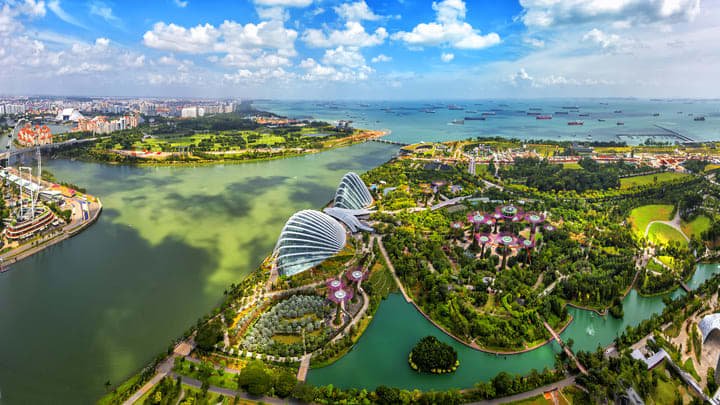
Image of Landscape, Nature, Outdoors, Scenery, Sea, Water,

Singapore’s weather in August is arguably the best of the year. Although it remains rainy in Singapore in August, rainfall is some of the lowest of any month. Since temperatures average 31°C year-round, and humidity levels around 82%, the other most important factor is sunshine hours.

Less rain invariably means more sun, and August in Singapore is one of the sunniest of the year. In fact, along with June, July and September, August is considered one of the best times of year to visit Singapore.

Add to this the festivities around National Day, and you’ll experience Singapore at its most celebratory!

Things to do in Singapore in August
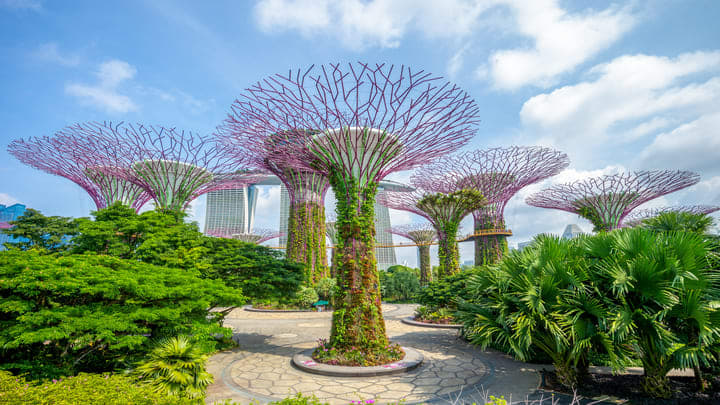
Image of Garden, Nature, Outdoors, Grass, Park, Plant, Vegetation, City, Arbour, Tree, Urban, Cityscape,

With the weather set fair, a great way to delve into Singapore’s delights is with a Historical Singapore Bicycle Tour. Peddling along the city’s oldest streets, you’ll get your first glimpse of its grandest monuments. Free from the barriers of a vehicle, you’ll also absorb the extraordinary ambience of Chinatown and the Museum District.

Thanks to reliable public transport, such as the MRT metro system, nowhere in Singapore is far away. But if in doubt, Big Bus Singapore has stops right throughout the city on its yellow and red hop-on hop-off routes.

While in the Museum District, it would be a shame not to visit the National Gallery Singapore. That’s because the gallery contains the largest collection of Singaporean and southeast Asian art of any public institution. Highlights include works by Xu Beihong, Georgette Chen, and Liu Kang.

No trip to this part of Singapore in August is complete without visiting Gardens by the Bay. Known for their 18 ‘supertree’ vertical gardens, Gardens by the Bay actually span over 100 hectares. Give yourself plenty of time to explore, since beyond Supertree Grove there’s also the Cloud Forest and Flower Dome greenhouses. The second is the largest in the world, and seeks to replicate a Mediterranean-style climate.

Beyond Downtown Singapore
default alt tag

A short distance from the Flower Dome, Singapore Cable Car links two very different Singapore attractions. Head south on the Sentosa Line, and you’ll get a bird’s eye view of family-friendly beaches (Palawan is one of the best) and the rollercoasters of Universal Studios Singapore. After all, Sentosa is the home of Singapore’s theme parks, with several to choose between.

In the opposite direction, the cable car’s Mount Faber Line takes visitors to Singapore in August to the peak of the same name. Having traveled across lush rainforest, you’ll have the chance to follow forest paths. Alternatively, simply enjoy a cocktail (or two) at the cool bars at the top with uninterrupted views.

But for an altogether different take on Singapore, head to Pulau Ubin. Reached via motor-powered bumboats from Changi (itself worth discovering), this tiny island harks back to the time of Raffles. Car-free, the best way to get about is by bike, although it’s also small enough to walk around without becoming exhausted.

Sights include stone quarries readopted by nature, mangroves, coconut plantations, and Singapore’s last traditional village (kampong). End your visit with an order of Pulau Ubin’s famed chili crab. There are several charmingly ramshackle restaurants just by the boat jetty.

Food and drink in Singapore
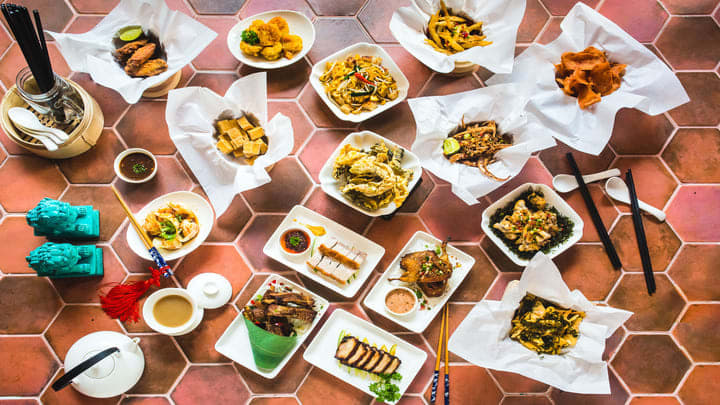
Image of Brunch, Food, Food Presentation,

Deciding what to eat will be your biggest problem when visiting Singapore in August. Because of the city’s cultural diversity, international favorites aren’t hard to find. But it would be a shame to depart Singapore having eaten nothing but burgers and pizza.

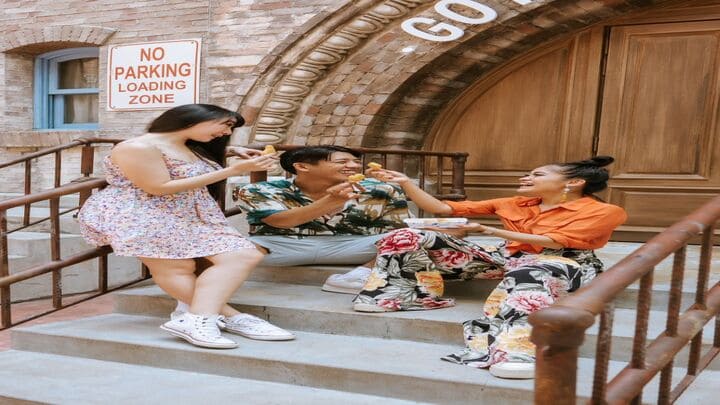
Luckily, good food isn’t hard to find. Pretty much every neighborhood will have its own hawker center. So important are they, that they’re now listed by UNESCO as part of humanity’s Intangible Heritage.

Although menus can be limited – each stall within a center tends to focus on a couple of dishes – your taste buds will thank you for it. Look out for Singapore noodles, laksa, and murtabak, a type of savory pancake.

Chinatown is the obvious place to head for authentic Cantonese and Hokkien dishes. Many you’ll never have seen back home. And for the flavors of the Indian subcontinent, there’s only one place to head – the aroma filled alleys of Little India.

Unmissable Singapore August events
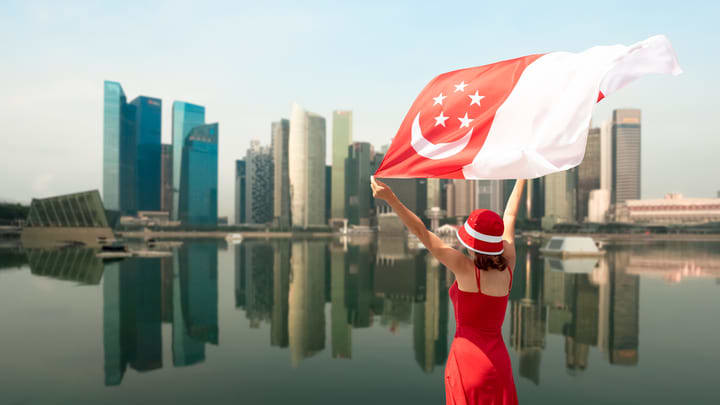
Image of Flag,

Singapore is a thriving destination for events, and August is no different. While the likes of Paris and Rome are snoozing in a mid-summer daze, Singapore is alive with unique experiences.

The biggest event in Singapore in August is National Day, a public holiday on August 9. The days in the run-up see the red and white of the Singaporean flag appear right across the island. The day itself comprises a series of activities. These include a large military parade and live performances from top names. It comes to an end with a magnificent firework display.

Should you miss National Day, Singapore Night Festival in the latter half of August is a good alternative. Running for more than a decade, it sees famous buildings decorated in lights. All manner of surprise live elements mark the city’s history and culture.

Why not visit Singapore in August with Go City?

Take the plunge, and you’ll find Singapore in August a destination that gives back ten-fold. All the same, Singapore does have a reputation for being on the pricey side. The answer? Travel with Go City.

Our All-Inclusive and Explorer passes give visitors to Singapore incredible savings on admission to attractions big and small. It means you can do even more on your Singapore vacation without worrying about your bank balance.

Alex Birungi
Go City Travel Expert

Continue reading

National Museum of Singapore
Blog

10 historical places in Singapore

Hey there, history buffs! If you haven’t been to Singapore, now is the perfect time to consider a trip to this unique and elegant city. It’s clean, bright and modern, with reminders of its past everywhere and grand architecture dating to the European settlement in the early 19th century. Since then, the Lion City has become home to many major religions, as well a hub of world events from the Chinese Revolution to occupations to several important military campaigns. Singapore is fairly compact, and much of it can be seen in a single visit. To get a good overall picture of the history of this intriguing city state, take in: The Sun Yat-Sen Memorial Hall Raffles Hotel Tea Chapter Chinatown Old Parliament House The Civilian War Memorial Kranji War Memorial and Military Cemetery The Battle Box Fort Siloso Museums 1. Sun Yat-Sen Nanyang Memorial Hall Sun Yat-Sen was a Chinese revolutionary who led the resistance against the Qing dynasty in the late nineteenth and early twentieth centuries. He would go on to become the first president of the People’s Republic and became known as the Father of the Nation. Yat-Sen used this colonial-style villa as a base for many of the rebellion’s activities, and it’s now been refurbished as a museum featuring artifacts and stories from the revolution and the mastermind behind it. 2. Raffles Hotel Possibly the most famous building in Singapore – from the Colonial era at least – Raffles Hotel is a must for any visitor to this city and is on the yellow line of the Big Bus Tour. This immense neo-renaissance-style villa, which started as a quaint beach hotel set amidst tropical palms, was converted into a luxury hotel in 1887 and named after the city’s founder, Sir Stamford Raffles. Stroll the long corridors, following in the footsteps of famous guests like Sir Rudyard Kipling, Charlie Chaplin and Queen Elizabeth II, and try a cocktail in the famous Long Bar - birthplace of the Singapore Sling. 3. Chinese tea drinking at Tea Chapter Tea drinking has been an important ritual in Chinese culture for at least 2,000 years, and possibly more. What better way to experience it than in the oldest tea house in Singapore? Escape from the bustle of Chinatown and enjoy a moment of calm as you kick off your shoes (literally) and enter the tranquil space of the tea room. Relax in zen-like surroundings, sip on a cup of Tea Chapter’s signature Imperial Golden Cassia tea, and know that you’re helping to keep an ancient tradition alive. 4. Chinatown In 1843 Sir Stamford Raffles officially allocated the area west of the Singapore River as the Chinese Campong. It’s now the largest historic district in the city and is a hub for many major religions – keep an eye out for the city’s oldest Hindu temple, Sri Mariamman, the oldest Hokkien temple, Thian Hock Keng, the Masjid Jamae Mosque and the aptly named Buddha Tooth Relic Temple and Museum. Spend a few hours wandering the district and soaking it all up (it’s on the Red Line of the Big Bus Tour), but if you need a little guidance, or want to dive a little deeper into the history of the area, try a guided bike tour or even an open world outdoor escape room. 5. Old Parliament House Explore the history of Singapore’s government and legal system at the oldest building in the city. Originally built as a residence in 1827, it became a courthouse soon afterwards and remained so until 1865, even after being purchased by the East India Company in 1841. Throughout the twentieth century it served as the Supreme Court, the Legislative Assembly House and then Parliament House, until the new parliament building was opened in 1999. It’s now an arts center, and visitors are welcome to stroll the old corridors where permanent exhibitions detail the story of the building and the lives of famous Singaporeans throughout history. 6. Civilian War Memorial The former burial chambers of victims of the Japanese occupation of Singapore in World War Two now form part of the foundations of the Civilian War Memorial, standing tall in War Memorial Park. It was opened on February 15th, 1967, 25 years after the fall of the city, and a memorial service is held here every year on that date. The monument is made up of four pillars (affectionately called ‘The Chopsticks’ by locals) representing the Chinese, Malayan, Indian and Eurasian populations of the city. Nearby is the Indian National Army Monument, which stands on the site of an earlier memorial to an unknown Indian soldier. 7. Kranji War Memorial and Military Cemetery A poignant and eerie place, the Kranji War Memorial is a stark and upright monument honoring lives lost in the two world wars. Originally a military camp, the Kranji area was used as a prison by the occupying Japanese forces, and it was the inmates who first established a small cemetery here for their deceased compatriots. The memorial is now the final resting place of more than 4,000 commonwealth and Chinese soldiers and is the site of a significant remembrance ceremony on November 11 every year. 8. The Battle Box True to its name, the Battle Box is a small underground bunker which was used as a bomb shelter during World War Two. Visitors can explore 26 rooms below Fort Canning Hill, reconstructed with wax statues, moving figures and historical artifacts. Learn how Lieutenant-General Percival and his senior officers directed the Battle of Singapore, watch battle campaigns unfold on land, sea and air and get lost in the labyrinth of rooms and corridors. Your ticket includes a 30-minute guided tour, but after that you’re free to wander and explore on your own. 9. Fort Siloso Another World War Two site, though this one has history dating back to the nineteenth century when it was one of three forts built to defend the city from potential sea invasion. Sitting at the north-west corner of the island of Sentosa, Fort Silosa was brought back into service in the twentieth century and now houses a military museum, underground tunnels and interactive video displays. Get there via a pretty coastal walk or ride the gondola from Faber Peak. 10. The Museum District Okay, so not strictly a historical site in itself, but Singapore’s museums together offer an interesting and comprehensive guide to the history of the area, pre- and post-colonialization. The National Museum of Singapore, dating to 1887, captures the history of the city through its cultures, traditions and stories. The Indian Heritage Center reaches a little further, exploring the history of India and southern Asia, while the Asian Civilizations Museum takes a religious perspective, covering Hindu, Buddhist, Muslim, Christian and Jain heritage in the city. Be a history buff with Go City Singapore has a rich heritage of cultural, military and religious history. See it all and save money with a Go City Explorer or All-Inclusive Pass today!
Karleen Stevens
Couple look from a rooftop pool over Singapore Marina
Blog

Best spas in Singapore

Think of Singapore, and certain experiences always come to mind – taking a selfie underneath the Supertrees, drinking a Singapore Sling in the historic Raffles Hotel, and watching the sunset from a traditional bumboat are all top-rated tourist traditions not to be missed. But for those of us who like a little luxury, there’s no better place than Singapore to pause for a bit of pampering and to shake off the jet lag. Whether you need some reflexology for tired feet, a romantic couples escape, a pool with a view or an invigorating scrub to rejuvenate your sun-soaked skin, you’ll find it all and more in Singapore. Here’s our recommendations for the best spas and experiences in the Lion City: The Thai Spa Aramsa Garden Spa Banyan Tree Spa St Gregory Spa at ParkRoyal Remede Spa at St Regis Auriga Spa at Capella Oasia Resort Sentosa Yunomori Onsen and Spa The Thai Spa Possibly the most famous spa in Singapore and certainly one of the most popular, The Thai Spa is located in Suntec City, a large, modern mall north of the river between Raffles Boulevard and Nicoll Highway. Here you can experience a traditional Thai massage, renowned for its use of yoga poses, aromatherapy and pressure points, or choose Thai reflexology, slimming therapies, a peppermint body scrub or Swedish, Balinese and Lomi Lomi massage. Couples can even luxuriate in a private rose honey milk bath jacuzzi, and everyone gets a private shower. Aramsa Garden Spa A bit of a trek – but worth it once you get there – the Aramsa Garden Spa is situated in Bishan Park, a 153-acre reserve along the banks of a former canal. The spa itself has 17 treatment rooms, all of which have their own private courtyard with outdoor showers and jungle backdrop, so it’s perfect if you want to get back to nature – or at least to escape the city for a while. Enjoy a mineral garden bath or rainforest shower with botanic views, then continue your nature escape with a walk around the park’s wandering paths, butterfly habitat and lotus pond. Banyan Tree Spa Head to the iconic Marina Bay Sands Hotel and on the 55th floor you’ll find the Banyan Tree Spa, there to offer you city escapism with an unmatchable view. From your treatment room you’ll be able to look out over the bay, perhaps down at the ArtScience Museum or Floral Fantasy, or even watching the sun set over the Supertrees in the Gardens by the Bay. After your pampering, have a wander around the oriental-themed water gardens then head up to the Ce La Vi SkyBar to enjoy more of the views with your favorite cocktail. St Gregory Spa at ParkRoyal This is a hotel spa with all the trimmings. Here you’ll find a rooftop infinity pool and jacuzzi with a cocktail bar to match, set in an architecturally stunning hotel complete with living balconies draped in greenery and colorful cabanas. Try a workout in the glass-walled gym-box or stroll along the 300-meter-long garden walk, looking out over Hong Lim Park and the city skyline. Try a treatment – they specialize in skin treatments and Chinese medicine – then complete your zen experience by joining a traditional tea ceremony at Tea Chapter, a short walk away in Chinatown. Remede Spa at St Regis It’s all about luxury at the St Regis, which is known around the world for its sumptuous décor and superb service. The spa features steam chambers, a Finnish dry heat sauna, a hydro massage pool and a Vichy shower. Guests will also be treated to exotic teas, champagne and the hotel’s own floral-scented chocolates. Treat yourself to a mani-pedi or a black soap and rhassoul hammam ritual (which involves a soft steam scrub with a face and scalp massage), stretch out on a warm, eucalyptus-scented marble slab and drift along in the heated outdoor whirlpool. Afterwards, take a tour of the hotel’s decadent décor and private art gallery, then top up on fresh air in the UNESCO World Heritage Botanic Gardens nearby. Auriga Spa at Capella Sentosa island is made for leisure lovers, with beaches, theme parks and luxury hotels aplenty. One of the best of those is the Auriga Spa at Capella, where you’ll find a herbal steam room, a vitality pool for full-body water massages and a relaxation lounge with ‘sound wave’ chairs. For treatments, you can choose from Balinese, Thai and Shiatsu massages, or a soothing Senja Sunyi massage which uses warm moon stones and scented body balm. Auriga uses only natural and organic products, and each of the treatment rooms has its own private, alfresco garden. It’s located on the south-western edge of the island, so once you’re done it’s an easy walk to spend the evening relaxing on the beach or watching the Wings of Time evening light show over the water. Oasia Resort Sentosa Another one on Sentosa, the Oasia offers some unique experiences including the cryotherapy facial, bamboo scrubs and ‘Mini-Me’ treatments for 13-16 year-olds. There’s also a meditation room which offers forest bathing therapy, and outdoor classes including pool aerobics and sunset yoga. The Oasia is in a convenient spot right in the middle of the island, so it’s easy to get there on the Mount Faber Cable Car and is close to Universal Studios, Madame Tussauds and most of the island’s beaches. Yunomori Onsen and Spa Located in the Kallang Wave Mall next to the National Stadium, Yunomori gets you relaxed and limber for your massage by offering a Japanese Onsen experience. The onsen baths are treated with hot spring minerals imported from Japan, and you can choose from soda, silk, bubble, jet and cold baths, each at varying temperatures. One admission fee gets you all day access to the onsen, steam rooms and saunas, and you’ll get a traditional milk drink to enjoy after your treatment. Just be sure to learn and follow onsen etiquette before you go – men and women bathe separately, always shower first, and note that underwear and swimsuits are not allowed – though you can take in a small towel or use disposable underwear if you want to. Treat yourself with Go City Singapore is a great place for a bit of pampering. Give yourself a boost on your next trip and grab your Go City Explorer or All-Inclusive Pass today!
Karleen Stevens

Have a 5% discount, on us!

Sign up to our newsletter and receive exclusive discounts, trip inspiration and attraction updates straight to your inbox.