
Barcelona in October

The Sagrada Familia and surrounding city blocks viewed from above

Following the final few waves of peak-time traffic seen throughout September, Barcelona in October enters into somewhat of a cooldown period. As with spring, fall offers a balance between the city’s renowned bustle and a more genuine, tranquil experience.

Whether you’re looking to experience all of Barcelona’s top attractions off-season or to discover some lesser-visited spots as the weather begins to dip, October can be a fantastic time for just about any type of traveler to visit the Catalan capital.

Tourism in October

Image of City, Person, Urban, Tree, Amusement Park, Fun, Theme Park, Outdoors,

As fall begins to rear its head, Barcelona goes through its second ‘shoulder season’ of the year. Throughout this period, tourism rates fall fairly rapidly from their summertime peak, though remain fairly consistently above the later lull to come over winter.

Just like in May or June, this transitive period is considered by many to be one of the best times to visit the city. It offers the best of both worlds with the maintained buzz of the remaining waves of visitors alongside a somewhat quieter and more authentic side to the city.

As such, just about every type of visitor is sure to get the most out of what they came for, be it Barcelona’s famous nightlife, its celebrated beaches and parks, or its world-renowned sights and attractions.

Weather in October
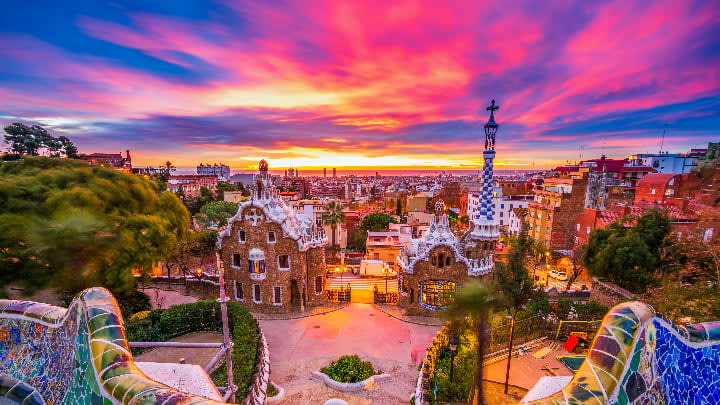
Image of Nature, Outdoors, Scenery, Building, Cityscape, Urban, Amusement Park, Fun, Theme Park, City,

Another benefit of Barcelona’s transitive shoulder seasons is its pleasant middle-ground weather. With temperatures averaging between the high-50s and mid-70s, visitors can expect more bearable highs than during peak season and much milder lows than during winter. While rainfall is significantly greater than during summer, it still isn’t typically frequent in October.

This translates to a great opportunity to explore Barcelona’s many parks and beaches without the summertime crowds. For those cooler days, you may want to perch yourself in one of the Gothic Quarter’s charming squares with a hearty cup of coffee or glass of local cava.

Things to Do in October
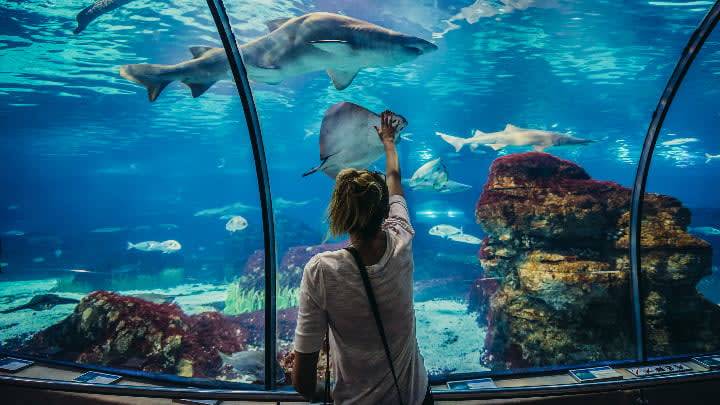
Image of Animal, Aquarium, Fish, Sea Life, Water, Aquatic, Adult, Female, Person, Woman, Outdoors, Shark, Nature,

Although you can visit the vast majority of Barcelona’s sights throughout the year, October serves as a great chance to see some of the city’s top attractions. Visiting off-season naturally means you can explore the likes of the Sagrada Familia and Park Güell without dealing with quite as large crowds as in summer.

For something a little different, families and animal lovers alike should take the chance to meet the 450+ species of the Barcelona Aquarium, while beer fans might enjoy a tour of the Estrella Damm Brewery, complete with complimentary samples. And if you’re partial to some retail therapy, Barcelona’s many shopping outlets have you covered.

Local & Cultural Events

Image of Adult, Female, Person, Woman, Festival,

Festes del Roser – Also known as the Festa Major de la Rambla, this local festival takes place early in October on Barcelona’s most famous street. Held in honor of Mare de déu del Roser, the Virgin of the Rosary, the event is best characterized by its floral display lining La Rambla and its iconic parade. The Festes del Roser are also host to a variety of performances, concerts, street food stalls, a craft fair and a number of free open house events at some of the area’s top attractions.

BAUM Fest – Welcoming tens of thousands of attendees each year, BAUM Fest is considered a benchmark for urban art and culture in Spain. The event brings together professionals and enthusiasts alike to celebrate and showcase the likes of graffiti, skating, parkour, motorcycles and break dance.

The festival offers an extensive program of activities and performances, including a variety of live concerts in various genres, from jazz and soul to world music. Running alongside the festival, the Barcelona Tattoo Expo also serves as a platform for professional tattoo artists from around the world to exhibit their work.

Independent Barcelona Coffee Festival – Truly an event made for the caffeine addicts among us, the Independent Barcelona Coffee Festival consists of three days dedicated to the craft and consumption of our favorite bean-based brew. The festival brings together industry professionals, from roasters to baristas, and offers a forum for their shared passion for specialty coffee culture.

Sitges Film Festival – Having now run for over half a century, the Sitges Film Festival is considered the most significant fantasy film festival in the world, showcasing the best films in the genre. The event typically runs for a little over a week and offers a varied program of short film and movie screenings, workshops and activities.

One highlight of the festival is the Sitges Zombie Walk, during which attendees receive a zombie make-over and walk a predetermined route through the city in their horde, culminating in a concert at the destination point and a night of zombified partying. Another is the Sitges Wine Festival, which typically runs alongside the film festival and offers everything from local wine sampling to wine-making workshops.

Halloween – While not a strictly Spanish celebration, Halloween is becoming increasingly embraced the world over. Barcelona is no stranger to spooky season in the lead-up to All Saints’ Day on November 1, and is host to all of the hallmarks of Halloween, from trick-or-treating to pumpkin carving to fancy dress.

There are parties and events held throughout the city for visitors of all ages to enjoy. Families can participate in the activities hosted at the Poble Espanyol and the nearby PortAventura World, while many of the city’s top night clubs offer Halloween-themed parties for adults to enjoy after dark.

Wrapping Up

It’s no wonder the fall season is widely dubbed one of the best times to visit Barcelona. Alongside pleasant weather and a bustling, electric atmosphere, the city is also host to a vast array of stellar events for all ages. Whether you’re looking for a buzzing nightlife experience or an insight into the region’s cultural significance, visiting Barcelona in October could be the trip for you.

Robert Heaney
Go City Travel Expert

Continue reading

Best time to visit Barcelona
Blog

The Best Time to Visit Barcelona

The bustling cityscape of Barcelona changes quite significantly in character depending on the time you choose to visit. At her peak, she’s lively and thriving, her streets brimming with life and soaked in sunshine. Other times, she cools off into a more modest and tranquil metropolis, which some might say is when she shows her true colors. Such a mercurial nature naturally brings into question when the best time to visit Barcelona may be. As with most things, there is no single clear-cut answer to this, as the factors that constitute the ideal time to visit will differ from person to person. Instead, we’ll run you through each major period of time to help you decide that for yourself.   January & February Temperatures: 41 - 73°F • Average Rainfall: 3 - 5 days/mth • Sea Temperature: 55 - 57°F Barcelona ushers in the new year rather modestly. Having seen off both the final waves of holiday season tourists, many visitors and locals alike now turn their attention toward ski season. With average temperatures at their coolest, this is the ideal time to visit one of the many great alpine resorts just a few hours out of the city. Those who aren’t visiting for the ski season may also enjoy some of the local events, such as the Cavalcada de Reis and Tres Tombs parade, Chinese New Year, the Santa Eulàlia festival and the Llum BCN festival.   March & April The referenced media source is missing and needs to be re-embedded. Temperatures: 46 - 65°F • Average Rainfall: 4 - 5 days/mth • Sea Temperature: 57 - 59°F Spring in Barcelona is much the same as in most destinations. The days begin to warm up somewhat, while still offering mostly mild temperatures of around 40 – 60°F. Given the still cool weather and fairly regular rainfall, this may not yet be the best time for a dip in the Mediterranean, but some consider it a fantastic time to visit. Throughout the spring months, you can expect to be able to participate in a number of events such as Sant Medir, the International Vintage Car Rally, the Barcelona Marathon, the Barcelona Beer Festival, La Diada de Sant Jordi, La Feria de Abril and, of course, Easter.   May & June Temperatures: 57 - 79°F • Average Rainfall: 3 - 5 days/mth • Sea Temperature: 64 - 70°F These two months mark the bridge between spring and summer, and mark the first real ‘shoulder season’ for Barcelona. Temperatures begin to climb just slightly, with averages resting around the low- to mid-60s. Rainfall is typically at its highest in May, but begins to drop significantly come June. Visiting during this time will mean you’ll get to experience Barcelona ahead of the high-season crowds, while also getting some pretty decent weather. The city will be more lively than during the winter months, without being overcrowded. Given the often pleasant weather and lower numbers of tourists, many consider this to be the best time to visit Barcelona. Events during this period include the Night of the Museums, Primavera Sound Festival, the nearby Girona Flower Festival, Sónar Festival, the Feast of Sant Joan and Barcelona’s Pride Festival.   July & August Temperatures: 70 - 84°F • Average Rainfall: 2 - 5 days/mth • Sea Temperature: 75 - 79°F The height of summer is when Barcelona truly thrives – some might say a little too much. This is when the city experiences its hottest and most humid days, with averages between 70 and 85°F both day and night. Barcelona is at its liveliest during this period, with just about every street, bar, café, restaurant and attraction bustling with visitors. For many, summer is truly the perfect time to visit Barcelona thanks to its buzzing ambience and fantastic weather. For others, the crowds and heat make for a less than ideal experience, and in fact many locals take this opportunity to relocate to more moderate climates for some time. Should you choose to visit in summer, be sure to make your plans and book your attractions well ahead of time. Throughout the summer months, you can expect such events as Festival Cruïlla, Barcelona Beach Festival, Rock Fest Barcelona, Festa Major del Raval, Gràcia Festival, El Grec and the Sants Festival. For music lovers and those who just enjoy a good social atmosphere, this is the time to come!   September & October Temperatures: 58 - 79°F • Average Rainfall: 5 - 6 days/mth • Sea Temperature: 72 - 75°F As summer draws to a close, the largest droves of tourists begin to vacate Barcelona, while many locals make their return for the increasingly more forgiving temperatures. Thus the city enters into its second shoulder season, which sees it continue to thrive with the remaining waves of visitors while returning to a somewhat more tranquil state. Barcelona isn’t done with the festivities just yet, though. In fact, in many ways it’s just getting started. Notable events in September and October include BAM Festival, Festa Major de Sant Miquel/Poblenou/La Ribera/La Rambla, La Diada, Sitges Film Festival, Mercat de Mercats and the Fiesta Nacional de España.   November & December Temperatures: 41 - 64°F • Average Rainfall: 4 - 5 days/mth • Sea Temperature: 61 - 64°F As the days begin to cool further and Barcelona ushers in the winter season, the Catalan capital truly takes on a new form. In the absence of the bustling and humid summer months, the city embraces the final fruits of fall and the coming of winter. This is when the locals truly come together to bring some much needed warmth to the cooler months. November sees Barcelona celebrate All Saints’ Day and La Castanyada, in remembrance of passed loved ones, in tribute to the saints of the Catholic religion, and in celebration of the autumnal produce of fall. This is also the prime period for many music and cinema fans, with an impressive array of film and music festivals running throughout the month. December, of course, is truly a transformation for Barcelona. Early in the month, the city blooms in celebration of Constitution Day, before the festivities make way for the holiday season. And make way they must, for the Christmas period in Barcelona is truly a sight to behold. For many, this is truly the best time to visit Barcelona, with its streets lit up with merry lights and decorations and lined with countless market stalls selling all manner of festive fare.   Wrapping Up Clearly, the beating heart of Catalonia has plenty to offer year-round for all different types of travelers. Some may prefer to visit during peak season to experience the city at its liveliest, while others may prefer the quieter months to see the city in its more authentic state, while others still may prefer to visit for specific events. Whatever your travel preferences may be, it’s up to you to decide when may be the best time to visit Barcelona. However, so as not to end on a vague conclusion, many regular tourists to the region agree that spring and fall are ideal for seeing the city at its most genuine, in the absence of the summertime rush.
Robert Heaney
Multiple fireworks exploding in the sky above Barcelona
Blog

Festivals in Barcelona

  If you love to party then Barcelona is the place to be. As well as being home to increasingly popular international music festivals, the city's seasonal traditions and saints’ days will have you whirling through the streets all year long. From parades, costumes, music and dancing to more unlikely spectacles like human pyramids, papier måché giants and fire-runs, there’s nothing the Catalan people like more than a celebration. Whatever time of year you plan to visit, we've everything you need to know about some of Barcelona's biggest festivals including: • Festival traditions • Summer music festivals like: - Primavera Sound - The Sónar - The Grec - Cruïlla de Cultures • Barcelona festivals including: - Epiphany (January) - Carnival (February/March) - Sant Jordi (April) - Sant Joan (June) - Neighbourhood festivals - Feste de la Merce (September)   Barcelona festival traditions ‘Festes’ (in Catalan - or ‘fiestas’ in Spanish) are a part of daily life in Barcelona. Some have Pagan or Roman origins, others were adopted as Christian festivals. Either way, since every barrio (neighbourhood) celebrates its own saints' days with processions and street parties, you’ll often find a carnival atmosphere around town.   Fire One theme common to many festivals is fire. Feel the glow of bonfires, fireworks or the ‘correfoc’ (fire run) when ‘devils’ parade through the streets waving pitchforks that release firecrackers and shower sparks.   Giants Giants - or gegants - are another feature of many festivals. Larger-than-life characters with papier måché heads bob through the streets alongside fantastic animals and Capgros (big heads). They originated in the Middle Ages when theatrical figures and animals were used to demonstrate Bible stories to an illiterate public. When they’re not on parade, drop in and see them for yourself at the super quirky (and free) La Casa dels Entremesos (Giant Museum) in the old town.   Castells Also look out for human towers - or castells. Originating in the 18th century, individual groups (or colles) compete to build hair-raising towers of people (castellers) up to nine levels high. In 2010 the sport (or art, depending on who you ask) was declared an ‘Intangible Cultural Heritage of Humanity’ by UNESCO.   Barcelona music festivals But before we get lost in too many time-honoured traditions, let’s first lose ourselves in music, because, from baroque to techno, Barcelona boasts some of the best music festivals in Europe. The Primavera Sound Festival is one of the most hotly anticipated festivals on the international circuit. Whatever you’re into, groove on down to the Parc del Forum where, for one week in spring, you’ll find big names and independent artists across diverse genres - from folk to jazz to hip hop, though mainly rock, pop and electro. Also keep your eyes on the side programme of gigs and performances taking place in clubs and public spaces across the city.   Hot on its heels is the Sónar Festival, one of the oldest and most well-known European music festivals, which attracts fans of electronic and experimental music from across the continent. Over a weekend in mid-June you can experience Sónar de Dia (day time performances) or catch some of the biggest names in the electronic scene as Sónar de Noche takes the event into the evening. Sónar+D offers an accompanying programme of creative technology experiences including digital workshops, and virtual-reality activities. From June to August The Grec Festival (which began in the seventies in the Grec (Greek) Theatre) brings together the best of theatre, music, dance and circus in a lively series of events that have become a huge summer attraction.   Or you can celebrate multiculturalism at Cruïlla de Cultures. As well as a music festival for genres as varied as ska, pop, hip-hop, reggae, folk and rock, it has grown to be a wider meeting of cultures, involving immigrant associations and neighbourhood groups. Don’t miss the series of open-air concerts that take place throughout July, when the clubs and public spaces of Poble Espanyol play host to national and international artists.   Get ready to mosh as Rock Fest Barcelona attracts rock and heavy metal bands from across Europe. Or grab your castanets as the De Cajón! Flamenco Festival gets the city whirling and stamping. Meanwhile the Barcelona Guitar Festival welcomes Spanish and foreign artists to celebrate that versatile instrument for a month every springtime. It’s official - whatever your music vibe, Barcelona is where it’s at!   Barcelona festival calendarEpiphany (January) The first big event in the traditional festival year is Epiphany. On 6th January, Spaniards and Catalans exchange gifts, whilst commemorating the gifts given to the baby Jesus by the three wise men (or magi). The evening of 5th January is a great time to be in the city, as the wise men arrive by boat at Port Vell. The extravagantly dressed kings then set off on the ‘Cavalcada del Reis’, a parade of floats, which travels from Parc de la Ciutella, through the city streets, with clowns, elves and acrobats distributing sweets to children along the route.   Carnival (February/March) Or, if you time your visit just a few weeks later you can kick back at Carnival, both a religious celebration and a popular party, featuring more floats, fancy dress and lots of fun. Lent is observed across much of the world as a period of abstinence in the 40 days leading up to Easter and, in Spain, rather than ‘Mardi Gras’, it is ‘Carnaval’ (or Carnestoltes in Catalan) that traditionally marks the last party before the fast and frugality. If you’re lucky enough to be in Barcelona on the Saturday before Ash Wednesday, don’t miss the many local parades that honour the arrival of the Rei Carnestoltes (Carnival King) who rouses the crowd to mischief and laughter. Since food is fundamental to festivities, many local markets also organise tortilla-making competitions!   On the Sunday the streets of the city turn orange for the Taronjada, a colourful ‘battle’ that takes place on the Plaça Comercial in El Born. In the past the public would throw actual oranges at one another but today you can just revel in a riot of orange balloons and confetti. Join adults and children that evening in traditional dancing at the Sarau, a grand masquerade ball. The celebrations come to an end on Ash Wednesday with (weirdly) the ‘Burial of the Sardine’ signifying farewell to fun and feasting and the beginning of Lent. The Carnival King is also symbolically condemned to death. Switch your bright colours for black and head to nearby Sitges where drag-queens and glamorous ‘widows’ mourn the death of the party - all night long!   Sant Medir (March) If you love sweets you might want to join the crowds in the Gràcia district on 3rd March for the dolça festa (sweet festival) dedicated to Sant Medir. According to legend the ancient saint’s broad beans flourished immediately after they were planted (though he was subsequently taken prisoner and martyred). In the 1830s a baker from the district made a pilgrimage in his honour, throwing beans to the public along the way. Today the beans have been replaced with tons of sweets and toffees, thrown from a parade of floats and horse carriages that take to the streets in the afternoon after the traditional pilgrimage. To make like a local take along a bag, bucket or open umbrella to catch your own share of treats!   Sant Jordi (April) Not content with slaying dragons to become the patron saint of England, busy St George is also patron saint of Catalonia. Apparently he saved a princess by taking on another dragon there, from whose blood grew a red rose... Consequently the custom is for gentlemen to purchase roses for their own damsel. In return ladies bought a book, although, in these enlightened days, it’s now usual for either partner to buy both! Even though it’s not a national holiday, join the Catalan people in taking to the streets to celebrate. Watch sardanas (traditional dances) and castells (human towers), take part in literary activities like workshops and signings; and stroll the stalls on La Rambla and Paseo, laden with books and colourful blooms.   Sant Joan (June) Don’t miss the mad midsummer celebrations on Sant Joan (St John’s Eve), one of the biggest events of the year, when incredible firework displays light up the shortest night and beer and sangria flow freely. Often known as the Nit del Foc (Night of Fire), locals welcome summer with fireworks and bonfires in the street. Join them as they eat pastries decorated with candied fruit and pine nuts and drink Cava all night long! Because June 24th is a national holiday it feels like the whole city hits the street or beach to party until sunrise.   Neighbourhood festivals (July - September) Whilst the bigger festivals are celebrated all over town, some are local to particular districts or barrios. The edgy El Raval neighbourhood is a great place to explore and, in July, the Festa Major del Raval celebrates its multi-cultural roots. Stroll among ethnic food stalls and flea markets, dance to world music and marvel at the obligatory procession of papier-måché giants. You can see more parading giants, human towers and fire devils later in July at the Festa Major de Poble Sec Or join the throngs of people who pack the bars for singing and Sangria for a week in August, at the Festa Major de Gràcia, one of the most famous barrio festivals. Amid the giants, correfocs, coloured lanterns, dancing and music, the neighbourhood streets compete to be the best decorated. And, should you miss that, The Sants Festival follows immediately afterwards with more decorated streets, performances and Catalan traditions.   Sala Montjuïc (July/August) Whilst not strictly a festival, you can make the most of Barcelona’s balmy summer weather at one of the picnic concerts or open-air cinema showings at Montjuïc castle. Maybe spend the day exploring the mountain on foot or by cable car. Then load your hamper with cava and jamon and treat yourself to a night of classic cinema. We recommend you buy a ticket in advance and get there early for a good spot.   Sant Roc (August) You an even bring your four-legged friend to help celebrate the Festival of Sant Roc, held on Plaça Nova, in the Gothic Quarter and one of August’s largest festival events. Legend maintains that Sant Roc was saved by a dog that brought him food whilst he was suffering from the plague, so locals bring their own dogs to join the festivities. Our advice is to spectate but not attempt another attraction of this festival - La Cucaña, a greasy pole that partygoers must cross to win a prize.   Feste de la Mercé Barcelona’s patron saints day - Feste de la Merce - marks the end of summer and sees one of Europe’s biggest street parties. The city has two patron saints - Santa Eulalia (for whom the cathedral is named) and the Mare de Déu de la Mercè (Our Lady of Mercy), also known simply as La Mercè. Having originally appeared to Catalan King Jaume 1 in 1218 and encouraged him to found a religious order, the Virgin allegedly reappeared in 1687 to save the city from a troublesome plague of locusts. It’s said that it always rains on 24th September as Sant Eulalia sheds tears of jealousy over the appointment of her ‘co-patron’.   Nevertheless 24 September is a national holiday so, if you’re lucky enough to be in the city, look out for performances, street art, live music, open air concerts and the city traditions of castells, devils, fire-runs and parades of gegants and Capgrossos. Then see the festival season out with a bang, with light shows in Ciutadella Park, laser displays on the facade of the city hall, pyrotechnics on Barceloneta beach and the awesome firework finale beside Montjuïc’s Magic Fountains. As we’ve seen, with festivals all year round, it’s always a good time to visit Barcelona. And an All-Inclusive Pass or Explorer Pass will ensure you can make the most of your time whilst making savings on your sight-seeing. So get ready to party because, with Go City, there’s always something to celebrate.
Jo Cooke
Bunch of roses in front of a Catalan flag
Blog

Valentine's Day in Barcelona

Europe’s top cities are known around the world for their vast wealth of culture, history and beauty, making them dream destinations for all things romantic. While the likes of Paris and Venice may be the first to come to mind, Barcelona is a city brimming with just as much intimate character as its bigger European cousins. Such a destination is fantastic for a romantic city getaway at any time of the year, but if you’re looking for an excuse to make things even more intimate, then there are few times more fitting for couples to visit than mid-February. Offering everything from trendy bars and restaurants to unparalleled activities to do with your partner, Valentine’s Day in Barcelona is bound to be an experience you’ll cherish for life. Does Barcelona Celebrate Valentine's Day? Like many primarily American celebrations, it might not surprise you to discover that Valentine’s Day isn’t something that a lot of locals in Barcelona particularly subscribe to, but it’s certainly gaining traction as more and more visitors set their sights on the city for a romantic escape. In essence, this means that, while much of the city may not openly embrace the celebration, it still serves as a fantastic destination to spend your Valentine’s Day with your significant other. And as more and more visitors flock to the city to celebrate their love for one another, plenty of businesses and restaurants have begun embracing the event by offering limited-time gifts and bookings. Couple's Activities Looking to share a special moment with your significant other? Barcelona is home to a whole host of intimate and exciting experiences to make your Valentine’s Day unique. Below are just some suggestions that we think plenty of couples would enjoy. Wine Straight from the Vine Visitors with a taste for specialty wines will likely be no stranger to Catalonia’s standing in the oenological (wine-making) world, with over 70,000 hectares of land throughout the region dedicated to wineries and vineyards. Many of these wineries around Barcelona offer tasting tours and workshops, such as Oller del Mas at the foot of beautiful Montserrat. A Stroll Through History Those with a keen eye for history and culture may enjoy a tour of the Gothic Quarter, complete with insights into its turbulent past dating back over 2,000 years to the original Roman settlement. Once finished, you’ll already be close to all of the Gothic Quarter’s charming squares, where you can sit for a romantic meal and a glass of Catalonia’s famous Cava. Sky-High Scenery For a truly remarkable experience, escape the hustle and bustle and fly high above the city on your own private hot air balloon ride. Offering unparalleled views of Barcelona and its stunning rural surroundings, rides typically last the best part of an hour and can even include a romantic meal and bottle of champagne while you take it all in. Wining and Dining Second only to its diverse architecture, Barcelona is famous for its cuisine and nightlife. It’s really no secret that the Catalan capital is home to a massive range of delightful restaurants and stylish bars, offering every imaginable type of food and beverage visitors could want. And that’s particularly ideal when it comes to looking for a great Valentine’s Day date night. Beachfront Bars As a destination known in particular for its stunning seaside location, it will come as little surprise that the beachfront is replete with trendy bars and restaurants overlooking the Mediterranean. While you can expect prices to be higher here than businesses based further inland, there are few views in Barcelona more splendid than the Catalan coastline. Catalan Cuisine You’ll find more of an authentic dining experience throughout the many historical squares and plazas dotted throughout the city, the most popular of which being Plaça Reial. These social hubs are home to a number of independent restaurants, bars and cafés where you can enjoy some of Catalonia’s most celebrated dishes. Rooftop Romance If hip and chic are what you’re looking for, then Barcelona has you covered there, too. Many hotels and restaurants throughout the city have rooftop terraces and cocktail bars where you can enjoy panoramic views over the skyline with your favorite beverage in hand. So long as the weather is pleasant enough, these terraces offer a truly stylish dining experience for you and your Valentine. Where to Avoid While La Rambla may seem like an appealing spot for an evening meal, being perhaps the most famous street in all of Barcelona, we’d advise that you give it a miss. This is perhaps the city’s biggest tourist trap in this regard, as food and drinks are typically very overpriced without necessarily offering the same quality as some of the more authentic bars and restaurants throughout the city. Día de Sant Jordi As we mentioned earlier, Catalonia’s answer to Valentine’s Day in the rest of the world is Día de Sant Jordi. If you don’t happen to be in Barcelona on Valentine’s Day, or if you’d prefer to experience a more genuine cultural celebration in the same vein, then this is the day to look out for. On April 23, many Catalans flock to Barcelona for this festival of love and culture, alternatively known as the Day of the Book and Rose. This day serves as an opportunity for locals and visitors alike to express their love for one another, often with the exchange of gifts. The most commonly exchanged gifts are roses or other such flowers and books, often bought from the many stalls set up throughout the city’s streets for the day. Couples, families and friends alike all participate equally, so this isn’t a day explicitly dedicated to romance. As the original inspiration behind World Book Day, which coincides with the celebration, Barcelona takes this opportunity to celebrate and embrace local culture. On this day, the city makes a particular effort to promote the Catalan language through many of the books on sale, bringing many local authors and publishers into the international limelight. A number of activities and workshops held throughout the day serve to give visitors more insight into Catalan culture as a whole.
Robert Heaney

Have a 5% discount, on us!

Sign up to our newsletter and receive exclusive discounts, trip inspiration and attraction updates straight to your inbox.