
5 Days in Rome

The Trevi Fountain in Rome, illuminated at dusk

Packed to bursting with more household-name attractions than you could shake a very large scepter at, Rome is one big open-air museum. Think the Colosseum, the Pantheon, the Roman Forum, the Baths of Caracalla, the Circus Maximus and St Peter’s Basilica. And that’s just for starters. There are also lush green parks to relax in, hills to climb for sigh-inducing city views and, of course, all the authentic wood-fired pizza and creamy gelato you can eat.

Spend five days in Rome and you’ll just about scratch the surface of this endlessly fascinating city, experiencing just enough of its atmospheric cobbled lanes, charming piazzas and ancient monuments to whet the appetite for a second visit. The sheer number of things to see and do around the city is staggering, making it difficult to know where to even start. Fear not though: our suggested 5-day Rome itinerary is here to help guide and inspire you.

Day 1: Ancient Rome Bucket List Bonanza
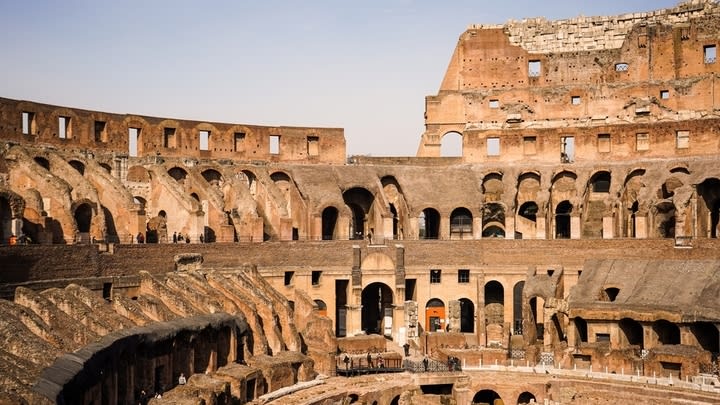
Image of Amphitheatre, Arena, Person,

There’s no point beating about the bush: you came to Rome to snap a selfie in front of the Colosseum. Everything else is just gravy, right? So let’s dive straight in with a day one itinerary that takes in not just one, but four of Ancient Rome’s biggest hitters. First stop on your self-guided walking tour is – you’ll be pleased to hear – the Colosseum. Grab that much-anticipated snap then step inside to experience the largest and best-preserved ancient amphitheater ever built. It doesn’t take a whole lot of effort to imagine the roar of the crowd baying for gladiator blood in one of the deadly battles that were staged here on an almost daily basis nearly 2,000 years ago.

Suitably roused, it’s onwards to the Roman Forum, the city’s ruined former heart, which contained markets, temples, brothels and more, then up Palatine Hill where, legend has it, Rome’s mythical twin founders Romulus and Remus were raised by a she-wolf. Wildflowers grow among the ancient ruins atop this verdant oasis and there are excellent views of the Forum and Aventine Hill from one side, and the Circus Maximus, Colosseum and Capitoline Hill from the other.
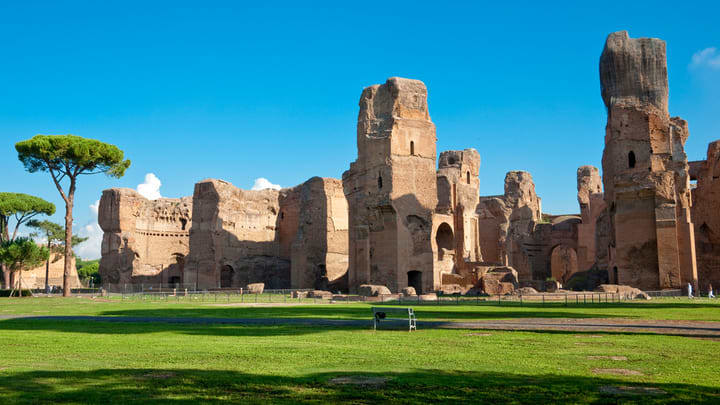
Image of Castle, Fortress, Grass, Arch, Gothic Arch, Ruins,

Not ready to throw in the towel just yet? Continue your walk to the ancient Baths of Caracalla, a spa complex that would have accommodated up to 1,300 bathers at a time back in the day. If you still have energy after that, you’re not a million miles from Aventine Hill, atop which stars of the show include the legendary Mouth of Truth (Bocca della Verità) and a keyhole through which you can view the dome of St Peter’s Basilica framed by perfectly manicured cypress trees. After all that, your first large glass of chilled pinot grigio will be richly deserved.

Pro-tip: Go City’s Rome Explorer Pass includes an audio tour that covers part of this itinerary, taking in the Colosseum, Forum and Palatine Hill.

Day 2: Villa Borghese
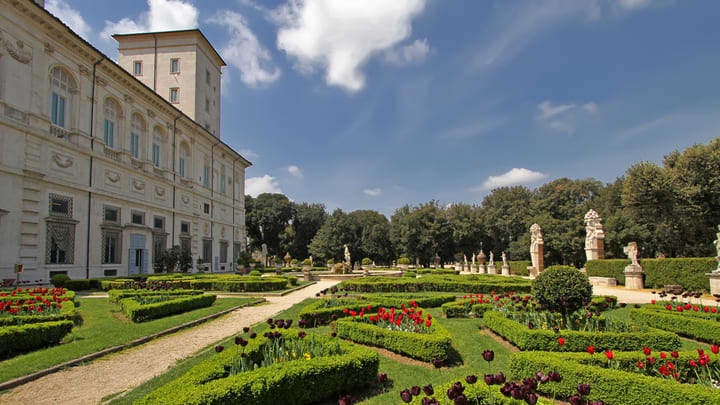
Image of Grass, Nature, Outdoors, Park, Scenery, House, Housing, Villa, Garden,

Footsore and hungover, you’ll be looking for something a little less taxing on day two of your 5-day Rome itinerary. Step forward Villa Borghese, Rome’s great green lung, packed with beautiful villas, gardens and monuments. Grab a picnic from the morning market on Campo dei Fiori – some salami, pecorino and fresh focaccia ought to fit the bill – and find a shady spot among the park’s towering plane and pine trees to stretch out, savor your lunch and enjoy some blissful Rome relaxation. Afterwards, pop by the Galleria Borghese, home of landmark works by Italian masters, including Raphael’s Deposition, Caravaggio’s Saint Jerome, and Bernini’s dramatic Apollo and Daphne sculpture in smooth Carrara marble. There’s also a temple, a slew of grand villas, several fountains and gardens, a lake and a puppet theater to explore in and around the park. The ever-popular Spanish Steps are tantalizingly close by, too, should you wish to tick off another of the city’s top attractions before returning to your hotel.

Day 3: Trastevere
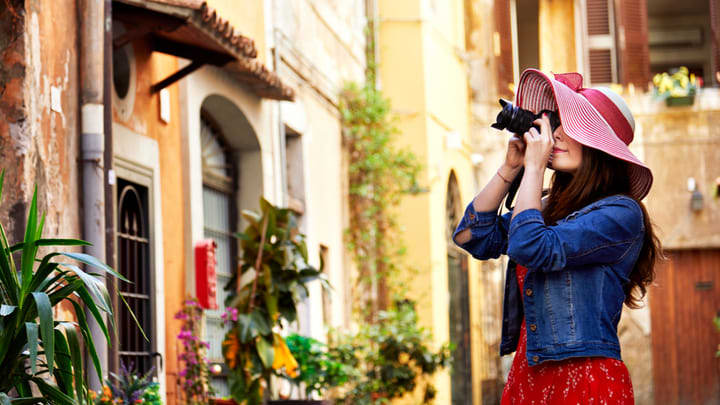
Image of Photography,

For the third of your five days in Rome, head for the laidback Trastevere neighborhood. Just downriver from the Vatican, it feels a long way from the honking car horns of the city center, with oodles of atmospheric alleys, pretty piazzas and Instagrammable ocher-colored houses with painted shutters, vines that wrap around wrought-iron balconies and window boxes that burst with joyful blooms.

Take time to visit the duo of stunning churches here. One of Rome’s oldest, the Basilica of Santa Maria in Trastevere has sections that date from the 4th Century, as well as a Romanesque 12th-century bell tower and incredible mosaics by artist Pietro Cavallini. Cavallini’s masterpiece, a huge fresco depicting the Last Judgment, can be seen at the nearby Church of Santa Cecilia in Trastevere, alongside several other fine medieval artworks.

Climb Janiculum Hill for sweeping views along the Tiber to the dome of St Peter’s Basilica and beyond, find your inner zen in the Japanese garden at the Botanical Gardens, and take in a little more art at the Palazzo Corsini where the collection includes fine pieces by Caravaggio, van Dyck, Rubens and more. Reward yourself with an authentic artisan gelato – flavors in these parts range from traditional stracciatella to a somewhat more challenging artichoke sorbet – and stick around for evening, when Trastevere’s piazzas burst into life as locals come together for fine wine, delicious local craft ales and the best thin and crispy pizza this side of Naples.

Day 4: Vatican City and Castel Sant’Angelo
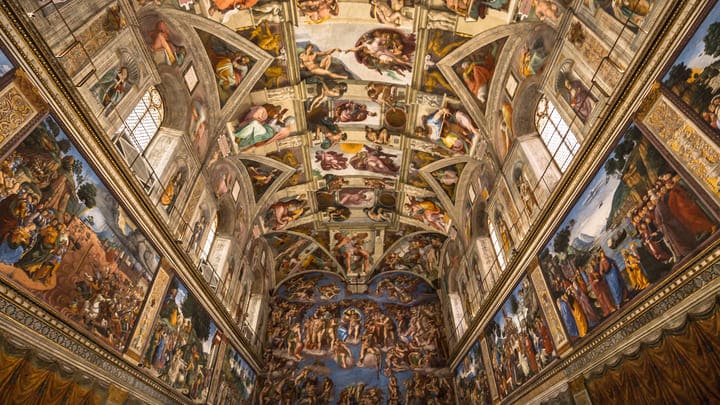
Image of Church, Landmark, Sistine Chapel,

There aren’t many cities you can visit where you get two countries for the price of one, but this is one of them, and a visit to the Vatican City should be considered an essential part of any 5-day Rome itinerary worth its salt. You’ve spent the last three days snapping St Peter’s Basilica from various other vantage points around the city. Now’s your chance to get inside and see Michelangelo’s iconic dome up close, with its biblical scenes by Botticelli, Perugino and Michelangelo himself. The basilica also contains dozens of other works of fine art and sculpture, including Michelangelo’s Pieta and Bernini's vast bronze Baldacchino, as well as relics such as St Peter’s chair and tomb.

And of course no visit to Rome would be complete without visiting the planet’s most famous fresco on the planet. You can get a combi ticket for access to the Sistine Chapel as well as several other Vatican museums, including impressive collections of classical sculpture, modern art and more.

Sure, there’s a lot to take in here, but if you arrived early enough it’s worth making time to pop over to Castel Sant’Angelo for a quick mooch around. This imposing cylindrical fortress was commissioned by Emperor Hadrian as a family mausoleum 2,000 years ago. It’s now a fantastic museum chock-full of frescoes, sculptures, paintings and military weaponry, all topped off with far-reaching views across the Eternal City from the lofty castle terrace.

Day 5: A Spot of Souvenir Shopping
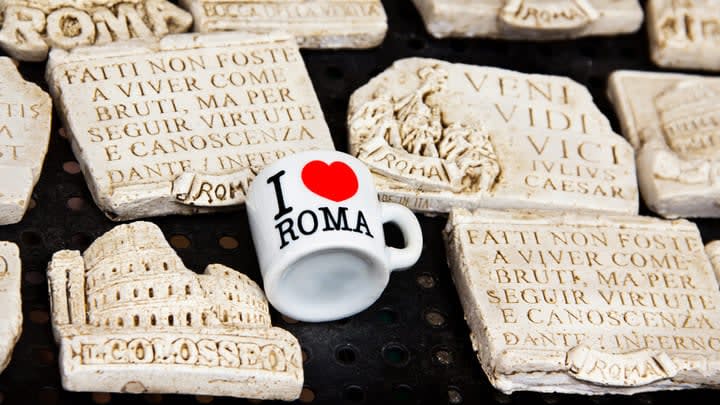
Image of Cup,

Now’s the time to mop up any of those must-see attractions that you just didn’t have time to visit. Whaddya mean you haven’t thrown a coin into the Trevi Fountain yet? Or enjoyed the uniquely mesmerizing experience of watching rain cascade through the Pantheon’s oculus during a downpour?

Make time to grab some gifts for loved ones and a few souvenirs for yourself. We’re talking fruity Lazio region wines and olive oils, tangy pecorino cheeses and – naturally – armfuls of Colosseum keyrings, Forum fridge magnets, Vatican votives and Trevi Fountain t-shirts.

Finish up with an atmospheric evening stroll through baroque Piazza Navona, pausing for a romantic selfie at Bernini’s Fontana dei Quattro Fiumi (Fountain of the Four Rivers), before settling in at one of the local trattoria for wood-fired pizza and a few local craft ales.

Save on things to do in Rome

Save on admission to Rome attractions with Go City. Check out @GoCity on Instagram and Facebook for the latest top tips and attraction info.

Stuart Bak
Stuart Bak
Freelance travel writer

Stu caught the travel bug at an early age, thanks to childhood road trips to the south of France squeezed into the back of a Ford Cortina with two brothers and a Sony Walkman. Now a freelance writer living on the Norfolk coast, Stu has produced content for travel giants including Frommer’s, British Airways, Expedia, Mr & Mrs Smith, and now Go City. His most memorable travel experiences include drinking kava with the locals in Fiji and pranging a taxi driver’s car in the Honduran capital.

Continue reading

Couple throwing coins over their shoulders into the Trevi Fountain in Rome
Blog

Neighborhoods in Rome

Exploring some of the planet’s best-preserved Ancient Roman architecture, wandering cobbled lanes lined with swoonsome palazzi and picture-perfect ocher-colored houses, or just watching the world go by over espresso at a sidewalk café: there’s really something for everyone in Rome’s patchwork of 21 districts, or rione. Hop aboard for our whistle-stop tour of seven of the best neighborhoods in Rome. Centro Storico Right in the heart of the action, Rome’s historic center is unquestionably the best place to start your voyage of discovery in this ancient city. The name is really a catch-all for the relatively compact area that encompasses – deep breath – the Colosseum, the Roman Forum, the Pantheon, Piazza Navona, the Capitoline Museums and the Circus Maximus. And that’s just for starters. This magical labyrinth of atmospheric cobbled alleys, sprawling baroque piazzas and gleaming Renaissance palaces is a treasure trove for history lovers and, well, anyone with even a passing interest in beautiful art or architecture (you’ll find works by the likes of Caravaggio, Bernini and Michelangelo in many of the museums and churches around these parts). And, if it all gets too much, you can always rest up with tagliatelle at a traditional trattoria or people-watch over coffee and cannoli at a cute café. Afterwards, head over to the Largo di Torre Argentina, home of Rome’s biggest cat sanctuary, to spot felines basking in the sunshine amid the ancient ruins of Roman Republican temples and the Theatre of Pompey. Tridente Tridente picks up where the historic center left off, and is loosely defined as the area around the triple-prong of streets that radiate out south from Piazza del Popolo, a vast cobbled square lined with churches and palazzi, as well as several grand fountains and a monumental Egyptian obelisk (they don't do things by half in Rome). It’s here you can get kitted out in the finest Italian fashions in the boutiques on and around Via dei Condotti. We’re talking Gucci, Fendi, Armani, Valentino et al, so be prepared to splurge. Suitably attired, make for the Trevi Fountain where you can indulge in the age-old tradition of throwing in a coin. Assuming you have any left, that is. Then give the quads a workout on the 135-step climb up the Spanish Steps. At the top sits the magnificent Renaissance confection that is the Trinità dei Monti church. Step into its cool interior, where a pair of anamorphic frescoes from the 17th Century are among the many splendid decorative features. Monti Crammed in between the Colosseum, the Quirinal Hill, and the Santa Maria Maggiore basilica, diminutive Monti is an attraction all of its own. Ivy climbs ocher-colored houses and wraps itself round iron balconies and locals chatter over morning coffee on the picturesque piazzas. In case it wasn’t already obvious, this largely residential Rome neighborhood is a photographer’s paradise. Budding snappers should head to La Casetta, a tiny trattoria for which the term ‘ivy-clad’ is something of an understatement – it’s virtually drowning in the stuff! Or make for Piazza della Madonna dei Monti, a vibrant square where sunset Aperols are accompanied by sensational views of the Colosseum silhouetted against the skyline. Monteverde Vecchio The clue’s in the name here: Monteverde Vecchio is one of the greenest neighborhoods in Rome. Go here to seek respite from the urban sprawl and enjoy the fresh air and tranquility promised by the Janiculum Hill and the expanse of landscaped gardens surrounding the grand Villa Doria Pamphili. Trastevere Just downriver from the Vatican, Trastevere is another of those Rome neighborhoods that just begs to be photographed, chock-full as it is of café-lined piazzas, achingly picturesque medieval churches and those familiar ocher-colored houses sporting quirky cast-iron door knockers and brightly painted window shutters. Grab a gelato and stroll across medieval Ponte Sisto to Piazza Trilussa, where locals meet and mingle in the evening by the monumental fountain. Visit the fine botanical garden that overlooks baroque Palazzo Corsini. And don’t miss the Sunday flea market at Porta Portese, an absolute treasure trove for diehard rummagers. Take your best haggling game to snare bargains on everything from vintage fashions and antique jewelry to pre-loved vinyl, classic comic books and, well, just about every other trinket and knick-knack you can imagine. Ostiense On the banks of the Tiber, Ostiense wears its industrial heritage on its sleeve, its landscape dominated by a huge metal gasometer from the decommissioned gasworks. If that’s already piqued your interest in this buzzing ‘burb, where ancient and modern Rome collide, you’re going to absolutely love the Central Montemartini museum, where dozens of ancient Greek and Roman statues, busts and friezes hewn from marble and stone are displayed against a backdrop of pipes, engines, turbines and dials inside a former electrical power station. And that’s not all. There’s a thriving street art scene here – meaning Ostiense is one of the best places to see work from up-and-coming Rome graffitos – as well as a number of hip bars, a smattering of craft beer pubs, and a cat café. One of Catholic Rome’s ‘big four’ basilicas, St Paul Outside the Walls, cuts an incongruous figure against what is an otherwise distinctly modern urban landscape. Parione The central rione of Parione is probably most famous for its two sprawling piazzas. Make for vibrant Campo dei Fiori, where Rome’s longest-running market (operating here since 1869), brings its riot of color, sound and scent every morning (except Sunday). Follow your nose past the rainbows of blooming gerberas to the unmissable foodie stalls. You’d require the willpower of a saint to resist temptation in the face of these mountains of homemade cake, freshly baked loaves and pungent Italian cheeses. In the evening, do as the locals do and soak up the baroque splendor of Piazza Navona on a twilight stroll across its cobbled expanse, pausing to swoon at Bernini’s Fontana dei Quattro Fiumi (Fountain of the Four Rivers), watch the street entertainers ply their trade and snap Instagram-ready shots of the fairytale palazzos and churches that line the square. Paper thin and ultra crispy wood-fired pizza at an authentic trattoria (washed down with local craft ales, natch) provides the perfect ending to a day in this historic Rome neighborhood. Save on things to do in Rome Save on admission to Rome attractions with Go City. Check out @GoCity on Instagram and Facebook for the latest top tips and attraction info.
Stuart Bak
Stuart Bak
Detail from Michelangelo's Creation of Adam panel on the Sistine Chapel Ceiling
Blog

Best Museums in Rome

It goes without saying that Rome is one of the world’s finest open-air museums, with ancient temples, amphitheaters, monuments and Roman baths around almost every corner. Think the Forum, the Colosseum, the Pantheon, the Circus Maximus... we could go on. Here’s our selection of 10 of the best museums in Rome, to whet your appetite for a trip to the Eternal City. Galleria Borghese Set within the Villa Borghese’s lush landscaped gardens, the Galleria Borghese contains one of the finest art collections in all of Rome, with landmark pieces from Italian masters including Raphael, Caravaggio, Bernini and Titian. Step inside this grand 17th-century Italian villa to marvel at works including Bernini’s dramatic Apollo and Daphne and Canova’s semi-nude Venus Vitrix, both sculpted from smooth Carrara marble. Don’t miss Raphael’s Deposition, Caravaggio’s Saint Jerome and Titian’s controversial 16th-century masterpiece Sacred and Profane Love. Afterwards, rent a boat and paddle across the lake to see the 18th-century Temple of Aesculapius in close-up. Baths of Caracalla When in Rome, do as the Romans do... and head for the thermal baths. Though, admittedly, the Baths of Caracalla are more fascinating history lesson than relaxing spa day. In their heyday 2,000 years ago, the baths would have accommodated somewhere in the region of 1,500 bathers at a time. Discover the tepidarium, calidarium and frigidarium and admire well-preserved floor mosaics as you explore this vast 3rd-century complex, its honey-colored crumbling stone walls and soaring arches presenting dozens of fine photo opportunities. Vigamus From the ancient to the modern, Vigamus is Italy’s first museum dedicated to video games, their artwork and cultural legacy. Gaming addicts can view exhibits including an 8-bit computer once owned by legendary games developer Dino Dini as well as the original Doom master disks and other important historical artifacts from the gaming universe. Head to the VR room for immersive video game experiences and relive your youth on the retro Street Fighter and Space Invaders arcades. There’s even a shop, for all your Sonic and Mario souvenir needs. Vatican Museums and Sistine Chapel No visit to Rome would be complete without seeing the world’s most famous ceiling fresco. Inside the Sistine Chapel, tourists gaze heavenwards, jockeying for position to get the best shot of the Creation of Adam, the centerpiece of this mesmerizing work of High Renaissance art. But there’s way more to it than just this (relatively small) section, with eight further scenes from the Book of Genesis and several more biblical paintings, including a vast wall fresco behind the altar depicting the second coming of Christ. Astonishingly, Michelangelo completed some sections of this huge masterpiece in just one or two days. Tickets also get you access to the Vatican’s majestic halls, galleries and courtyards. Unmissable. Capitoline Museum It’s well worth the effort to climb the Michelangelo-designed steps up to the vast complex of museums on top of Capitoline Hill, where you’ll be rewarded with a quite astonishing array of archaeological discoveries including ancient Roman statues and pottery, plus important sculptures and paintings from the likes of Titian, Rubens, Van Dyck and Caravaggio. Don’t miss the statue of the Dying Gaul and the symbolic Capitoline Wolf, a bronze she-wolf suckling Romulus and Remus, the mythical twin brothers who founded Rome. Though the wolf’s origins are disputed (possibly Etruscan, but arguably much later) she has called the museum’s Palazzo dei Conservatori her home since way back in 1471. Capuchin Crypt For bone-chilling experiences, the spooky crypts beneath the church of Santa Maria della Concezione dei Cappuccini take some beating. The five rooms include the Crypt of Skulls, the Crypt of the Leg Bones and Thigh Bones, and the Crypt of Pelvises (complete with pelvis chandelier). Mummified hooded figures lurk in dark corners; in one room a skeleton on the ceiling clutches a scythe (also made of bone), in another a pair of mummified arms cross over each other in macabre representation of the Capuchin coat of arms. The ossuaries are said to contain the mortal remains of some 4,000 Capuchin friars. If a visit to this fascinating museum doesn’t cause you to reflect on your own mortality, perhaps nothing will. Leonardo da Vinci Experience Take a deep dive into the genius mind of the most celebrated sculptor, painter and engineer of the Italian Renaissance. This excellent interactive museum contains recreations of more than 50 of Leonardo da Vinci’s inventions, including flying machines, a bicycle, excavation equipment, weapons and a sewing machine, some of which you can even have a go at operating yourself. You can also get much closer to the Mona Lisa here than in the Louvre, with this and several other da Vinci paintings including The Last Supper and Lady with an Ermine presented in dazzlingly accurate reproductions, all painstakingly recreated by restoration artists from the Vatican Museums. Explora Rome isn’t exactly renowned for its child-friendly museums, so Explora – aimed squarely at under-12s – is a boon for beleaguered parents worn down by toddler complaints about ‘boring ancient stuff’. Several themed areas feature interactive, hands-on fun for the little people in your life, from train drivers’ cabins and fire engines to water play, construction areas and space for young inventors. Activities are grouped by age to ensure there’s something to entertain very young kids as well as pre-teens. We recommend booking in advance as Explora is, perhaps unsurprisingly, rather popular. Centrale Montemartini The temporary removal of a number of statues and sculptures from the Capitoline Museums to the Centrale Montemartini in 1997 became permanent when visitors responded positively to the juxtaposition of ancient Greek and Roman statues, busts and friezes against the industrial-age interiors of their new home. Here’s a unique opportunity to marvel at majestic wonders hewn from marble and stone set against the backdrop of huge pipes, engines, turbines and dials inside a former electrical power station. Truly one of the best museums in Rome. Castel Sant’Angelo Commissioned by Emperor Hadrian as a family mausoleum nearly 2,000 years ago, Castel Sant’Angelo is an imposing cylindrical edifice on the banks of the Tiber. It’s long and storied history has seen it used as a fortress, a prison and a papal residence. Today, mere mortals like you and I are able to visit this extraordinary museum, where a huge collection of paintings, frescoes, sculptures and military weaponry are displayed over seven floors. Suitably wowed by the opulent treasures within, head up to the castle terrace for some fresh air and far-reaching views across ancient Rome, including the picture-perfect bridge with its 10 angelic statues directly below. Save on the best museums in Rome Save on admission to Rome attractions with Go City. Check out @GoCity on Instagram and Facebook for the latest top tips and attraction info.
Stuart Bak
Stuart Bak

Have a 5% discount, on us!

Sign up to our newsletter and receive exclusive discounts, trip inspiration and attraction updates straight to your inbox.